
Holy Santa Claus shit.
I genuinely don't know how else to begin this review.
I've driven some seriously quick cars. I've experienced the ridiculous instant acceleration that modern electric vehicles are capable of, and I've spent enough time behind the wheel to know that outright speed and actual driving enjoyment aren't necessarily the same thing.
But the Hyundai IONIQ 6 N?
Good Lord.
At some point, someone inside Hyundai's N division apparently asked a question that no other manufacturer had thought to ask.
What if we made an electric car that didn't feel like an electric car?
Not just one that makes artificial engine noises through the speakers. We've seen that before.
No, Hyundai has gone considerably further.
The IONIQ 6 N can simulate the behaviour of a conventional performance car's gearbox, complete with the sensation of changing gears, interruptions in power delivery and a soundtrack that makes your brain question absolutely everything it knows about electric vehicles.
And the most ridiculous part?
It works.
I know it works because I conducted a highly scientific experiment.
I took my brother for a drive.
I didn't tell him it was electric.
I simply put my foot down.
Now, there's a particular facial expression people make when their internal organs suddenly attempt to relocate themselves into the seat behind them.
My brother made that face.
Once he'd recovered sufficiently to form words, he made an observation.
“It feels like an electric car. There's no turbo lag."
“That's because it is," I replied.
He looked at me.
“F*** off! It is not!"
A pause.
“Is it???"
And there it was.
The perfect demonstration of what Hyundai has achieved.
They've built an electric performance car so convincing in its imitation of a combustion-engined machine that someone can experience its acceleration, hear it changing gears, feel the interruptions in power delivery and still refuse to believe it's electric.
And here's the truly extraordinary thing.
None of that theatre is necessary.
An electric car doesn't need gears. It doesn't need a simulated rev limiter. It certainly doesn't need to interrupt its own acceleration to pretend it's shifting through a transmission that doesn't exist.
From a purely engineering perspective, it's completely ridiculous.
From a driving enthusiast's perspective?
It's fucking brilliant.
Because Hyundai has finally understood something that a surprising number of performance EV manufacturers seem to have forgotten.
Driving isn't supposed to be an exercise in efficiency.
It's supposed to make you feel something.
And bloody hell, does the IONIQ 6 N deliver.
Price and Key Specifications
Let's get one thing out of the way immediately.
This is a $115,000 Hyundai.
Before on-road costs.
And while there was a time when that sentence would've caused people to question whether Hyundai had completely lost its mind, the numbers behind the IONIQ 6 N suggest the company might actually be onto something.
Underneath that aggressively sculpted bodywork sits an 84kWh lithium-ion battery feeding two electric motors, one at each axle.
Together, they produce 448kW and 740Nm.
Already ridiculous.
But press the N Grin Boost button and those figures jump to 478kW and 770Nm for up to ten seconds.
For context, that's approximately 641 horsepower.
From a Hyundai.
A company that once sold Australians the Excel.
We've come rather a long way.
Key Specifications
Price: $115,000 before on-road costs
Powertrain: Dual-motor electric
Drivetrain: All-wheel drive (AWD)
Maximum Power: 448kW
N Grin Boost Power: 478kW
Maximum Torque: 740Nm
N Grin Boost Torque: 770Nm
Transmission: Single-speed reduction gear with simulated N e-Shift
Battery: 84kWh lithium-ion
0–100km/h: 3.4 seconds
0–100km/h with N Launch Control: 3.2 seconds
Top Speed: 257km/h
WLTP Driving Range: 487km
Claimed Energy Consumption: 18.7kWh/100km
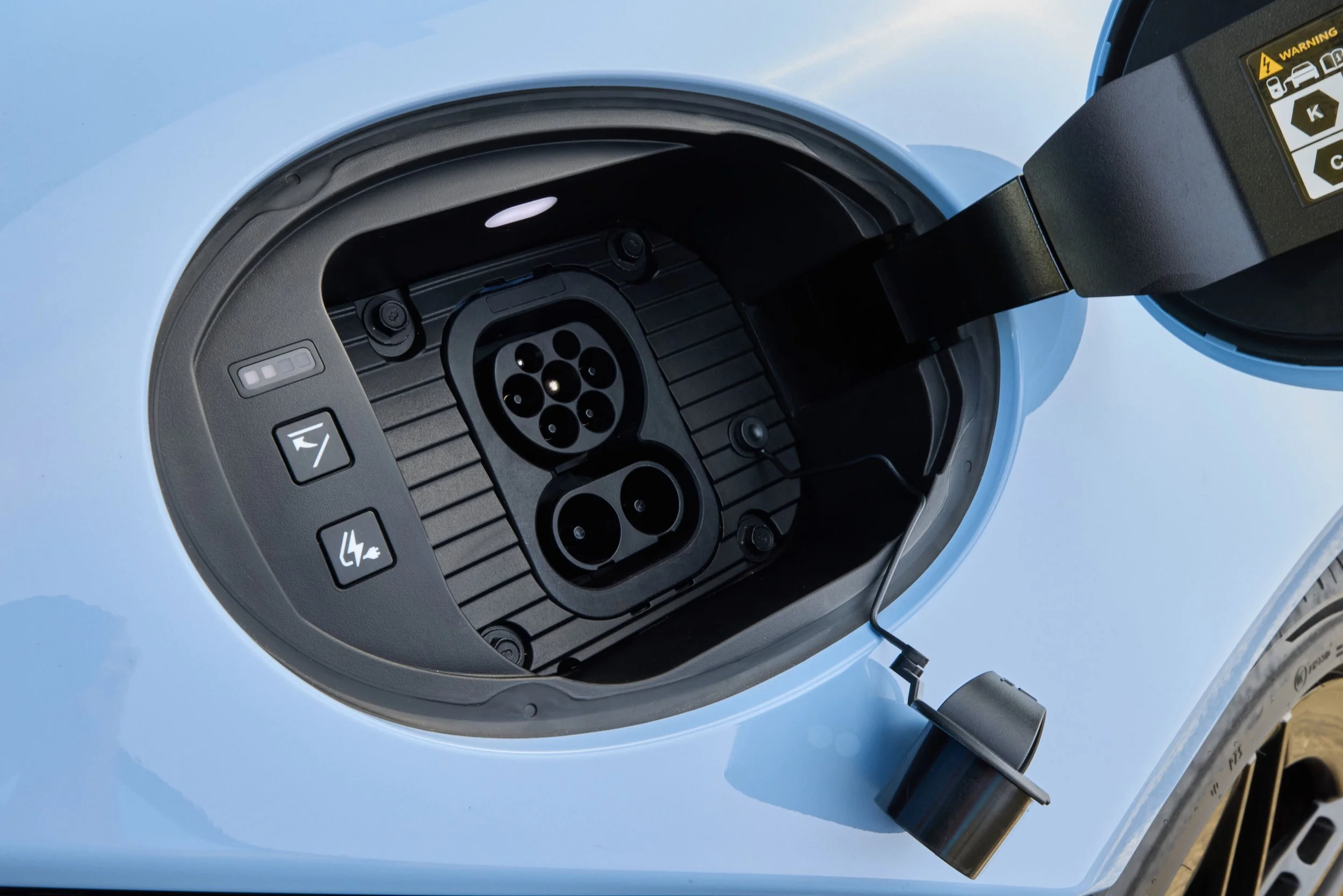
Maximum AC Charging: 11kW
DC Fast Charging: 10–80% in approximately 18 minutes under ideal conditions
Length: 4,935mm
Width: 1,940mm
Height: 1,495mm
Wheelbase: 2,965mm
Tare Weight: 2,201kg
Boot Capacity: 371 litres
Wheels: 20-inch forged alloy wheels
Tyres: 275/35 R20 Pirelli P Zero 5
The headline performance figure is 0–100km/h in just 3.2 seconds with N Launch Control engaged.
That's properly fast.
Not fast for an electric car.
Not fast for a Hyundai.
Just fast.
And the more interesting part is that Hyundai hasn't simply chased an impressive acceleration number.
There's an entirely reworked chassis, electronically controlled suspension, an electronic limited-slip differential, enormous brakes, bespoke tyres and an extraordinary amount of software designed to make the driver feel involved.
This isn't an ordinary IONIQ 6 with the power turned up.
It's a very different animal.
Exterior Design
The regular IONIQ 6 has always been something of a divisive design.
It's sleek, aerodynamic and undeniably distinctive, but its unusual proportions and rounded rear end have never been universally loved.
The N version, however, is an entirely different proposition.
And I think it looks sensational.
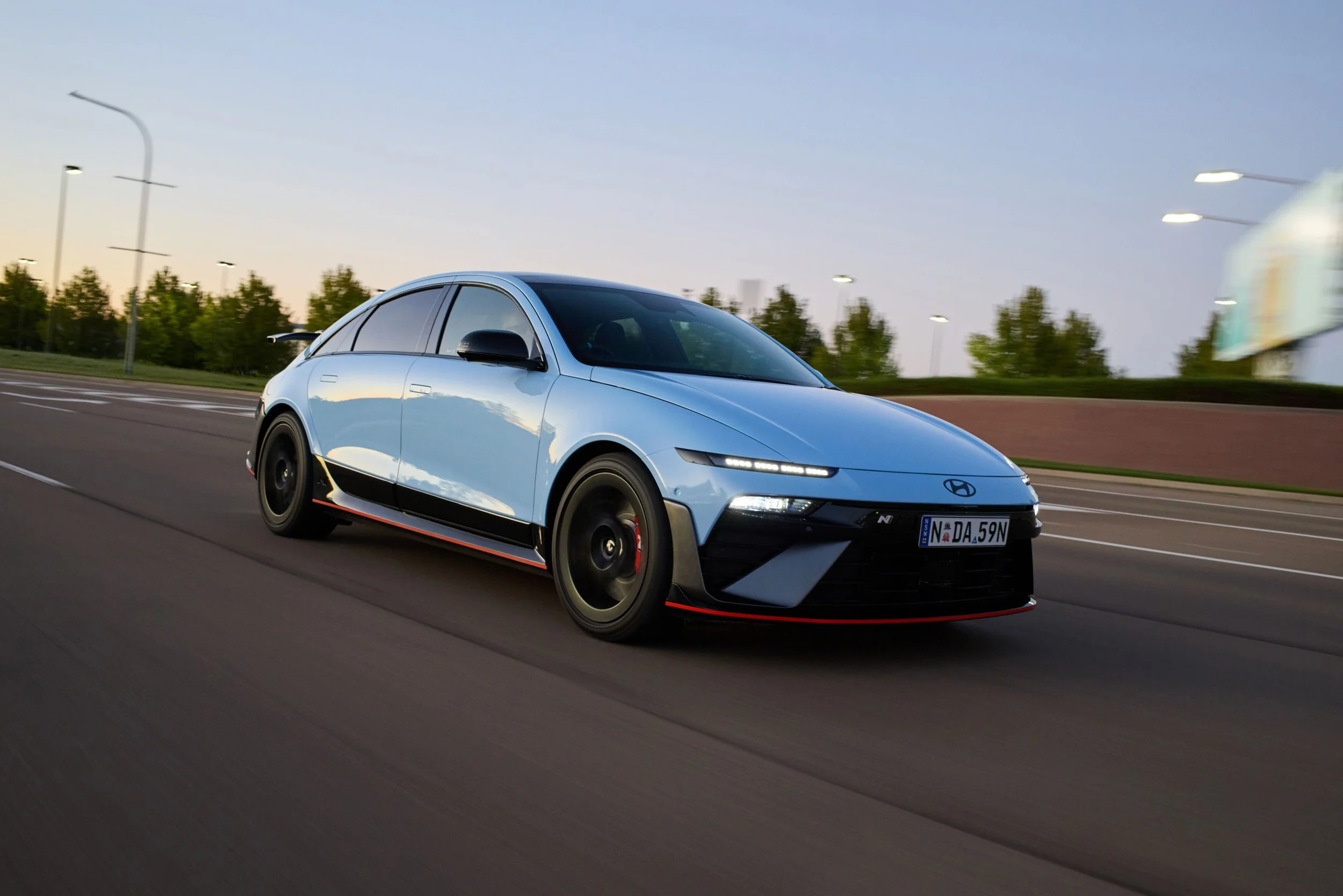
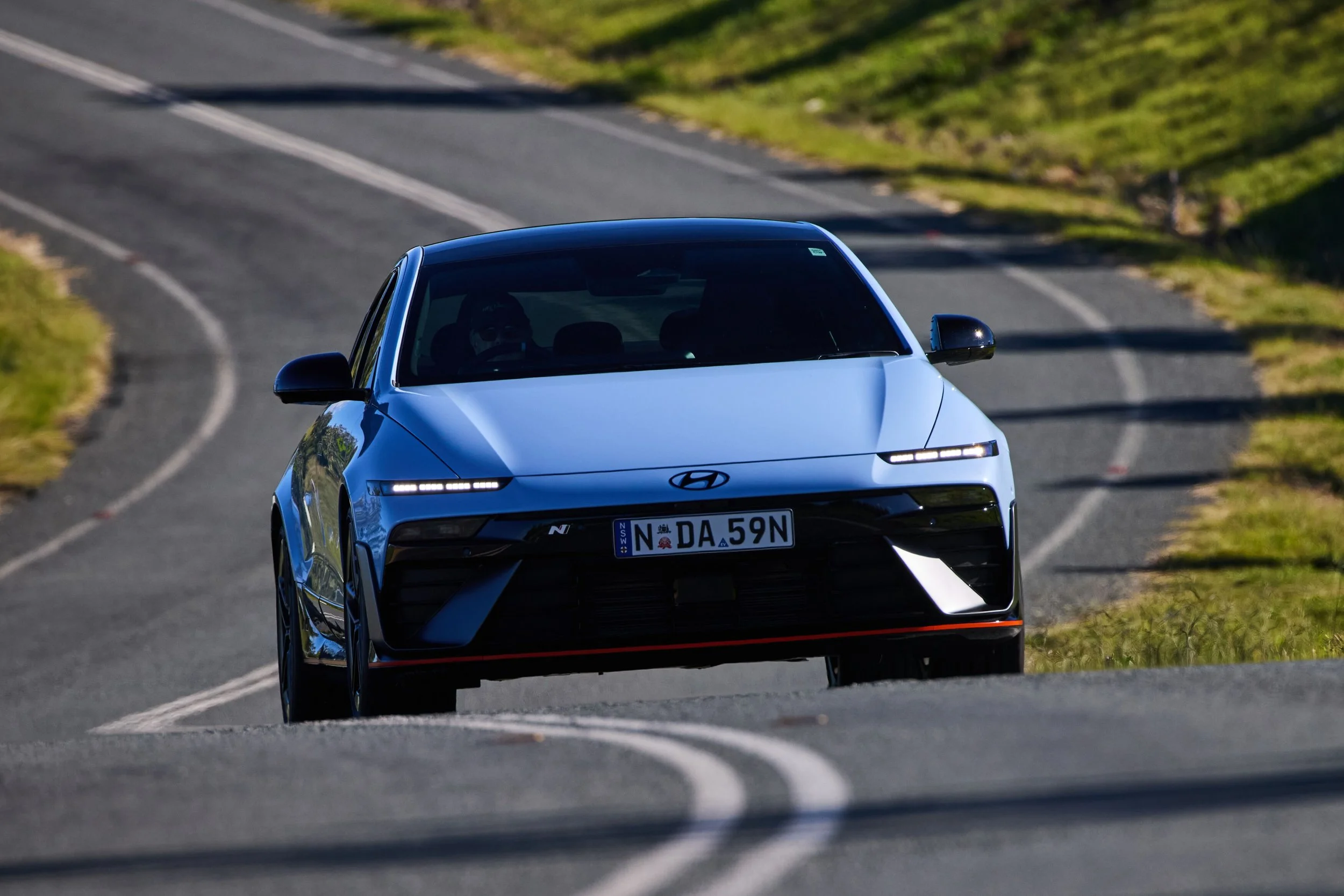
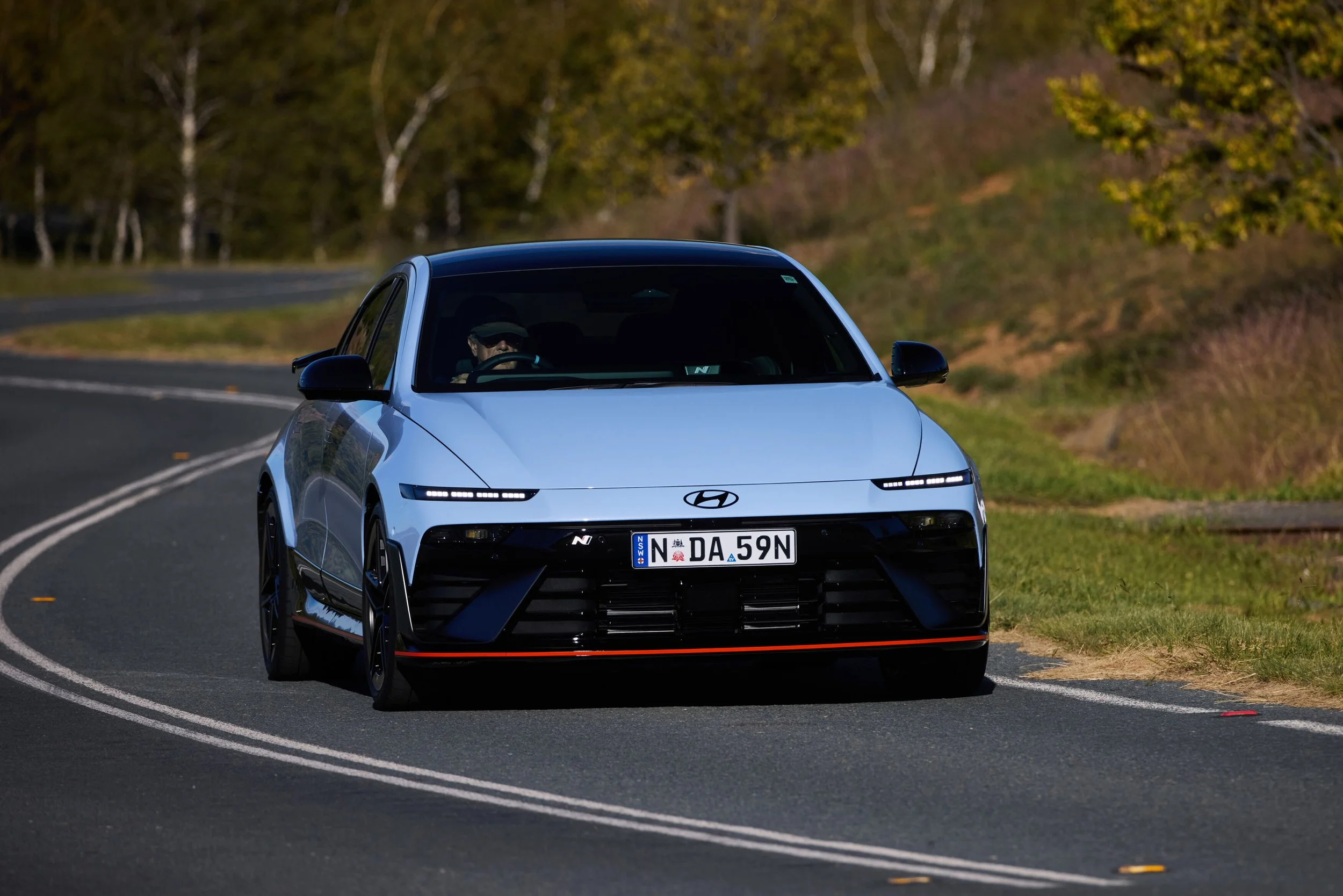
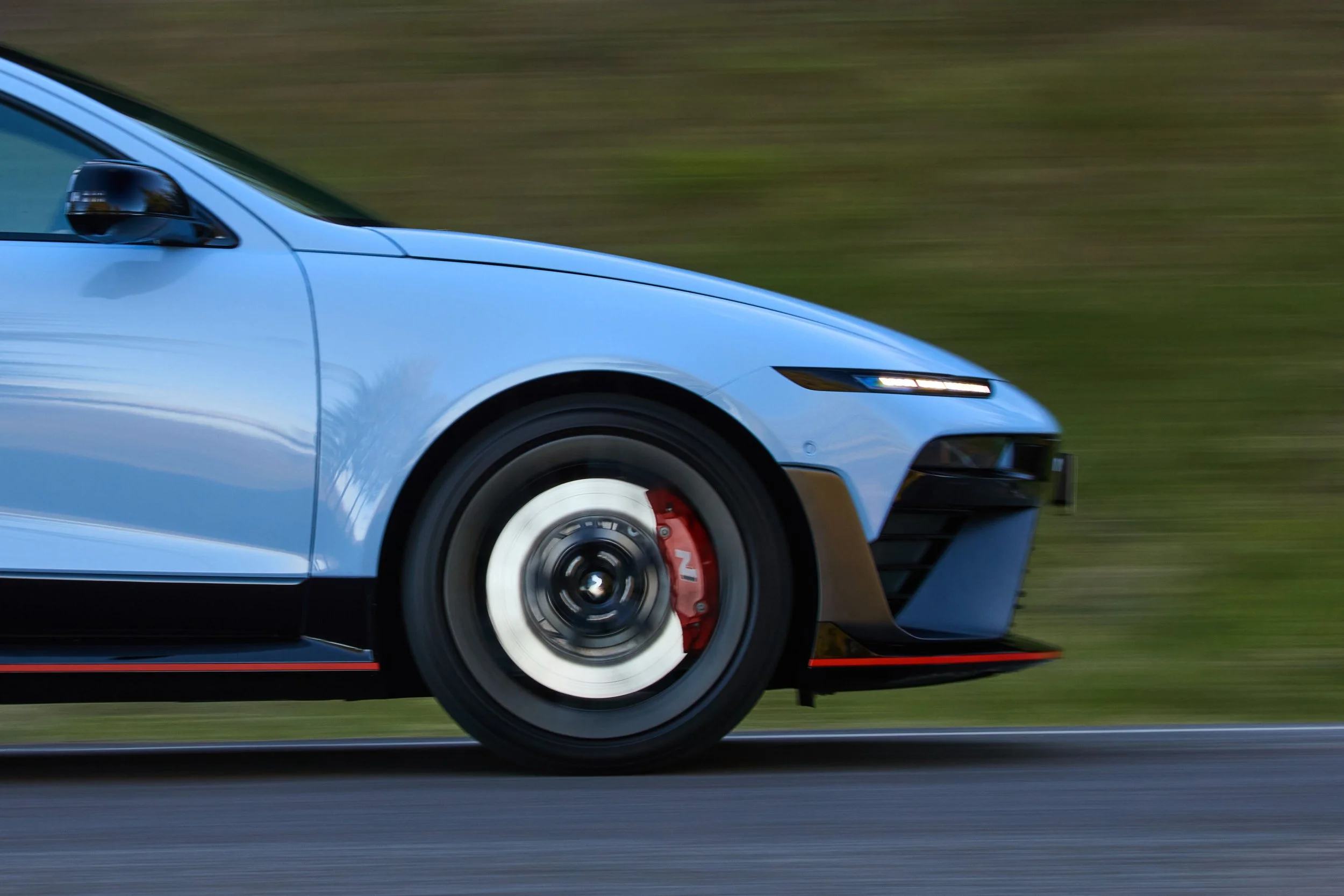
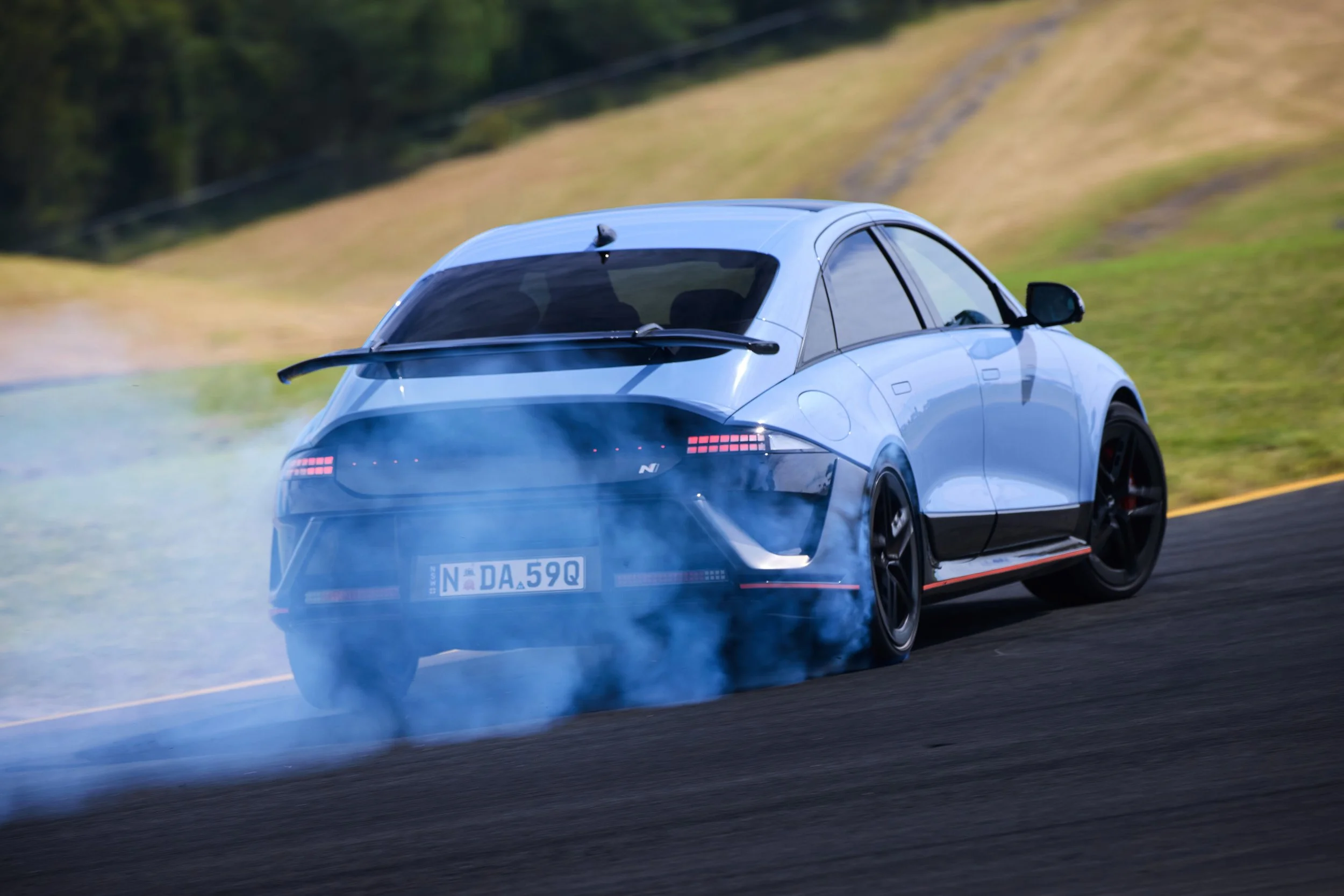
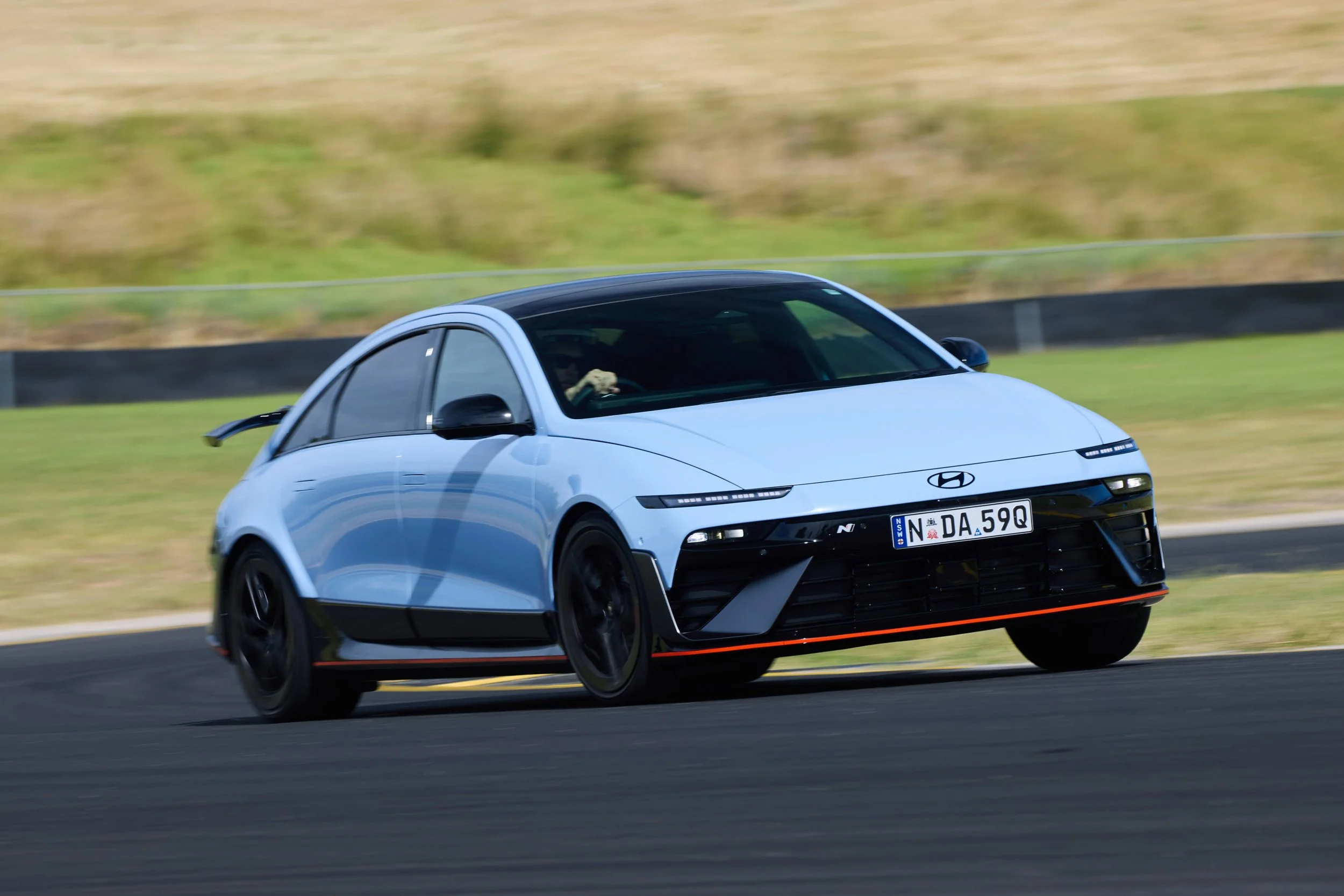
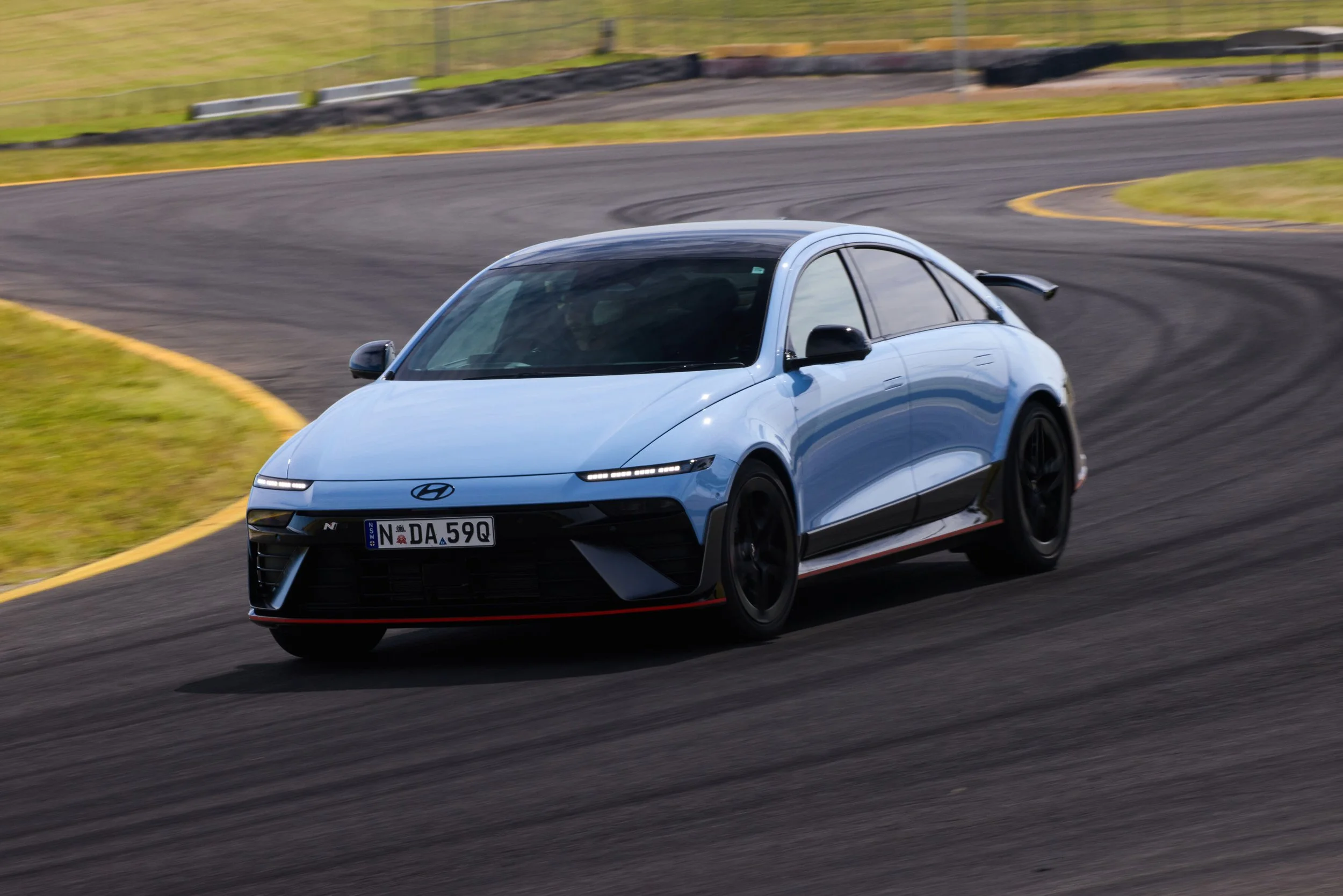
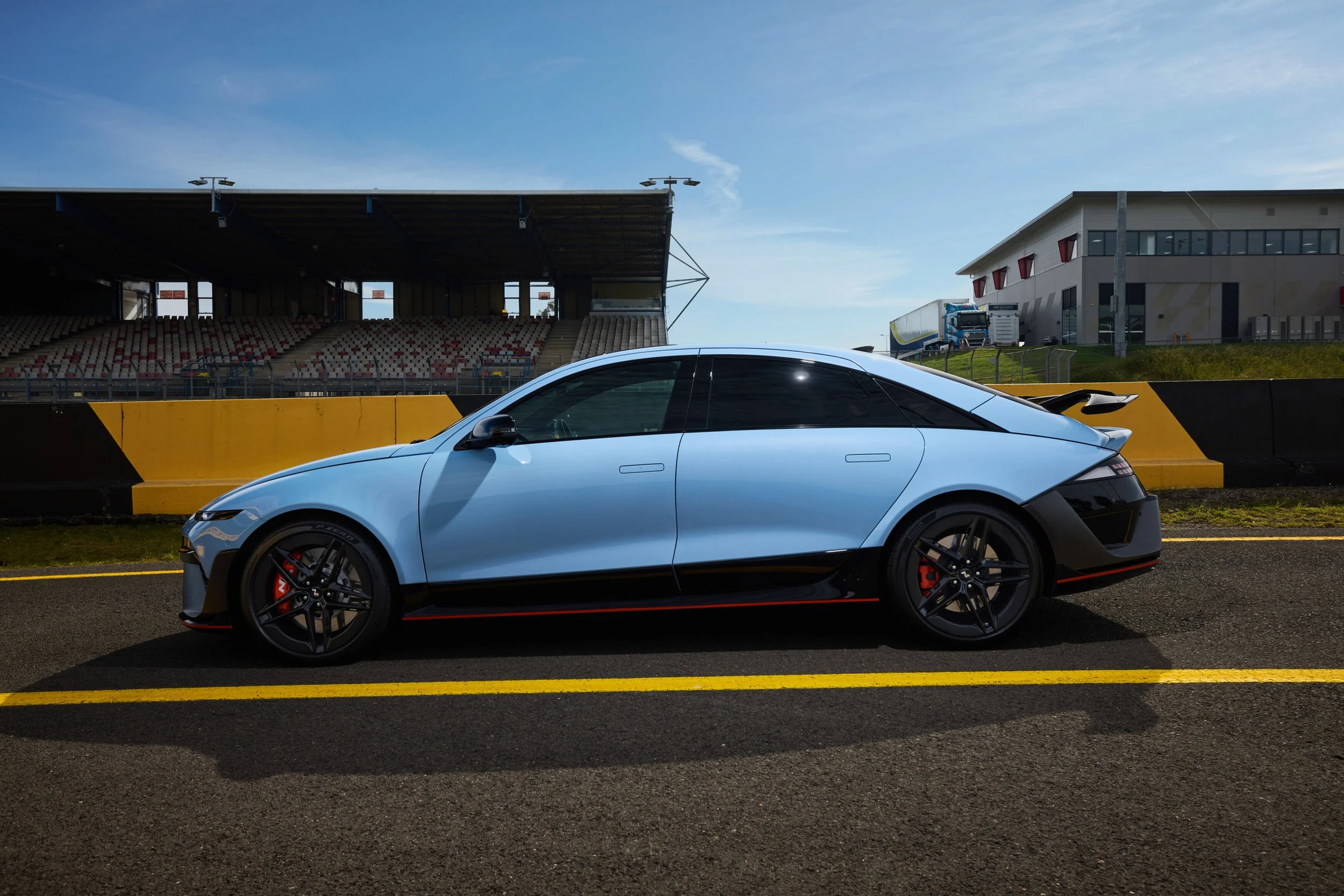
The widened stance, aggressively styled bumpers, pronounced side skirts and 20-inch forged alloy wheels give it a much more purposeful appearance.
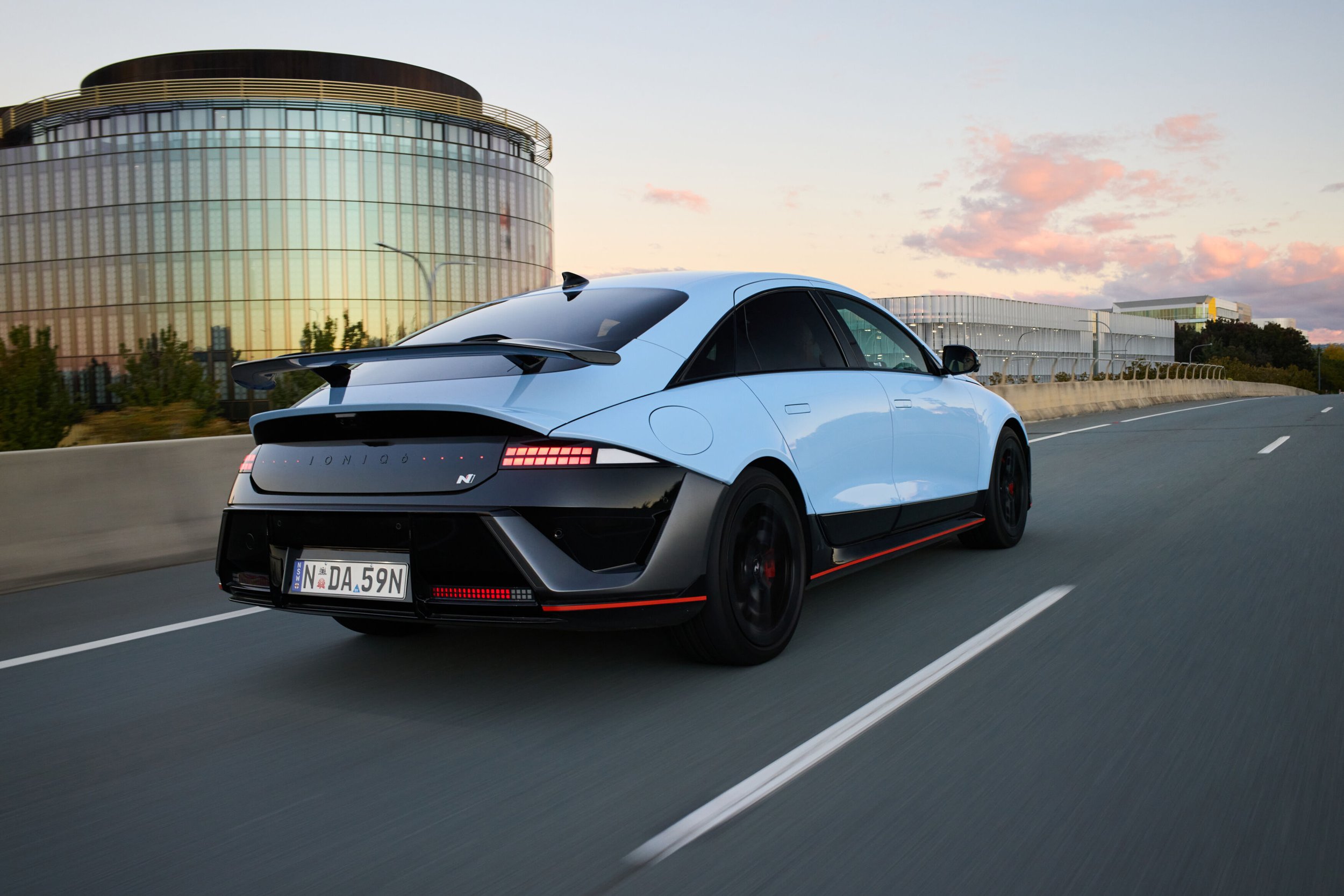
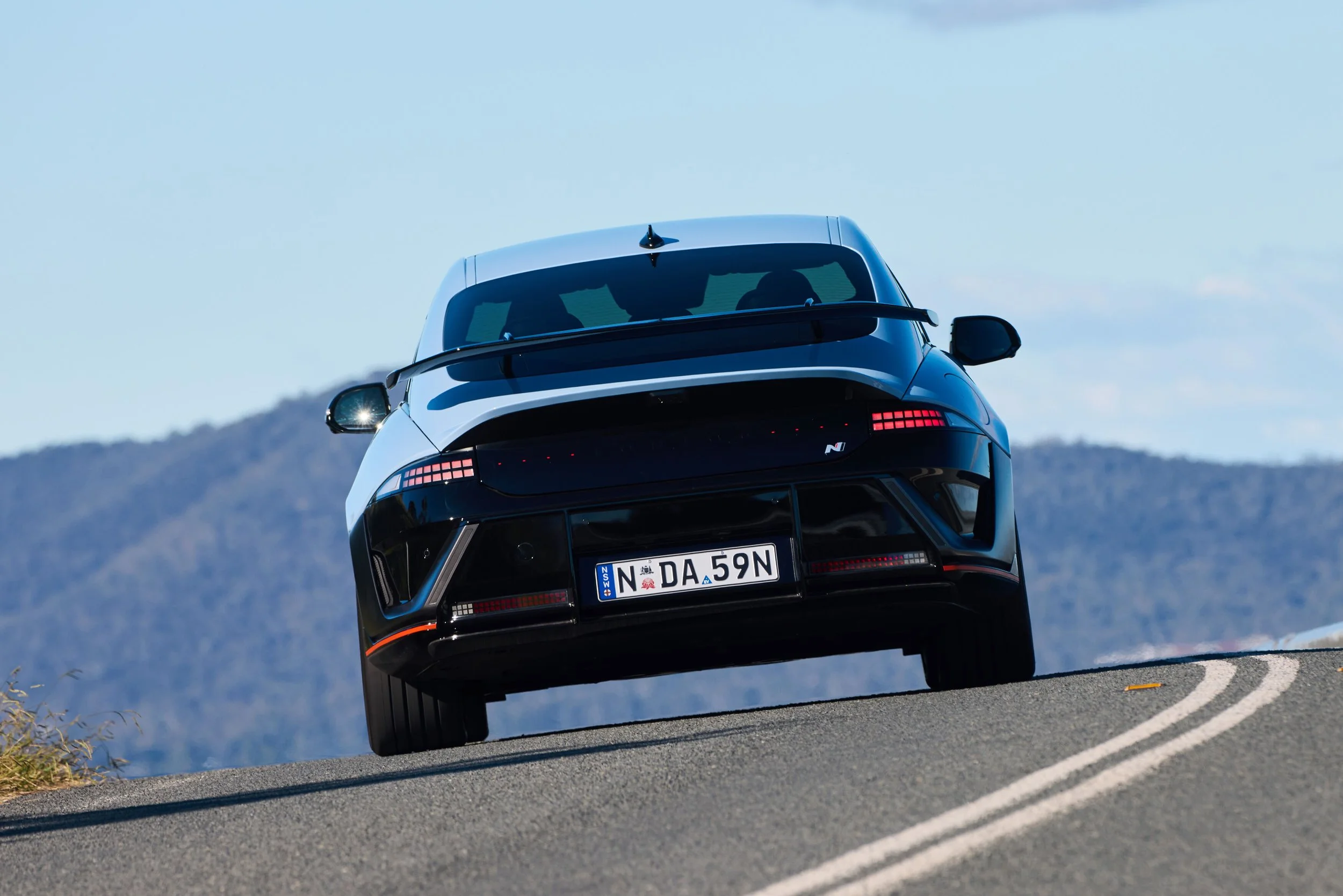
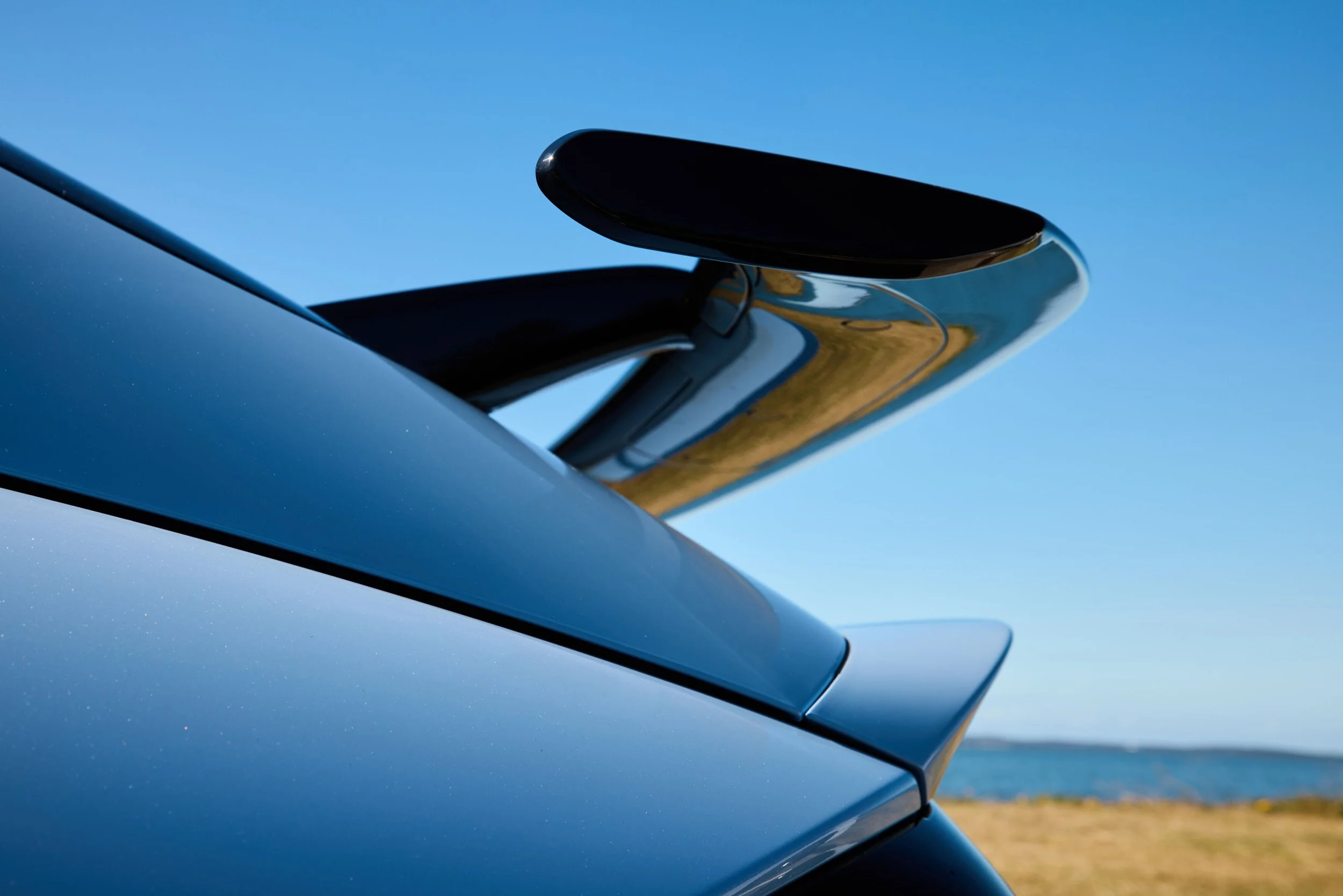
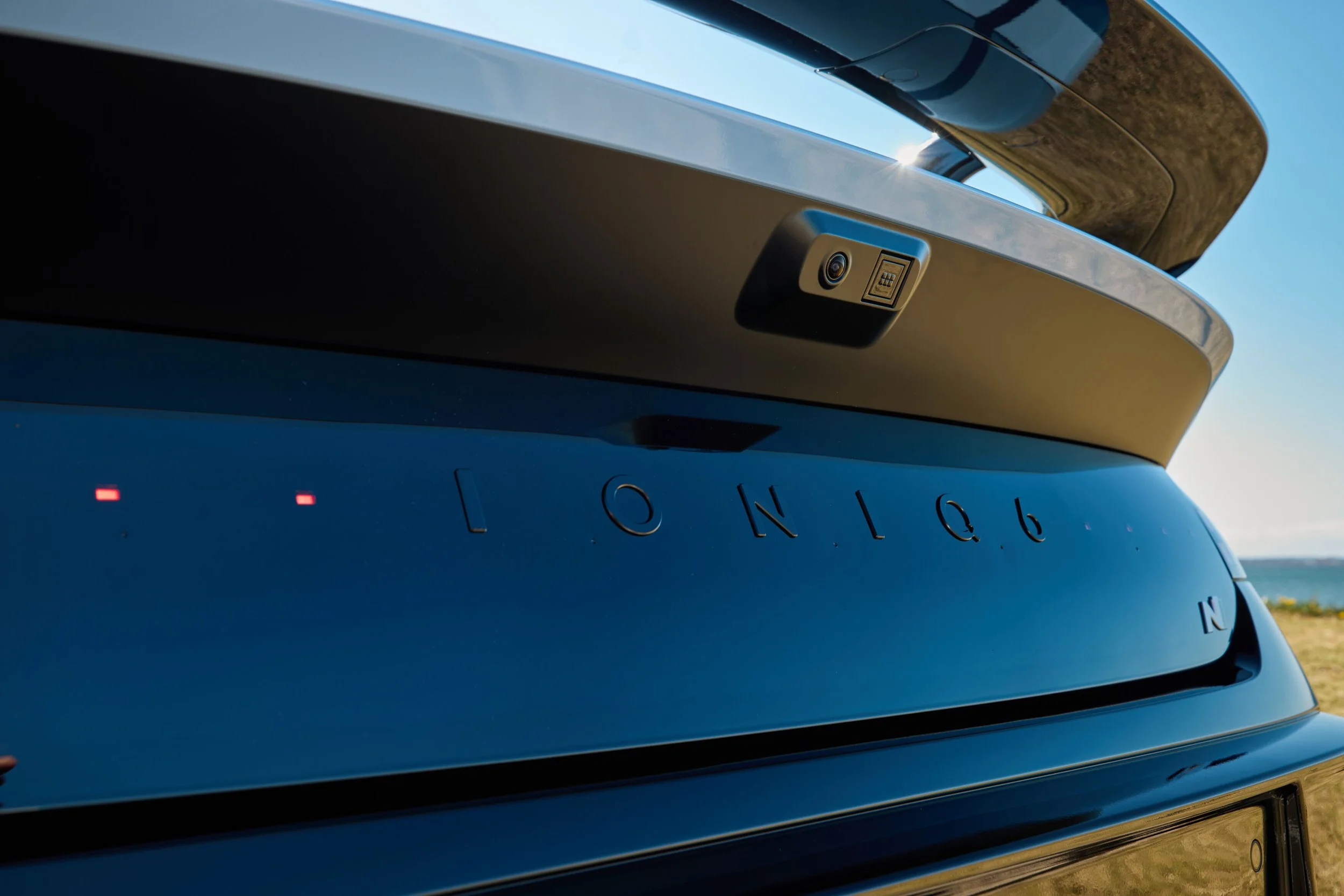
Then there's the rear wing.
Oh, that rear wing.
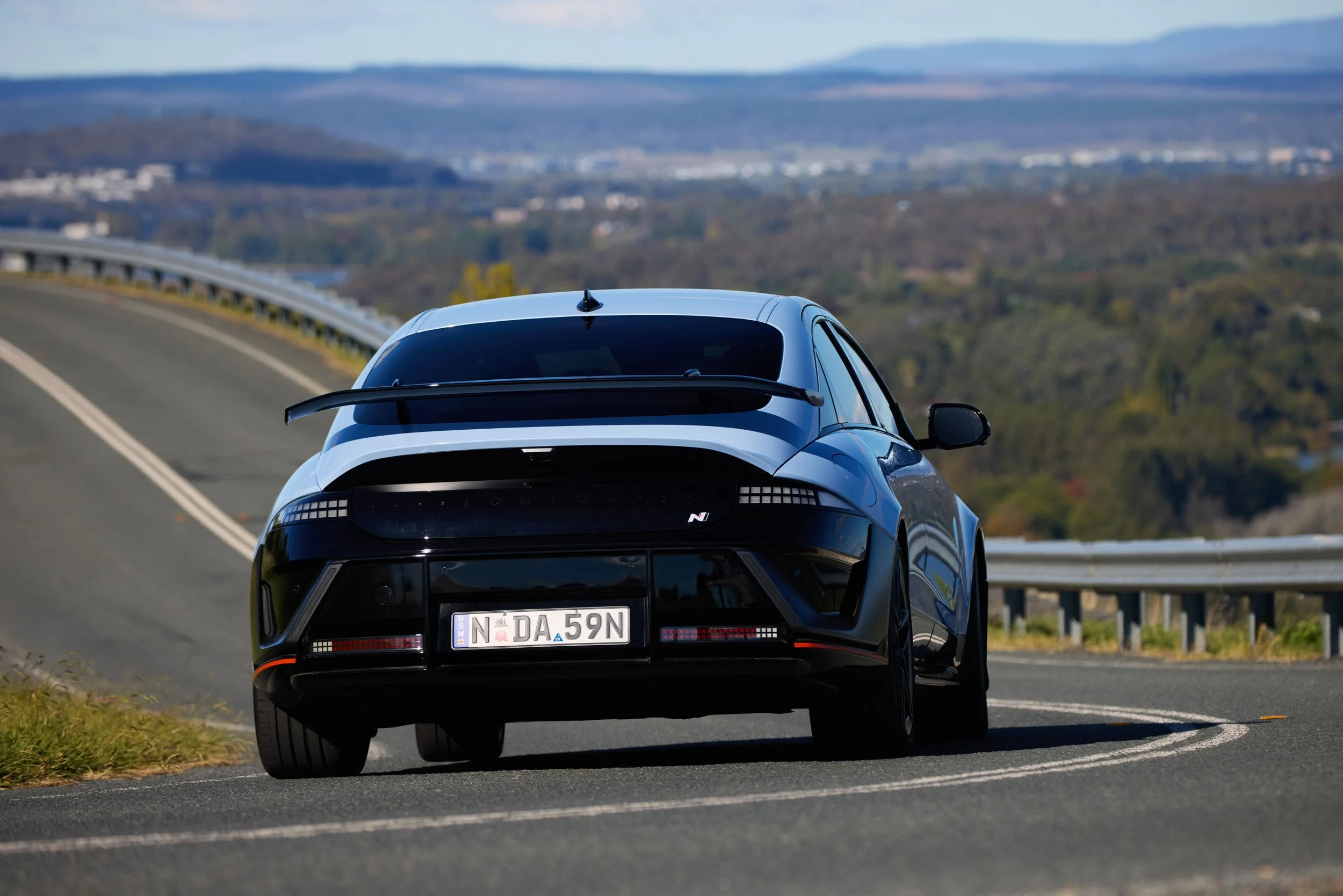
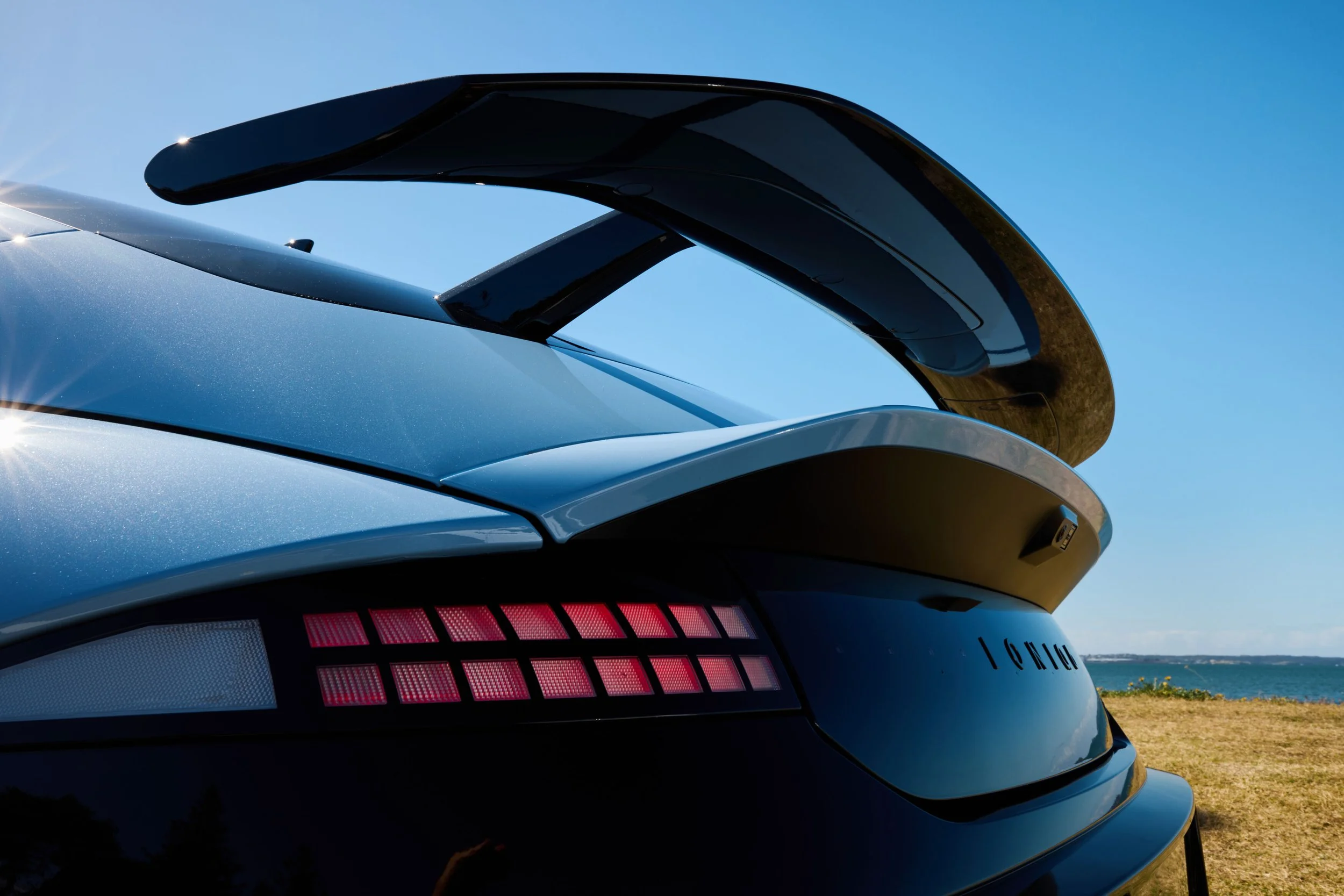
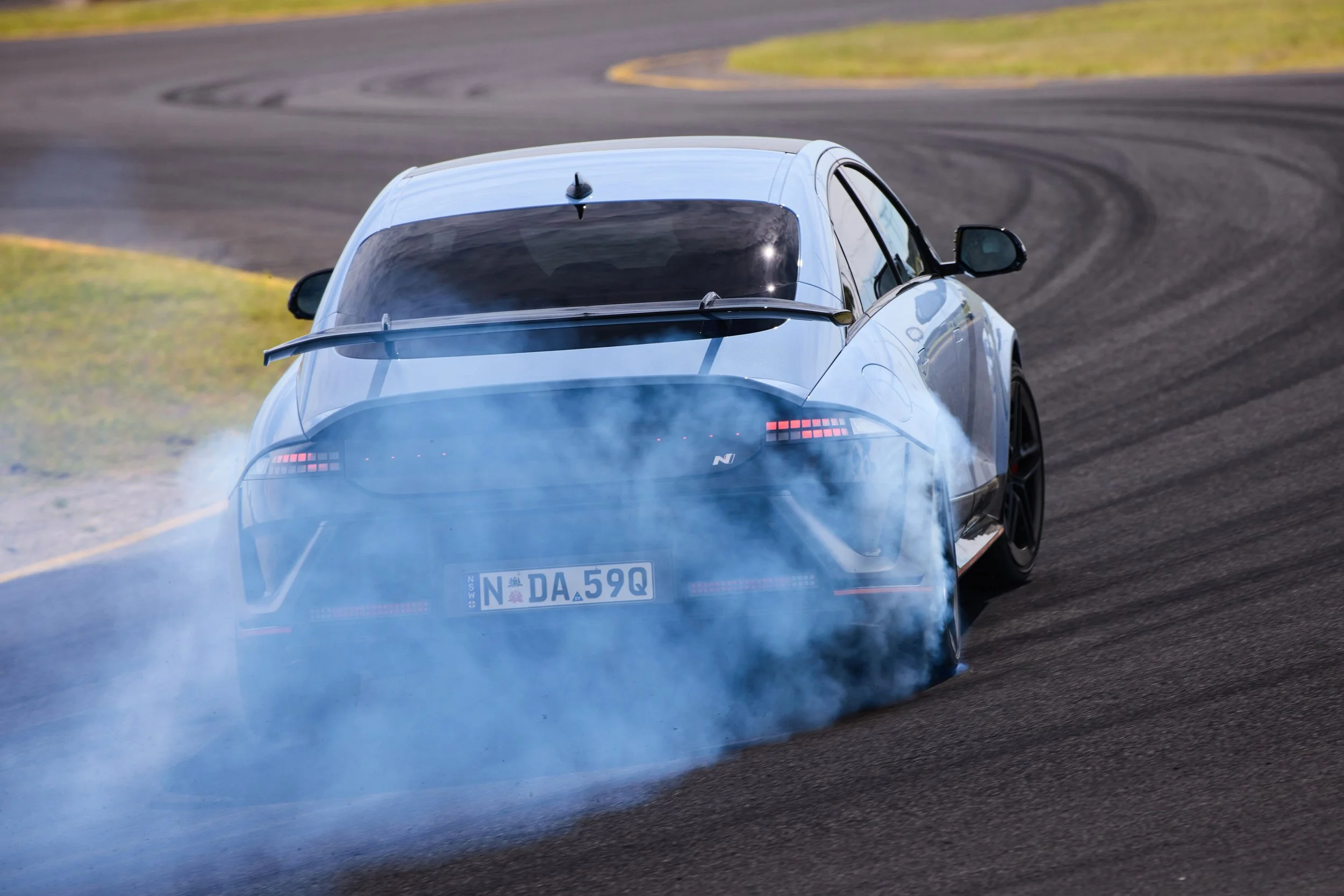
Mounted on distinctive swan-neck supports, it looks like something that belongs on a touring car rather than a family-sized electric sedan.
It's enormous.
It's unapologetic.
And crucially, it's functional.
Hyundai has paid considerable attention to aerodynamic performance, using the revised bodywork and rear wing to generate additional downforce and stability at speed.
Despite the aggressive additions, the IONIQ 6 N achieves a drag coefficient of just 0.274.
That's impressive for something with a rear wing that looks capable of doubling as a picnic table.
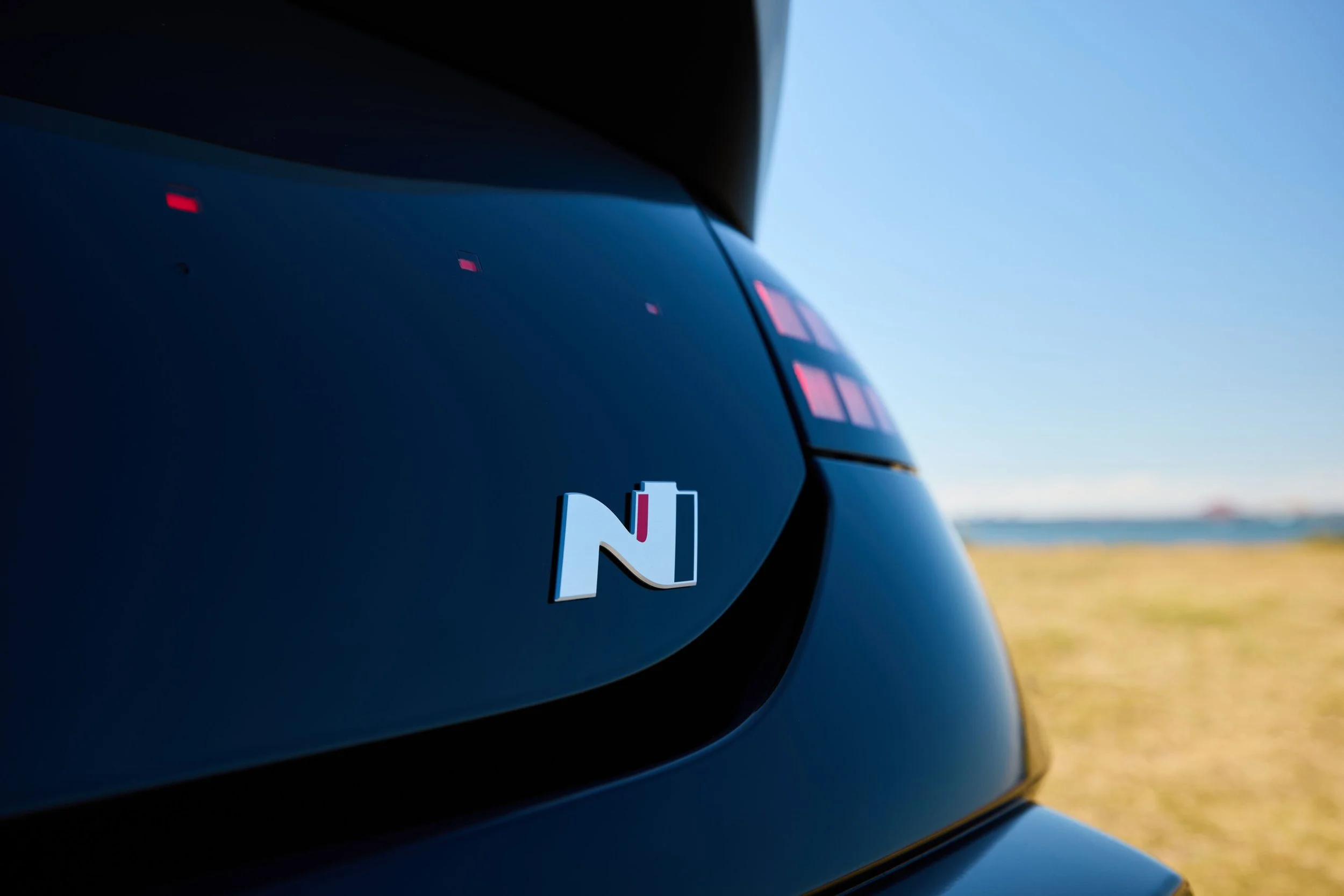
The Performance Blue accents and N-specific detailing further distinguish it from the standard model, while the lower, wider appearance gives the whole car a much more serious character.
It's not subtle.
But neither is a car capable of reaching 100km/h in 3.2 seconds.
And frankly, I wouldn't want it to be.
Interior and Practicality
Step inside the IONIQ 6 N and things become considerably more familiar.
Which, in this case, is a good thing.
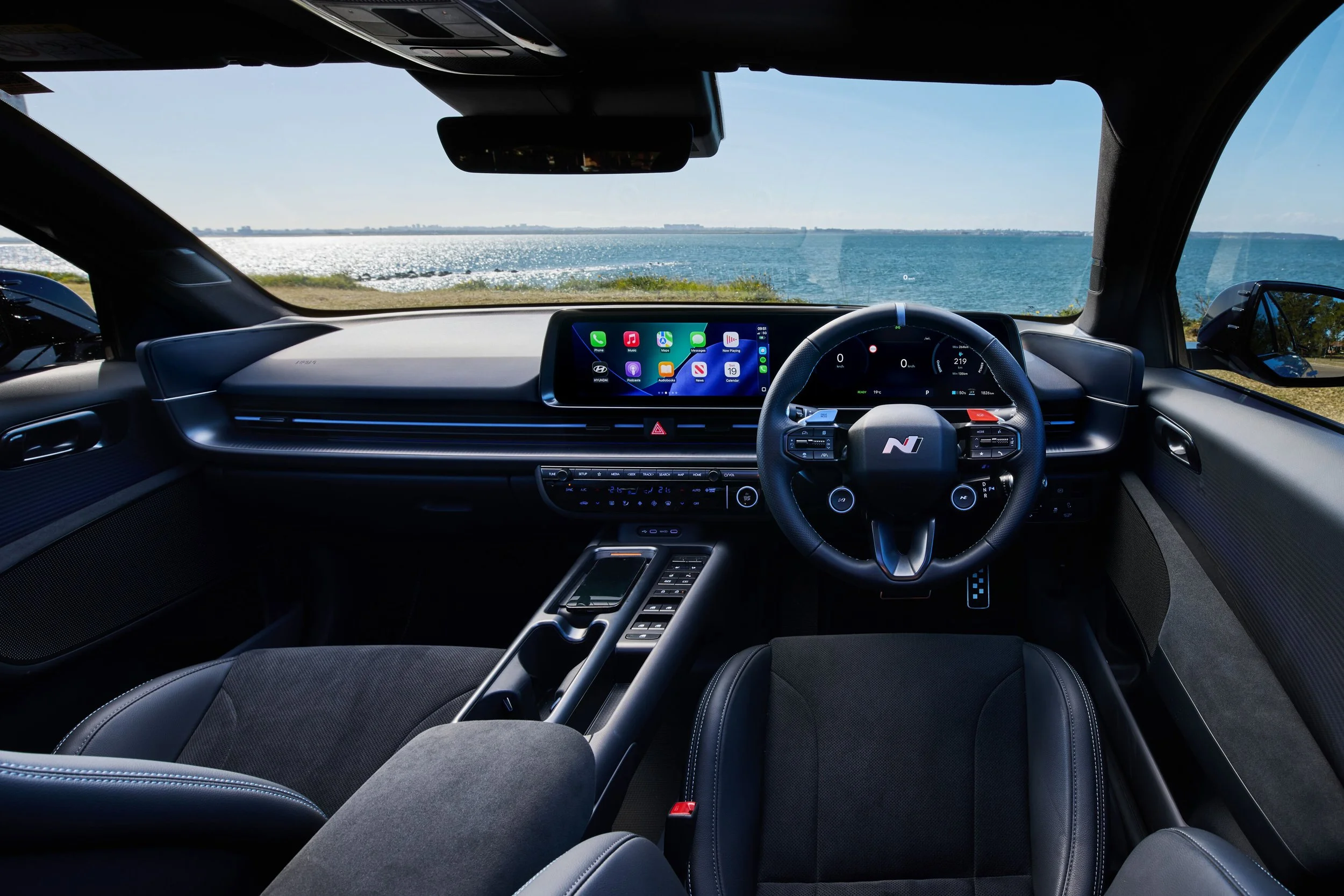
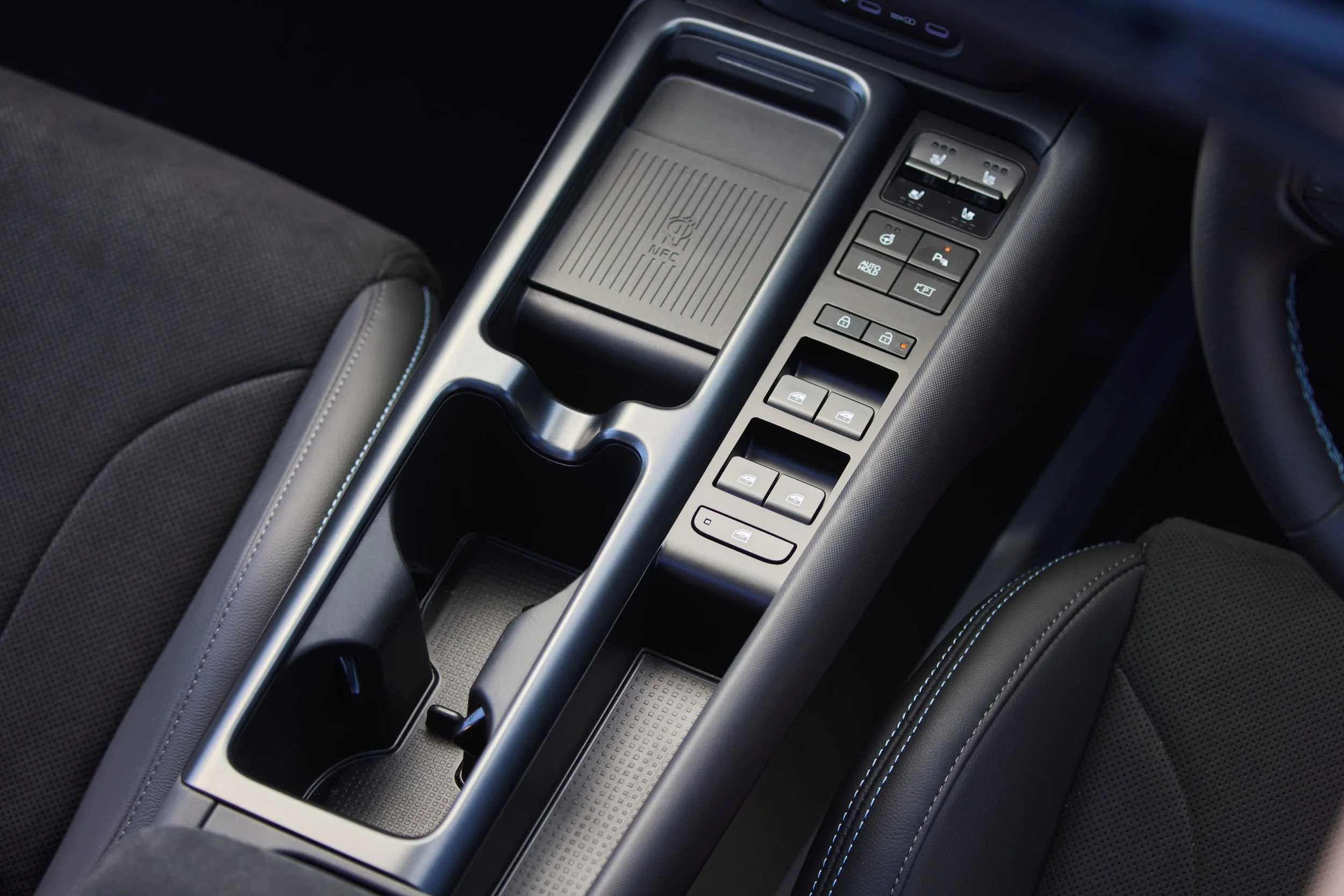
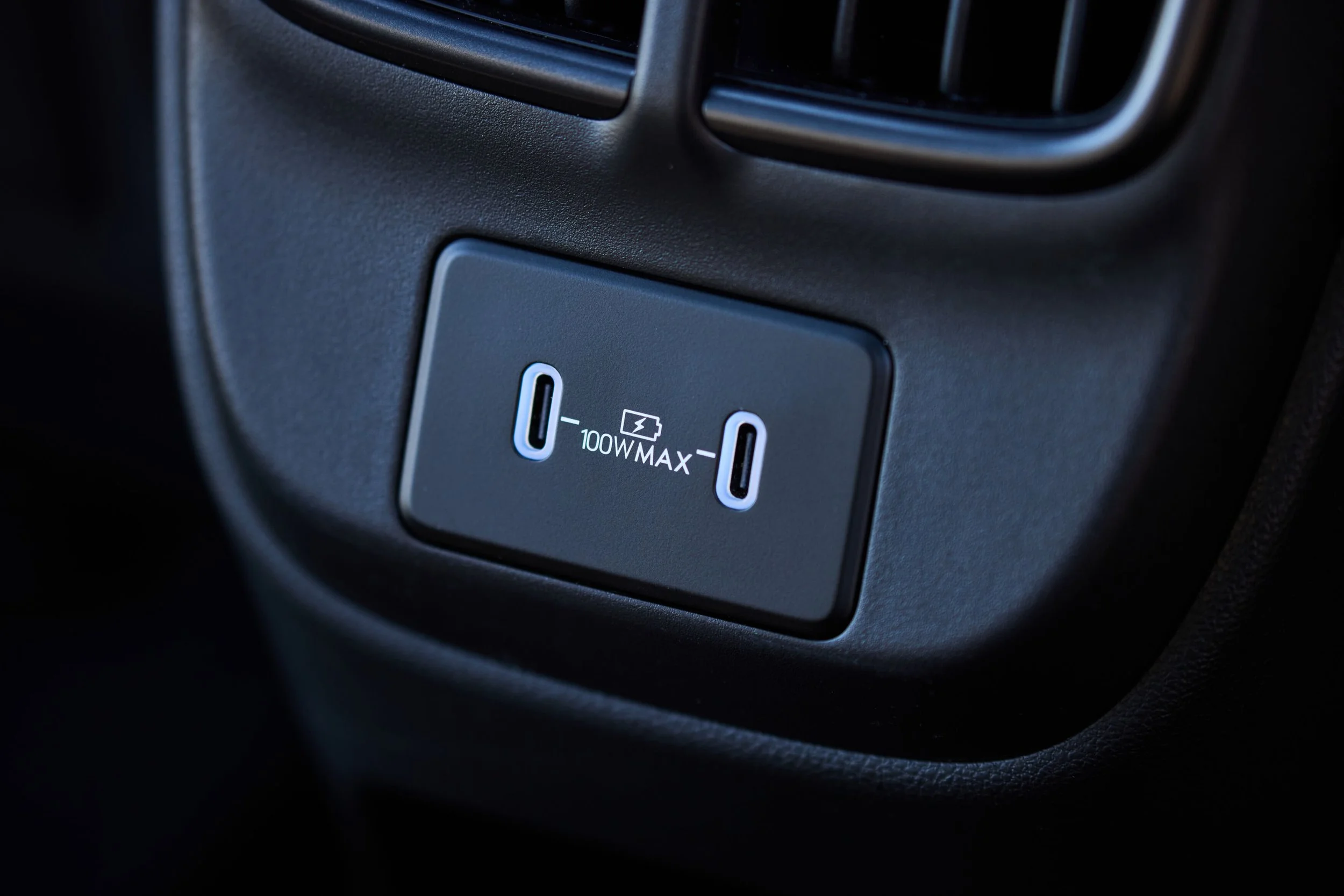
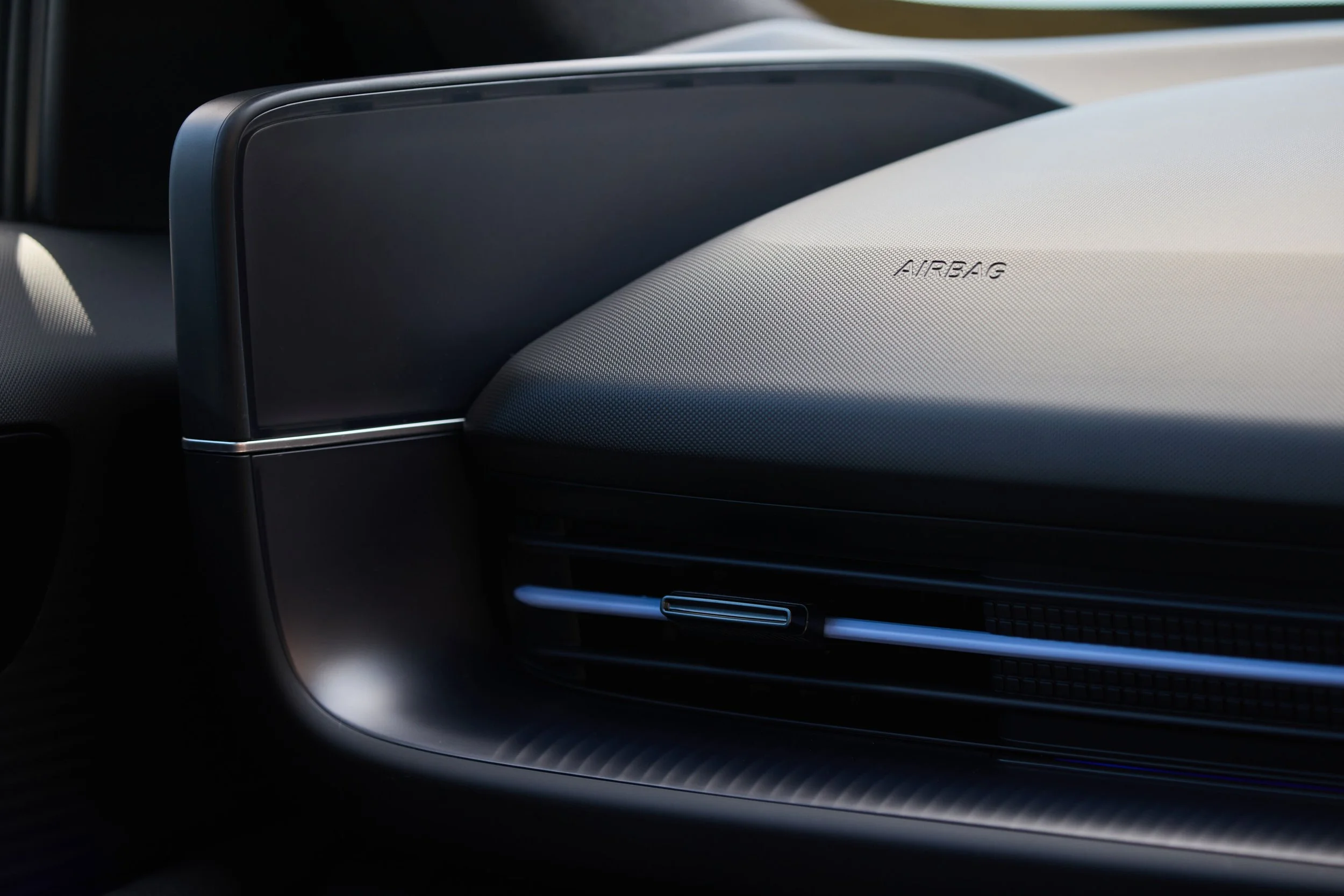
Rather than completely reinventing the interior, Hyundai has retained much of the standard IONIQ 6's clean, modern dashboard architecture and added the sort of details you'd expect from a proper N performance model.
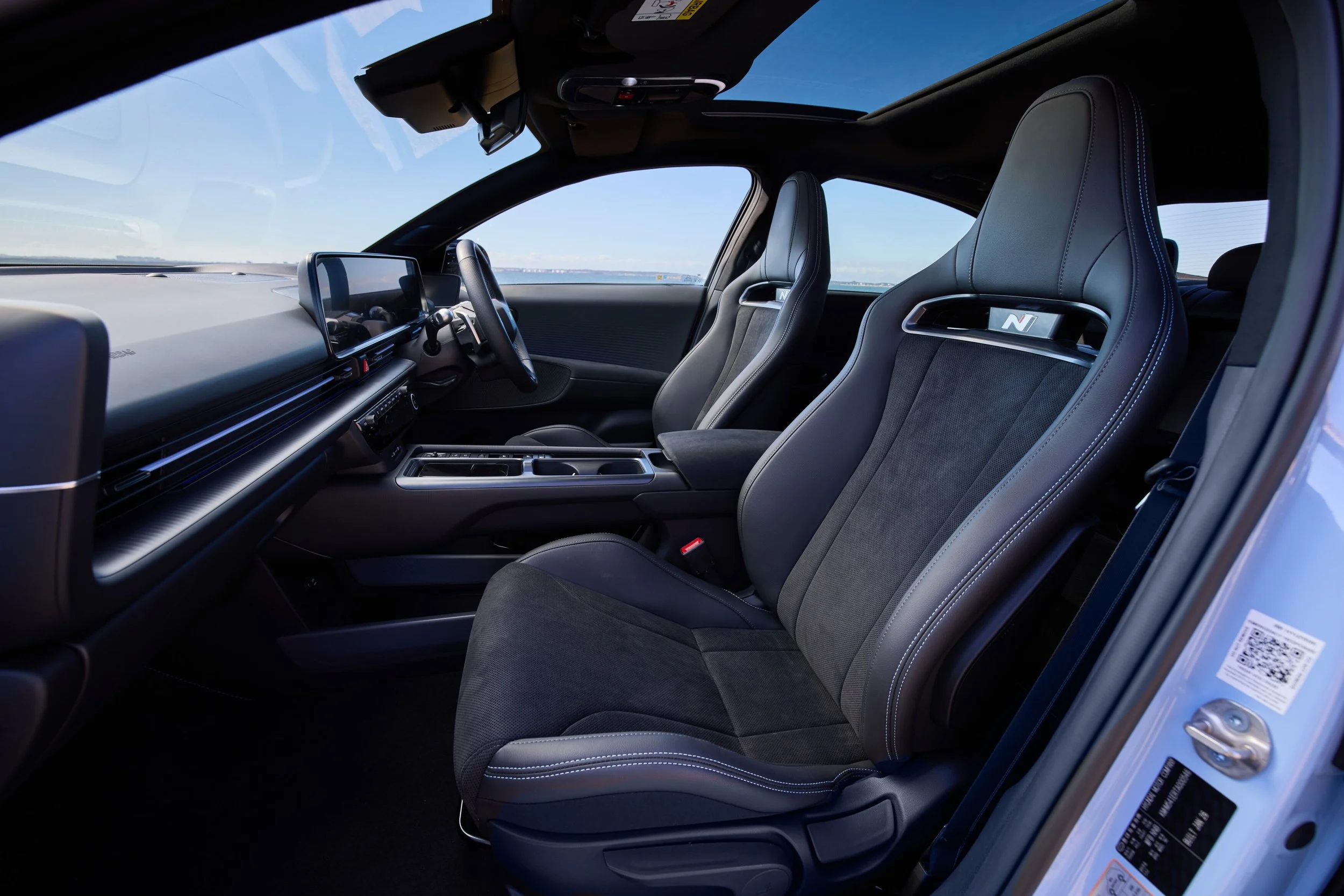
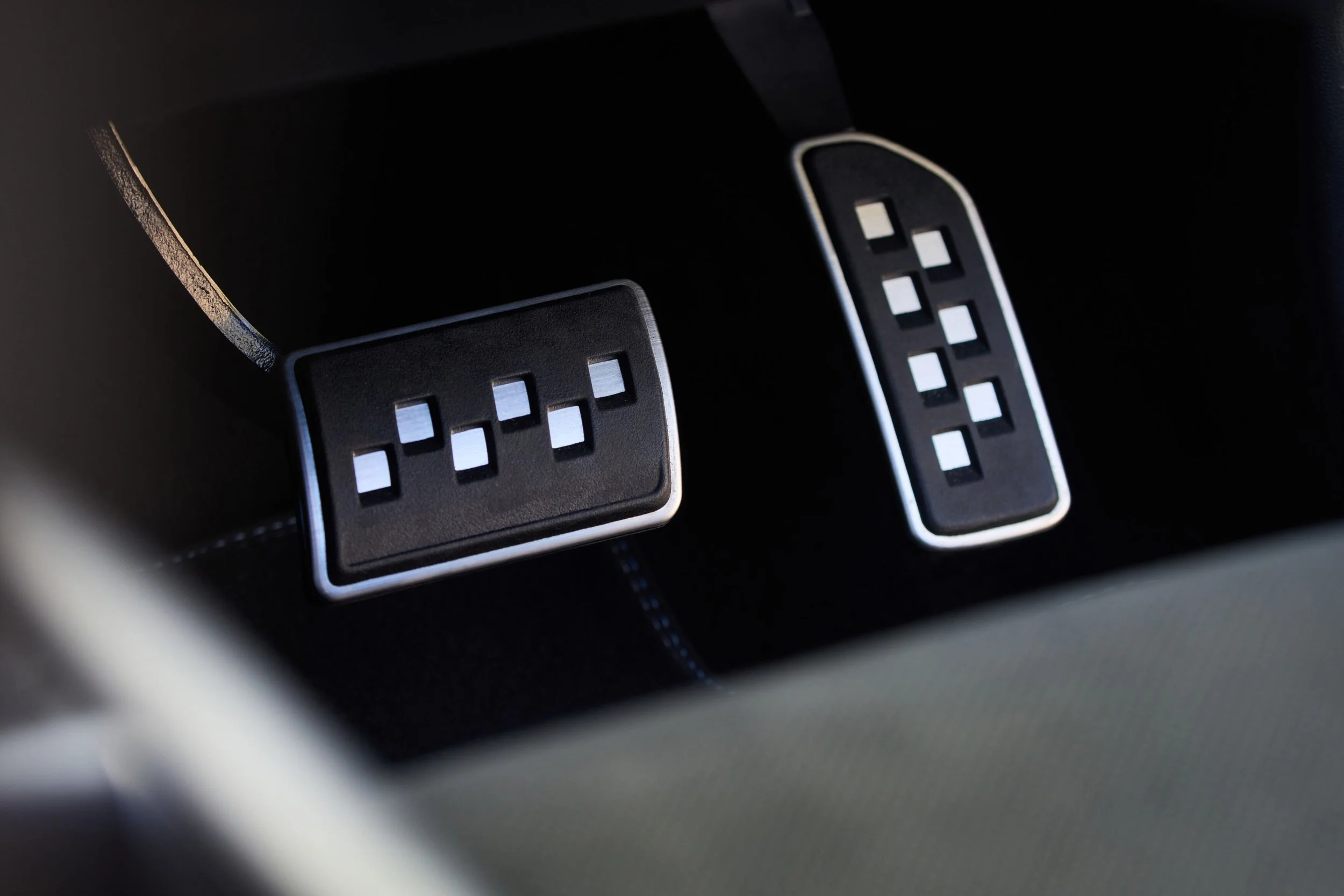
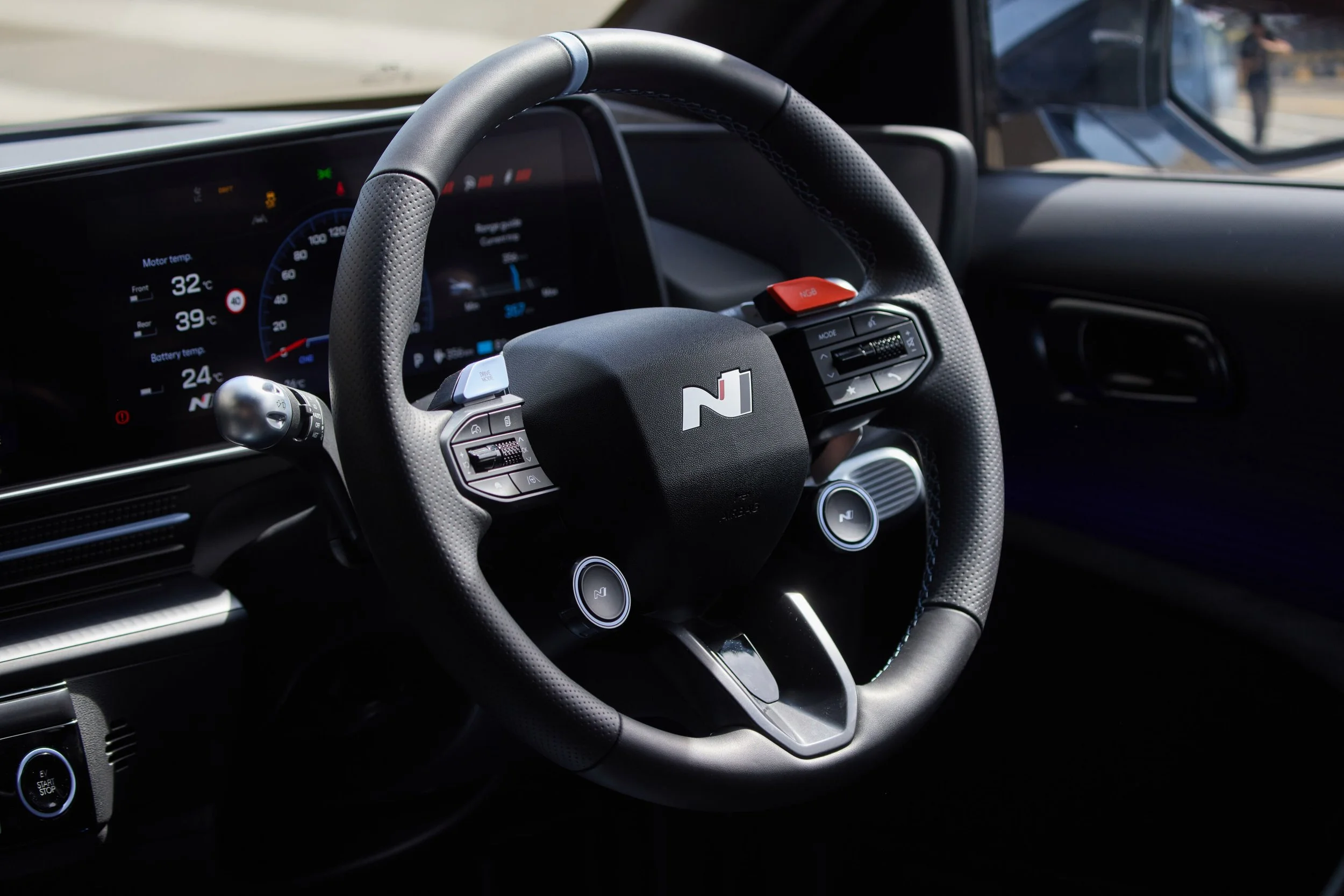
There are deeply bolstered sports seats, an N-specific steering wheel, Alcantara and leather trim, contrasting Performance Blue accents and additional padding around the centre console to support you during enthusiastic cornering.
The seats deserve particular attention.
In a performance car, a supportive seat isn't simply a nice thing to have. It's what allows you to concentrate on driving rather than attempting to prevent yourself from sliding into the passenger seat every time you take a corner.
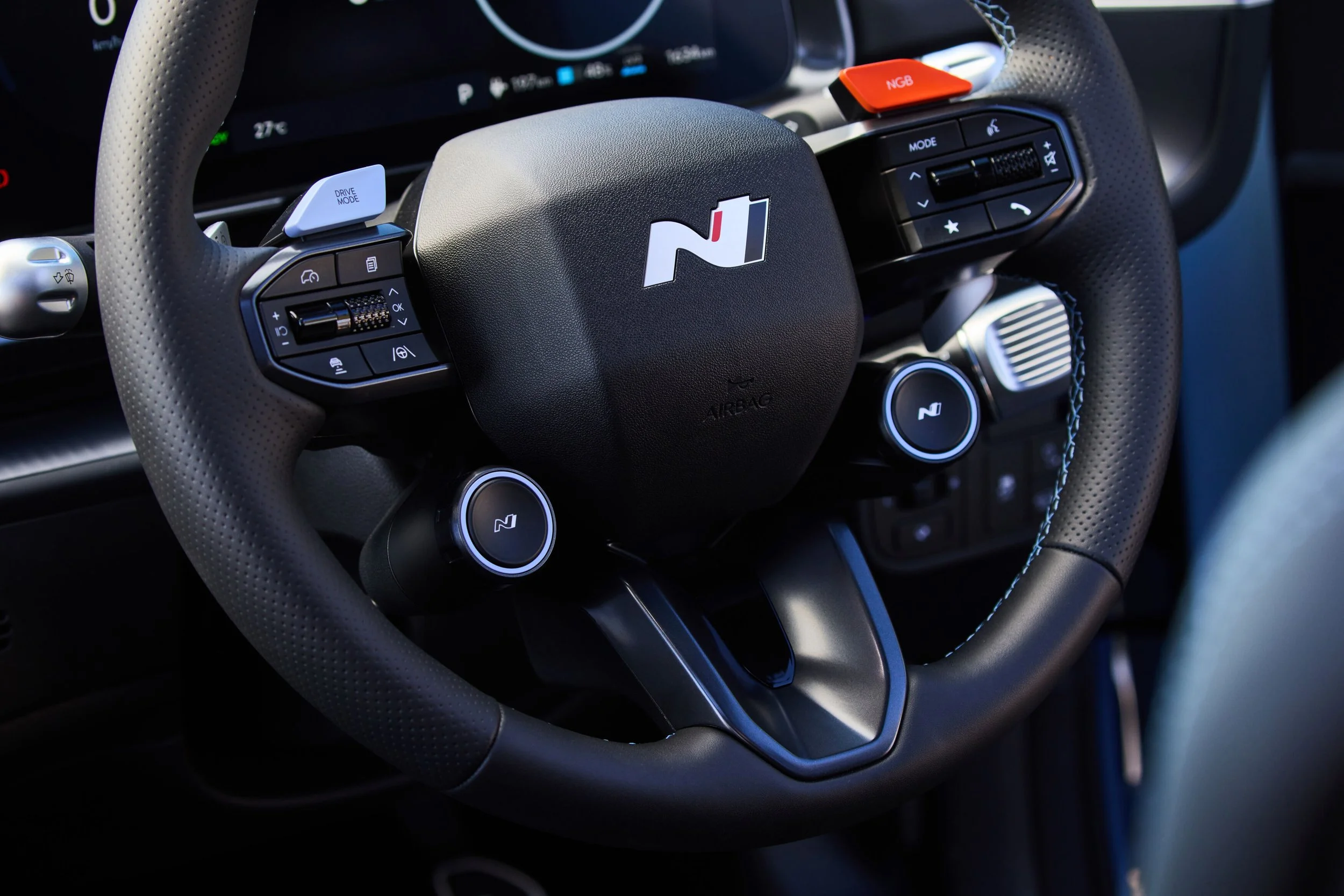
The steering wheel is similarly purposeful.
There are dedicated N buttons allowing you to access custom driving configurations, while the prominent N Grin Boost button gives you instant access to the car's full 478kW output.
It's essentially a button marked make everything considerably more interesting.
Thank you, Hyundai.
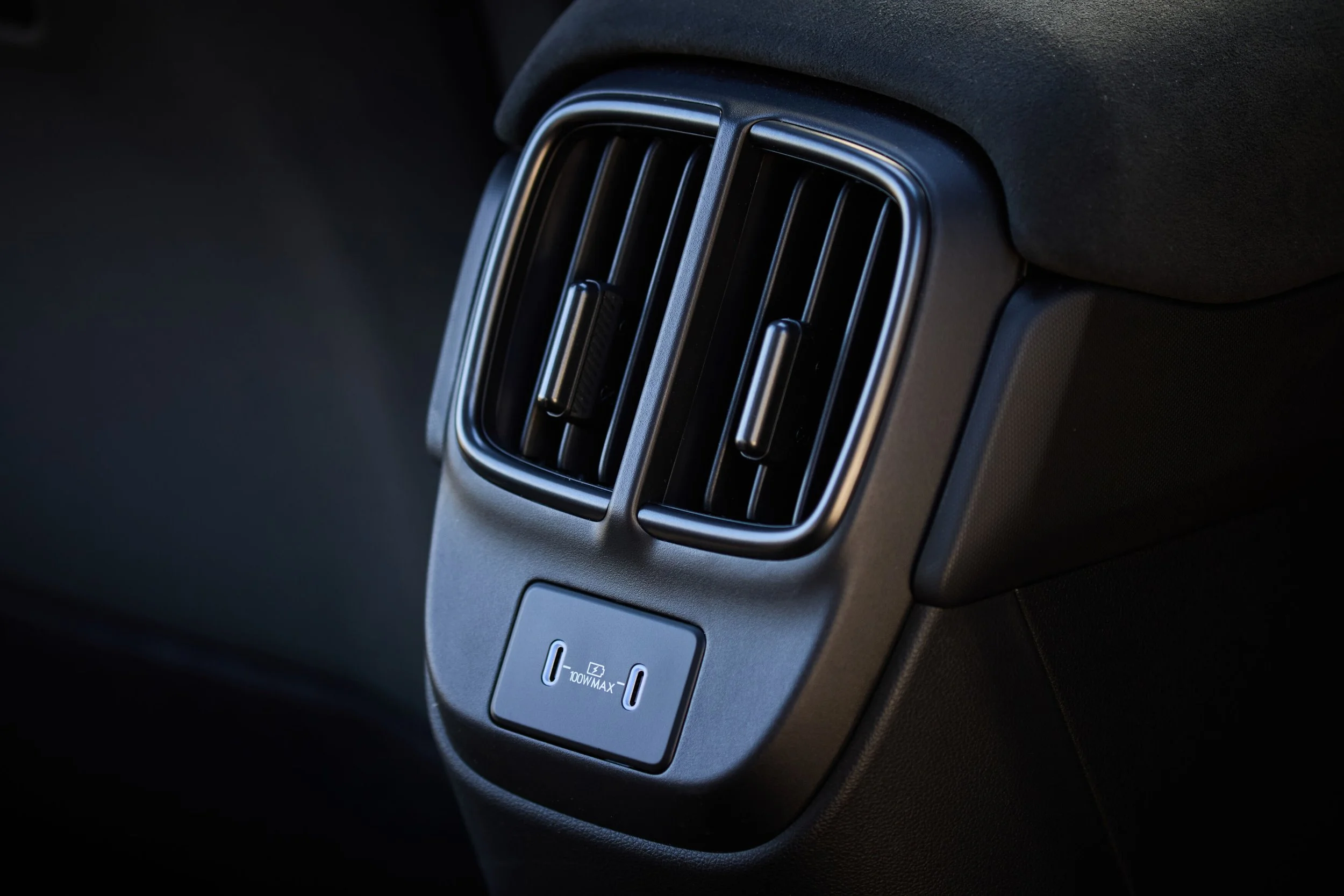
Beyond the performance touches, the cabin remains surprisingly practical.
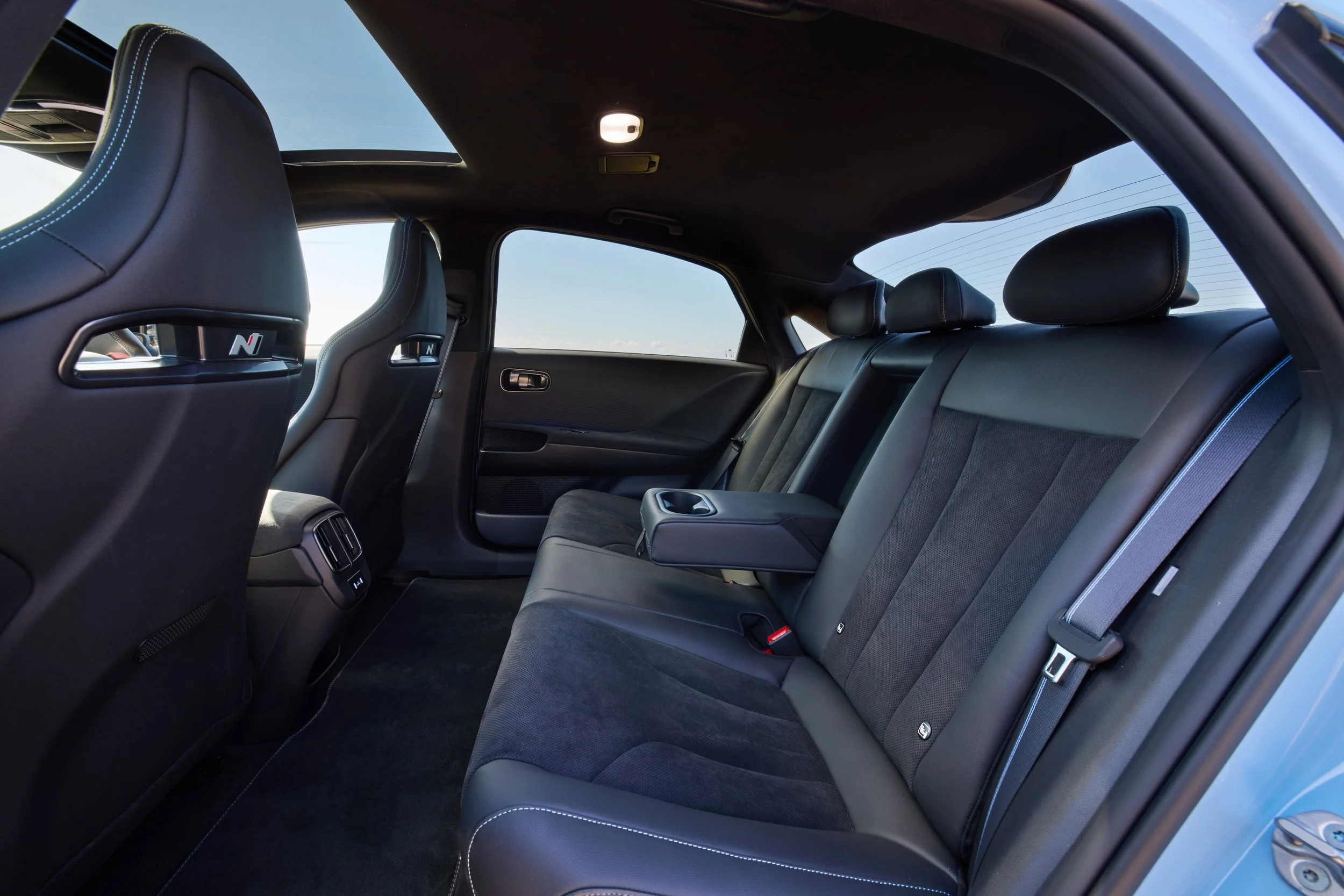
The 2965mm wheelbase provides generous passenger space, particularly in the rear, while the flat EV architecture helps make the most of the available room.
Rear headroom is naturally influenced by that sweeping roofline, and the 371-litre boot isn't particularly generous for a car measuring almost five metres long.
But this is still a genuine five-seat sedan.
You can take passengers.
You can carry luggage.
You can do the school run.
And then, once you've dropped everyone off, you can enjoy the sort of acceleration that would have embarrassed exotic machinery not particularly long ago.
That's a fairly compelling combination.
Infotainment and Technology
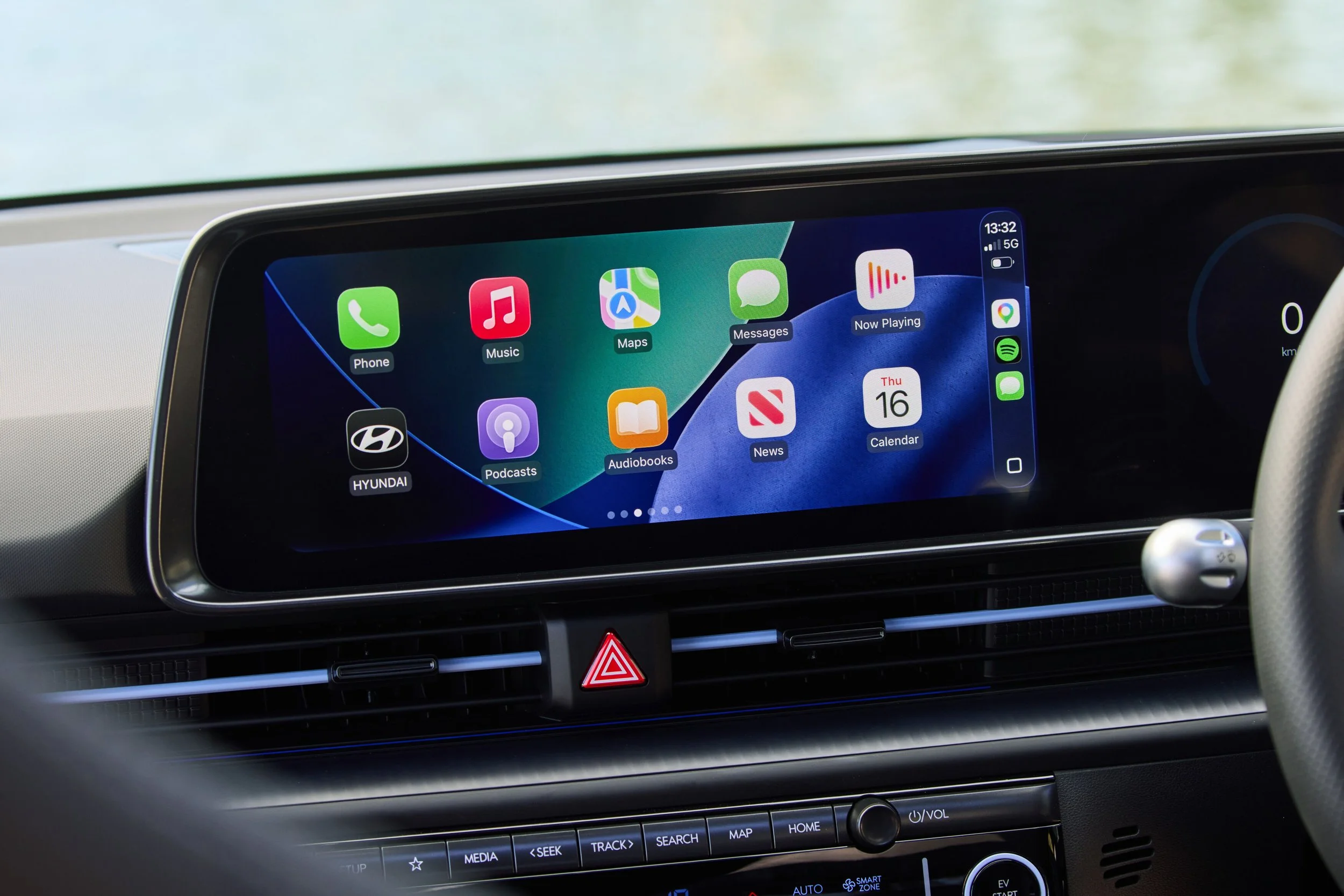
The IONIQ 6 N features Hyundai's familiar dual 12.3-inch display arrangement, combining a digital instrument cluster with a central infotainment touchscreen.
The interface is clear, responsive and generally easy to navigate, while the presence of physical controls for frequently used functions is very welcome.
Because as impressive as enormous touchscreens might look in a showroom, nobody wants to navigate six menus to adjust the air conditioning while driving.
But it's the N-specific technology that transforms the experience.
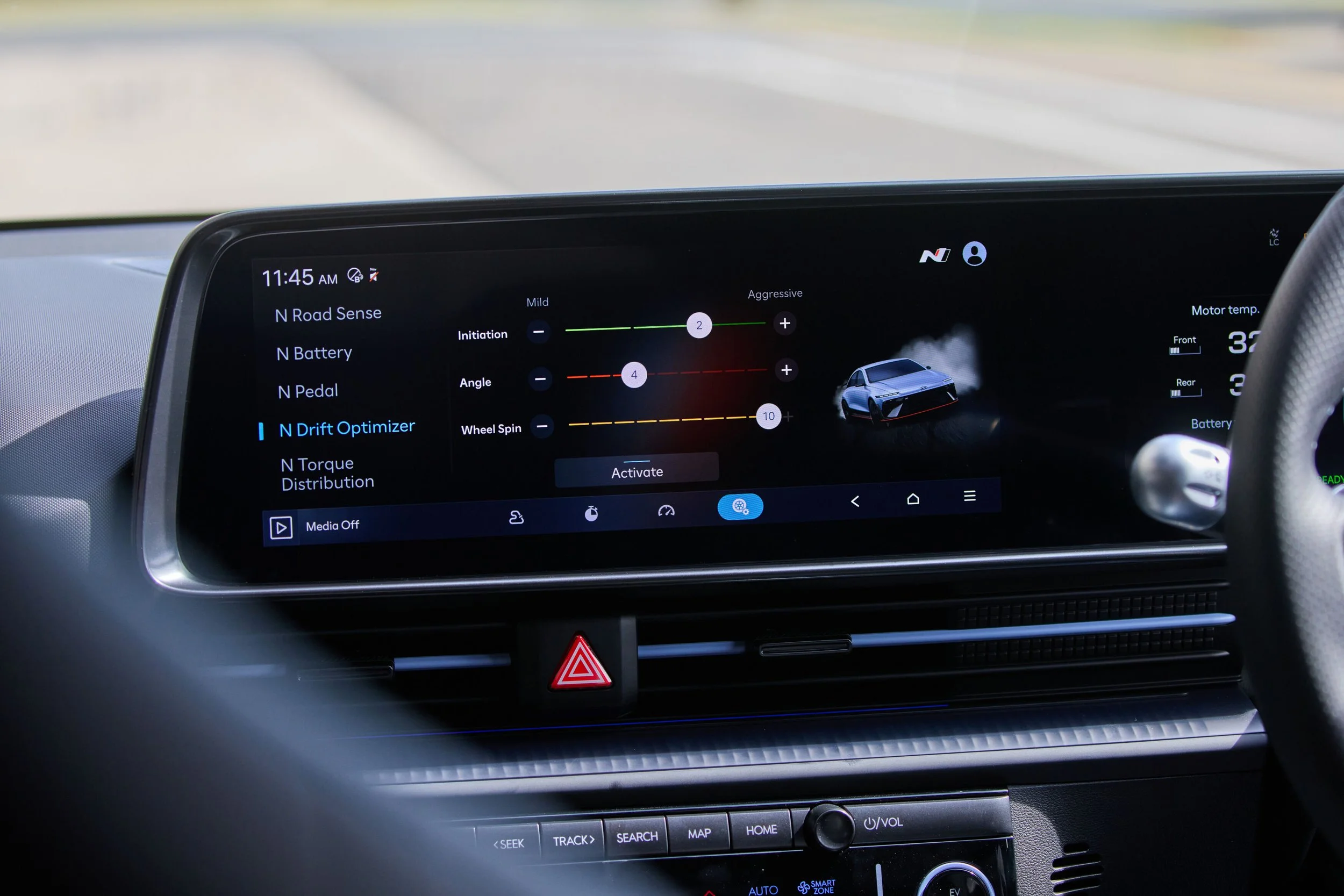
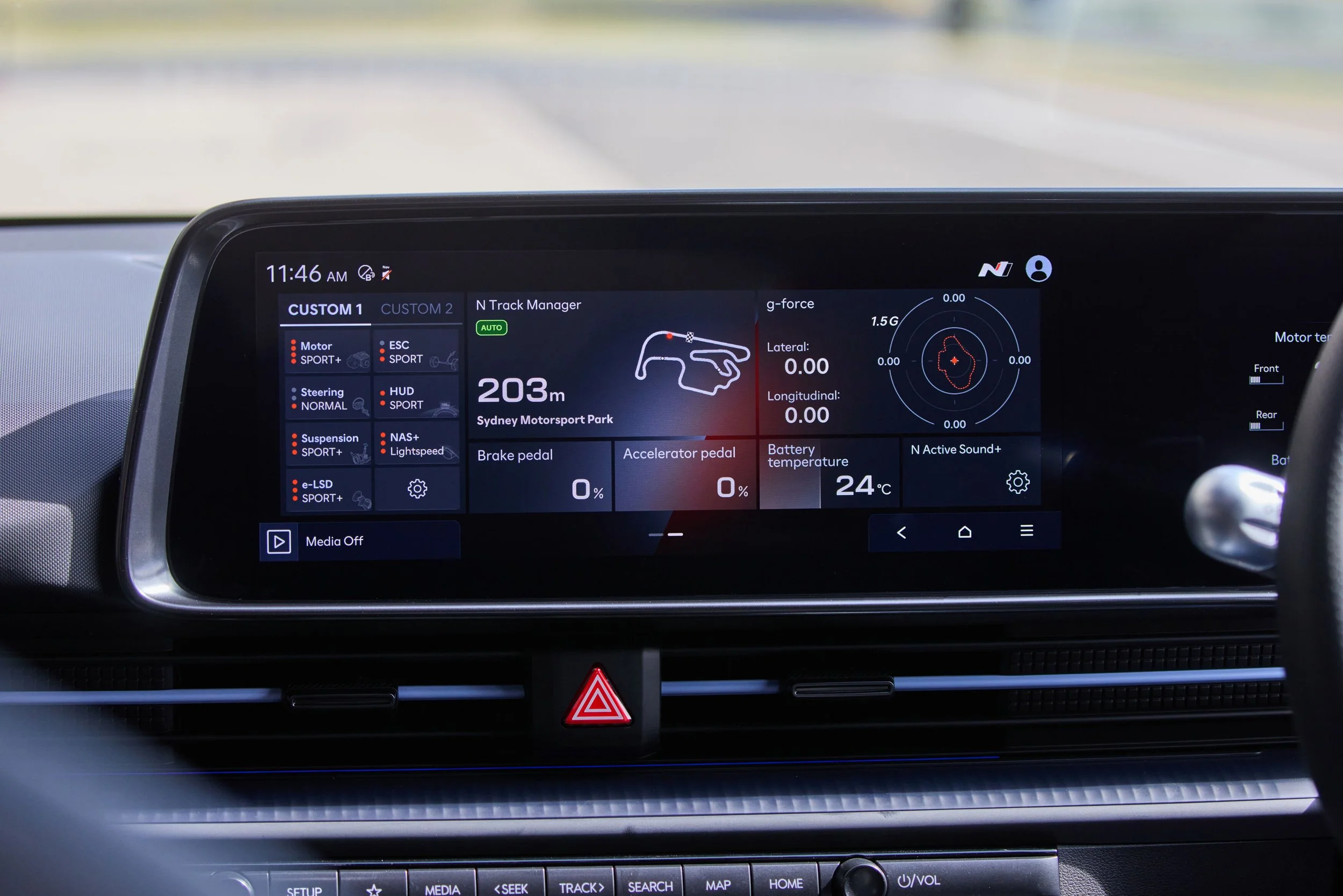
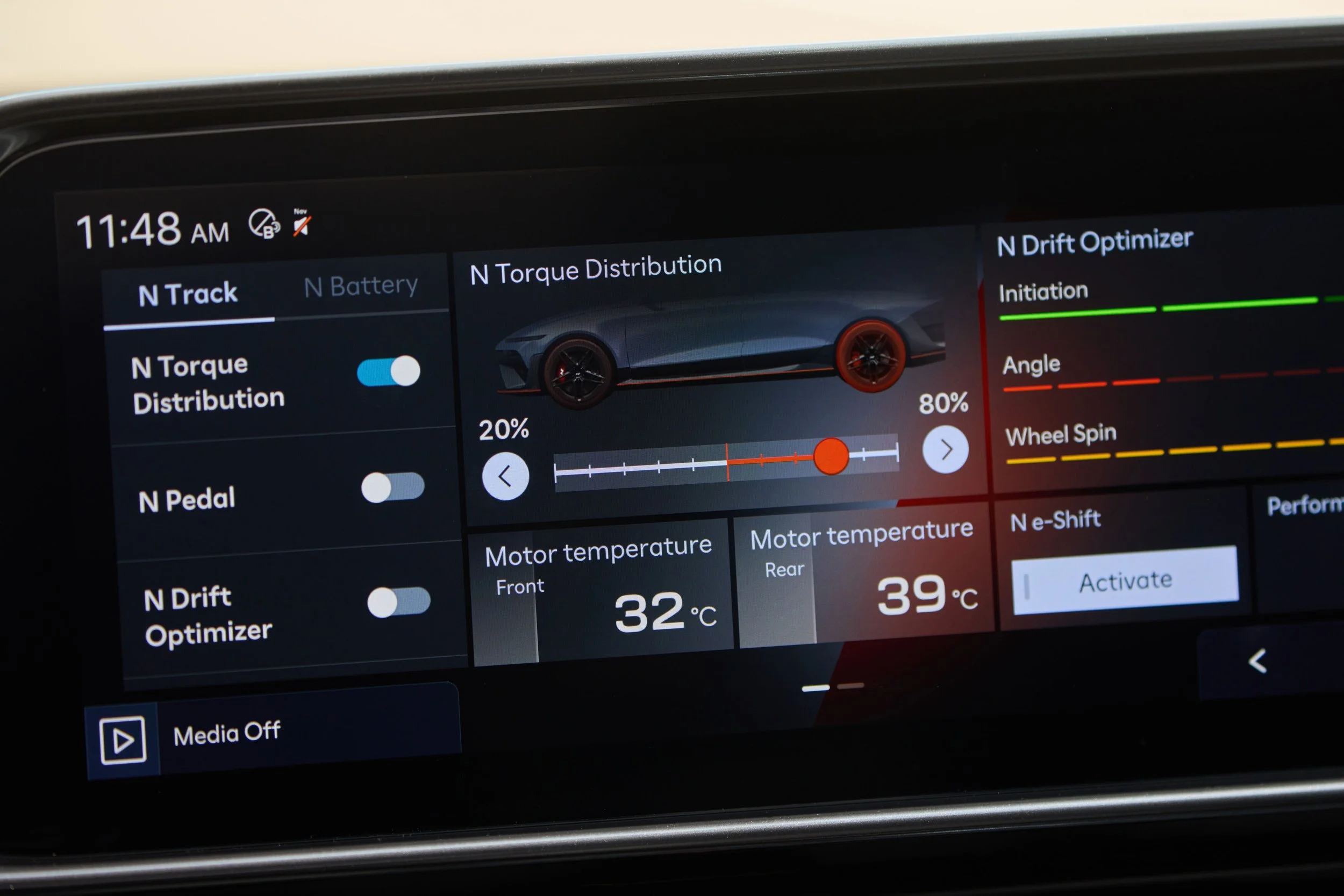
There are customisable driving modes, detailed performance displays, battery temperature management functions and an almost absurd number of ways to tailor the vehicle's behaviour.
Want to adjust the distribution of torque between the front and rear axles?
You can.
Want to alter the way the car responds to braking and cornering?
Absolutely.
Want to simulate a high-performance combustion engine, complete with gear changes and a rev limiter?
Of course you do.
The IONIQ 6 N also introduces N Track Manager, allowing drivers to configure track layouts, review lap performance and compare sessions.
It's the sort of technology that makes it abundantly clear Hyundai expects some owners to do considerably more than commute.
But for all the impressive software, there's one feature that deserves its own section.
Actually, it deserves its own bloody review.
N e-Shift: The Most Ridiculous Brilliant Idea in an Electric Car
Let's talk about the elephant in the room.
Or more accurately, the gearbox that isn't in the room.
Because the IONIQ 6 N doesn't have a conventional multi-speed gearbox.
It doesn't need one.
Electric motors can deliver enormous torque across a broad operating range, and a single-speed reduction gear is more than capable of transferring that power to the wheels.
From an engineering perspective, it's wonderfully efficient.
From an enthusiast's perspective?
Well, sometimes it's a bit boring.
And Hyundai knows it.
So the engineers developed N e-Shift, a system that simulates the behaviour of an eight-speed dual-clutch transmission.
And no, this isn't simply a digital gear indicator changing numbers on a screen.
The system actively alters motor torque delivery to recreate the sensations associated with changing gears.
When you pull a paddle, the car briefly interrupts and reshapes its power delivery.
You feel the shift.
You hear the shift.
You experience the sensation of the drivetrain engaging the next ratio.
There's even a simulated rev limiter.
An actual rev limiter.
In an electric car.
What an utterly ridiculous concept.
And I absolutely love it.
Because suddenly you're not simply pressing the accelerator and waiting for the scenery to arrive.
You're participating.
You're listening to the simulated engine speed, anticipating shifts and using the paddles to control the experience.
And when you combine N e-Shift with Hyundai's N Active Sound+ system, the illusion becomes remarkably convincing.
There are three sound profiles — Ignition, Evolution and Lightspeed — each providing a different character.
Ignition is the one that particularly leans into the traditional performance-car experience, complete with an aggressive combustion-inspired soundtrack.
Is it artificial?
Of course it is.
But so are plenty of the things we already accept in modern performance cars.
Piped-in engine noise.
Electronic exhaust valves.
Artificial steering weight.
Manufactured pops and crackles.
The difference is that Hyundai isn't pretending any of this is real.
It's openly admitting that it's engineering an experience.
And the result is something genuinely entertaining.
My brother's reaction wasn't simply funny.
It demonstrated how effectively the combination of sound, torque modulation and physical feedback can fool your senses.
He knew something felt unusual.
He recognised the lack of turbo lag.
But the rest of the experience was convincing enough to make him question whether the car was actually electric.
That is an extraordinary achievement.
Hyundai has deliberately made its electric car less mechanically efficient in order to make it more emotionally engaging.
And that might be the single most important thing about the IONIQ 6 N.
Performance and Driving Experience
Right.
Let's discuss what happens when you stop playing with the simulated gearbox and ask the IONIQ 6 N to deliver everything it's got.
Because the acceleration is completely absurd.
With N Launch Control activated, Hyundai claims 0–100km/h in 3.2 seconds.
And unlike a turbocharged combustion engine, there's no waiting for boost pressure to build.
No hesitation.
No conventional gear changes.
Just an enormous, immediate wall of torque.
The sensation is violent in a way that's difficult to properly communicate through numbers.
You press the accelerator and the car simply goes.
Not builds speed.
Not gathers momentum.
Goes.
It's the sort of acceleration that causes passengers to reconsider their life choices.
My brother can confirm.
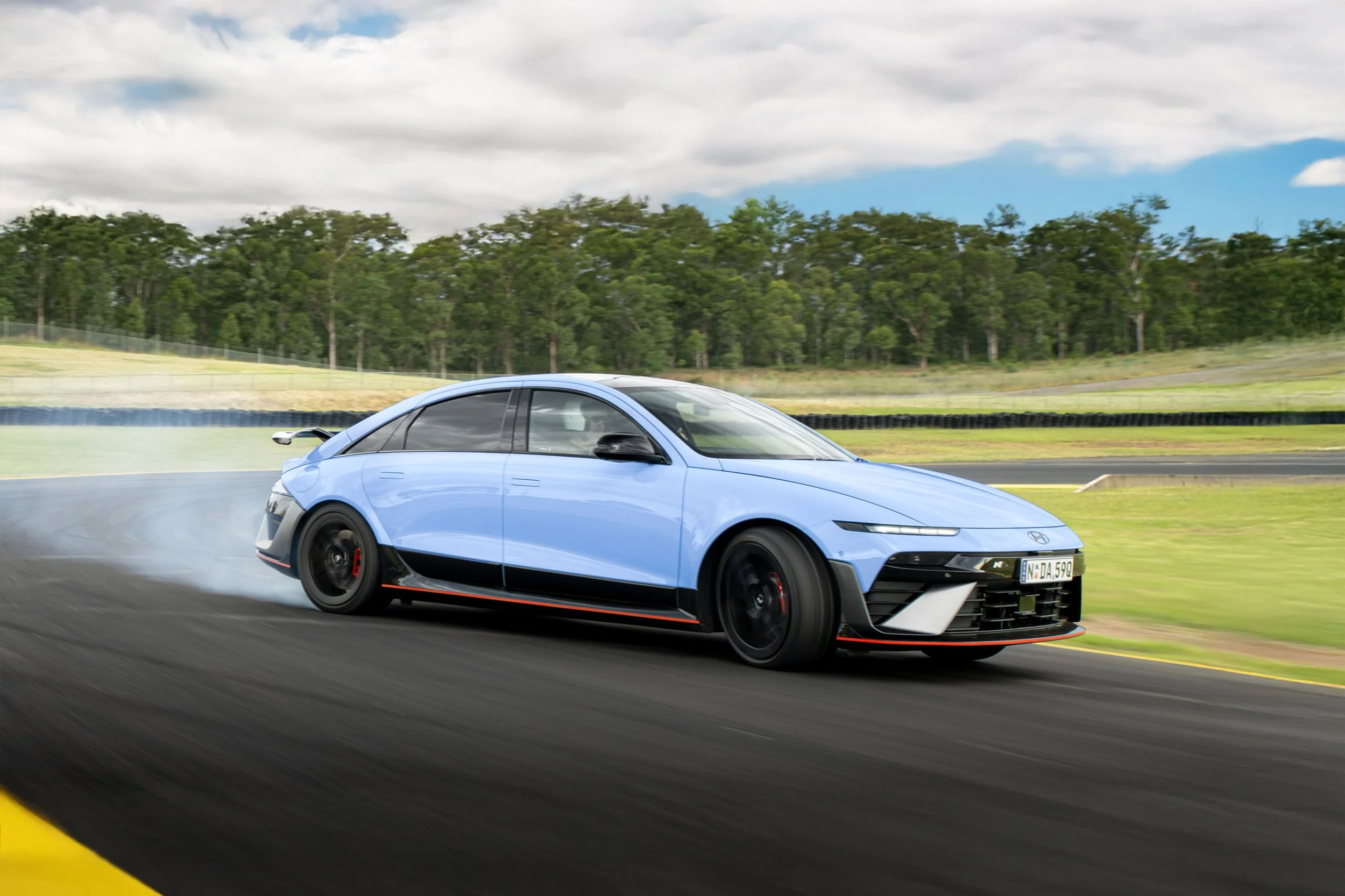
But the truly impressive thing about the IONIQ 6 N is that Hyundai has put considerable effort into ensuring it can do more than accelerate in a straight line.
Because making a powerful electric car isn't particularly difficult anymore.
Making one that handles its weight, communicates with the driver and remains entertaining through a series of corners?
That's a considerably greater challenge.
At more than 2.2 tonnes in Australian tare specification, the IONIQ 6 N is undeniably heavy.
There's no hiding that.
But Hyundai has approached the problem with an extensive chassis development programme.
The suspension geometry has been revised to reduce the roll centre, while stroke-sensing electronically controlled dampers respond to suspension movement and driving conditions.
There's additional structural reinforcement, revised steering calibration, a stiffer rear anti-roll bar and an electronic limited-slip differential to help distribute power effectively.
The result is a car engineered to manage its considerable mass rather than simply overwhelm it with horsepower.
The dual-motor all-wheel-drive system also incorporates N Torque Distribution, allowing the driver to adjust how power is delivered between the front and rear axles.
That gives the IONIQ 6 N a remarkable degree of flexibility.
You can prioritise traction and stability.
Or, in an appropriate controlled environment, you can shift the balance rearward for a considerably more playful character.
And then there's N Pedal, which uses regenerative braking to influence the car's attitude as you approach and negotiate corners.
It's clever technology.
But more importantly, it's technology developed to enhance the driving experience rather than simply produce a better number on a specification sheet.
Braking and Chassis
Stopping a car capable of accelerating this quickly — particularly one weighing more than two tonnes — requires some serious hardware.
Fortunately, Hyundai hasn't been stingy.
Up front are enormous 400mm ventilated brake discs with four-piston monobloc calipers.
At the rear, there are 360mm ventilated discs.
The mechanical braking system works alongside Hyundai's sophisticated regenerative braking technology, which can provide up to 0.6g of deceleration under appropriate conditions.
That means the electric motors can contribute meaningfully to slowing the car, reducing the demands placed on the friction brakes.
And for a performance EV, that's particularly important.
Repeated hard acceleration and braking can generate enormous amounts of heat, especially when you're dealing with this much weight and performance.
Hyundai has also incorporated dedicated battery conditioning and thermal management systems designed to prepare the vehicle for different types of demanding driving.
N Battery Preconditioning includes settings for different performance scenarios, helping manage battery temperature before enthusiastic driving.
It's another example of Hyundai treating this as a genuine performance vehicle rather than a standard EV with a large power output.
And that's a distinction worth making.
The IONIQ 6 N isn't simply designed to deliver one spectacular launch before everything gets too hot.
It's engineered with repeatable performance in mind.
Range, Charging and Everyday Ownership
Of course, eventually you'll stop driving like an overexcited teenager and remember that this is still an electric car.
Which means range and charging matter.
The IONIQ 6 N uses an 84kWh battery, with Hyundai claiming a WLTP driving range of 487km.
Official combined energy consumption is 18.7kWh/100km.
Now, let's be realistic.
If you're regularly exploiting 478kW, enjoying the simulated gearbox and discovering just how entertaining the accelerator pedal can be, you're not going to achieve that figure.
Physics remains stubbornly uninterested in how much fun you're having.
But for everyday driving, a claimed range approaching 500km makes the IONIQ 6 N considerably more practical than its outrageous performance might suggest.
And thanks to Hyundai's 800-volt electrical architecture, charging performance is another strong point.
Under ideal conditions, a compatible 350kW ultra-rapid DC charger can replenish the battery from 10 to 80 per cent in approximately 18 minutes.
That's barely enough time to order a coffee, question the price of a muffin and return to the car.
AC charging is supported at up to 11kW, making overnight charging at home a realistic proposition with appropriate equipment.
Servicing is scheduled every 24 months or 30,000km, whichever comes first.
And while electric cars generally have fewer routine drivetrain maintenance requirements than their combustion counterparts, this is still a high-performance machine.
Those enormous tyres won't be cheap.
Neither will replacing the performance brake hardware when the time eventually comes.
The IONIQ 6 N may be electric, but that doesn't magically make it an inexpensive car to own.
Safety
Beneath all the performance theatre, the IONIQ 6 N remains equipped with Hyundai's extensive SmartSense driver-assistance technology.
The suite includes forward collision-avoidance assistance, lane-keeping and lane-following assistance, blind-spot collision-avoidance assistance and other active safety systems designed to support everyday driving.
There are also eight airbags, along with the structural protection provided by Hyundai's dedicated electric vehicle platform.
But perhaps the most important safety consideration in a car like this isn't the number of sensors or cameras.
It's the performance.
Because 478kW is an enormous amount of power.
And when a car can accelerate from rest to 100km/h in just over three seconds, things happen very quickly.
The IONIQ 6 N may make that performance feel approachable, but it deserves respect.
Particularly when you're enjoying the theatre of simulated gear changes and a soundtrack that encourages you to believe you're driving something considerably more conventional.
It's entertaining.
It's addictive.
And it requires a sensible right foot on public roads.
The Competition
At $115,000 before on-road costs, the IONIQ 6 N finds itself in some rather interesting company.
The most obvious rival is Hyundai's own IONIQ 5 N.
Both share fundamentally similar dual-motor performance hardware, an 84kWh battery and Hyundai's extraordinary suite of N performance technology.
Both are priced at $115,000.
But the personalities are different.
The IONIQ 5 N has the practicality and presence of a high-performance crossover, while the IONIQ 6 N offers a lower, sleeker sedan body and a more focused aerodynamic package.
Then there's the Tesla Model 3 Performance.
It delivers genuinely serious acceleration and electric performance for considerably less money.
On paper, that's a difficult argument for Hyundai.
But the Tesla and Hyundai approach performance from very different directions.
The Tesla is ruthlessly effective.
Minimalist.
Efficient.
Devastatingly quick.
The Hyundai?
The Hyundai wants to entertain you.
It wants you to change gears that don't exist.
It wants you to listen to an engine that isn't there.
It wants you to play with torque distribution, customise the driving experience and become involved in the process.
And for someone who genuinely loves driving, that difference matters.
You could also consider the BMW i4 M50 or M60, depending on model availability and pricing, although the BMW leans more heavily into the premium performance grand-tourer experience.
Then there are the combustion alternatives.
Because at this price point, plenty of enthusiasts will be considering cars like the BMW M2.
And that raises an interesting question.
Would you rather have a genuine combustion-powered performance car, complete with real gear changes and a real soundtrack?
Or an electric car that can convincingly recreate much of that experience while delivering outrageous instant acceleration?
A few years ago, I would've thought the answer was obvious.
After driving the IONIQ 6 N?
I'm not so sure anymore.
Verdict
I've spent years hearing people tell me that electric cars are the future.
They're faster.
They're more efficient.
They're quieter.
They're technologically superior.
And in many respects, they're right.
But I've always thought that argument misses something fundamental about why people love cars.
Because driving enthusiasts don't necessarily want the most efficient way of getting from A to B.
We want character.
We want involvement.
We want the sound of an engine climbing through the rev range, the anticipation of a gear change, the satisfaction of getting a corner just right.
We want something that makes an ordinary drive feel extraordinary.
And for a long time, that's been the problem with performance EVs.
They've been incredibly fast.
But sometimes, not particularly interesting.
The Hyundai IONIQ 6 N changes that conversation.
Not because it has 478kW.
Not because it can accelerate to 100km/h in 3.2 seconds.
And not because it has an enormous rear wing and enough performance technology to keep an engineer occupied for several weeks.
It's because Hyundai has realised that performance isn't simply about numbers.
It's about emotion.
The simulated gearbox is ridiculous.
The artificial engine sounds are ridiculous.
The fact that Hyundai has deliberately programmed interruptions into an otherwise seamless electric drivetrain is, from a purely technical perspective, completely ridiculous.
And yet, sitting behind the wheel, it all makes perfect sense.
Because it makes the car more entertaining.
More involving.
More memorable.
My brother's reaction summed it up better than any specification sheet ever could.
He experienced the acceleration.
He heard the gear changes.
He felt the drivetrain responding.
And when I told him it was electric, he refused to believe me.
That's not merely an amusing anecdote.
That's a manufacturer fundamentally changing someone's perception of what an electric car can be.
And I think that's extraordinary.
For all its technology, all its performance and all its engineering complexity, the IONIQ 6 N succeeds because it does something remarkably simple.
It makes you smile.
Actually, scratch that.
It makes you laugh.
Out loud.
Like an absolute idiot.
And isn't that what a great performance car is supposed to do?
Hyundai hasn't just built another ridiculously fast electric car.
It's built an electric car for people who love cars.
And that might be the most important achievement of all.
Thank you, Hyundai.
Seriously.
Holy Santa Claus shit.