
Sometimes a car surprises you because it's faster than expected.
Sometimes it's more luxurious.
Sometimes somebody gives a completely ordinary family SUV 762Nm and you spend the next week wondering who approved that.
The Mitsubishi Triton Raider surprised me for a completely different reason.
It left me alone.
And I didn't realise how much I'd appreciate that.
Because modern cars are becoming exhausting.
Screens.
Menus.
Driver monitoring.
Lane warnings.
Speed warnings.
Attention warnings.
Seatbelt warnings.
Cameras watching your face.
Computers constantly checking whether your hands are on the steering wheel.
Somewhere along the way, driving a car started to feel like being supervised by an extremely anxious driving instructor.
Then I climbed into the Triton Raider.
Turned the key.
Selected Drive.
And drove away.
And...
That was basically it.
No technological circus.
No enormous screen demanding my attention.
No need to spend ten minutes configuring seventeen different vehicle settings before leaving the car park.
It just got on with the job.
And I liked it.
A lot more than I expected to.
What Is the Raider?
The Raider sits above the Triton GSR and represents Mitsubishi's locally developed answer to the growing collection of factory-backed, off-road-focused dual-cabs.
But this isn't simply a Triton with some decals and a set of chunky tyres.
Mitsubishi worked with Australian engineering firm Premcar to develop the Raider specifically for local conditions.
And Premcar knows this game rather well.
The company has already spent years developing Australian-market off-road vehicles, and the Raider receives a collection of meaningful changes rather than cosmetic theatre.
There are specially tuned Monroe dampers.
The front is lifted by 25mm, while the rear comes up 15mm.
The track is widened by 20mm.
There are 18-inch ROH Assault wheels wrapped in Bridgestone Dueler A/T 002 all-terrain tyres.
Additional underbody protection.
Side protection bars.
A sports bar.
And, yes, some Raider graphics.
Because apparently modifying a dual-cab ute without putting stickers on it remains illegal in Australia.
The important thing, though?
Premcar didn't simply bolt this stuff on and send it.
The Raider underwent around 40,000km of local development and durability testing.
That's the bit I care about.
Price and Specifications
The Raider arrives at $74,990 drive-away, positioning it above the regular GSR while still undercutting some of the other locally enhanced off-road utes.
Under the bonnet is Mitsubishi's familiar 2.4-litre twin-turbocharged four-cylinder diesel, producing 150kW and 470Nm.
It's paired with a six-speed automatic transmission and Mitsubishi's excellent Super Select II four-wheel-drive system.
No additional power for the Raider.
And initially, part of me thought:
Really?
You've gone to all this effort.
Suspension.
Tyres.
Lift.
Protection.
Development.
Surely we could've found another 20kW somewhere?
But then you drive it.
And while more power would certainly be welcome, you realise that's not really what this vehicle is about.
The Raider isn't supposed to be a Raptor.
It's supposed to be a better Triton.
There's a difference.
Design
The latest Triton already has quite an aggressive face.
The Raider builds on it without going completely overboard.
The bronze 18-inch ROH wheels look excellent.
The all-terrain tyres fill the guards properly.
The increased ride height gives the vehicle a more purposeful stance.
There's a sports bar out back.
Additional protection down the sides.
And underneath, a Raider-branded bash plate provides a flash of red.
Then there are the graphics.
Mitsubishi describes them as Ralliart-inspired.
Fair enough.
They're not exactly subtle.
But neither is a lifted dual-cab on bronze wheels.
The overall package works.
Most importantly, it looks like the changes serve a purpose.
The wheels aren't enormous because somebody in marketing thought 22s would photograph well.
The tyres aren't low-profile.
The suspension hasn't been lowered.
Nothing here compromises the actual reason the vehicle exists.
Imagine that.
Thank you, Mitsubishi.
Interior
Climb inside and this is where some people are going to start criticising the Triton.
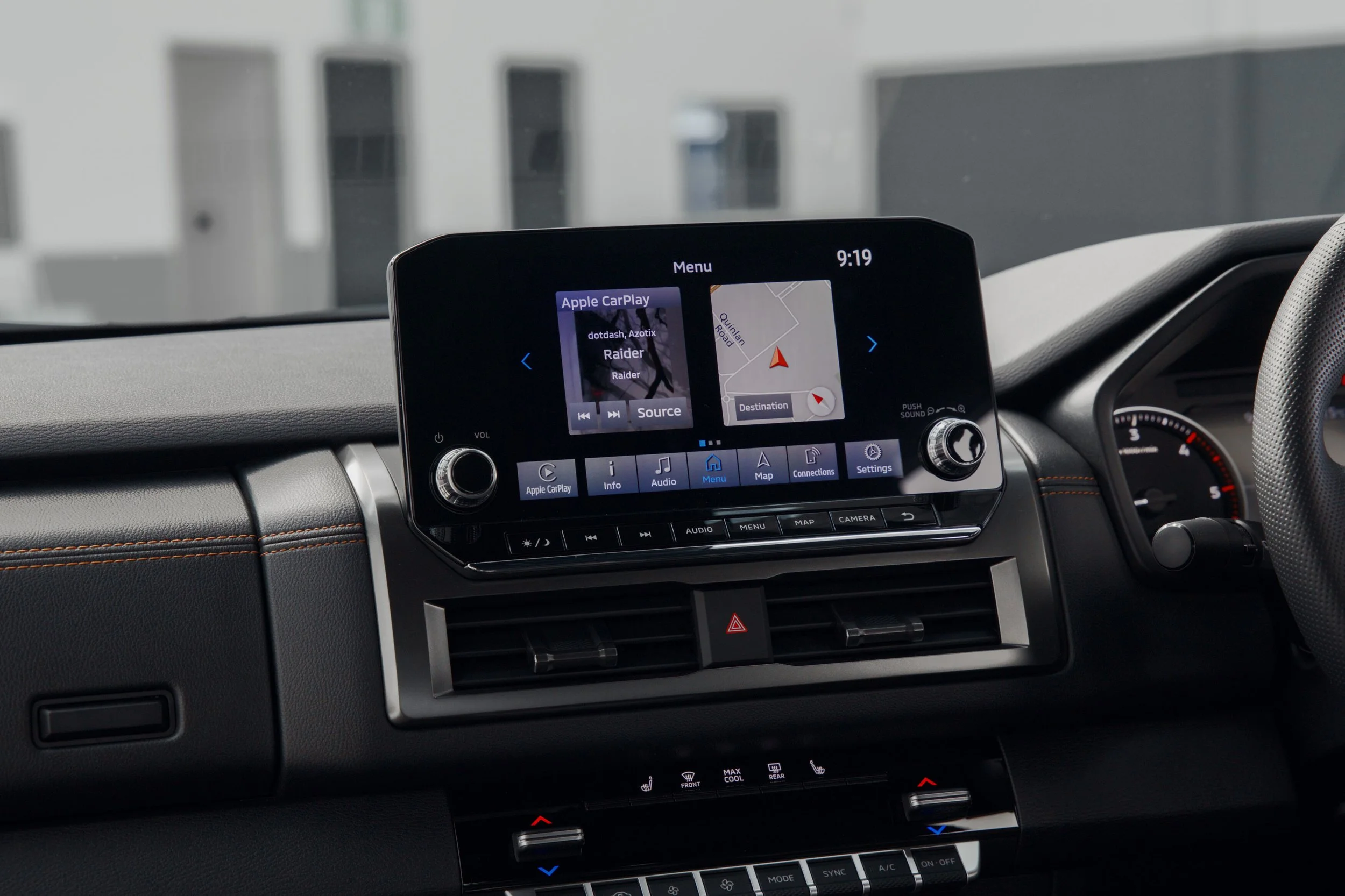
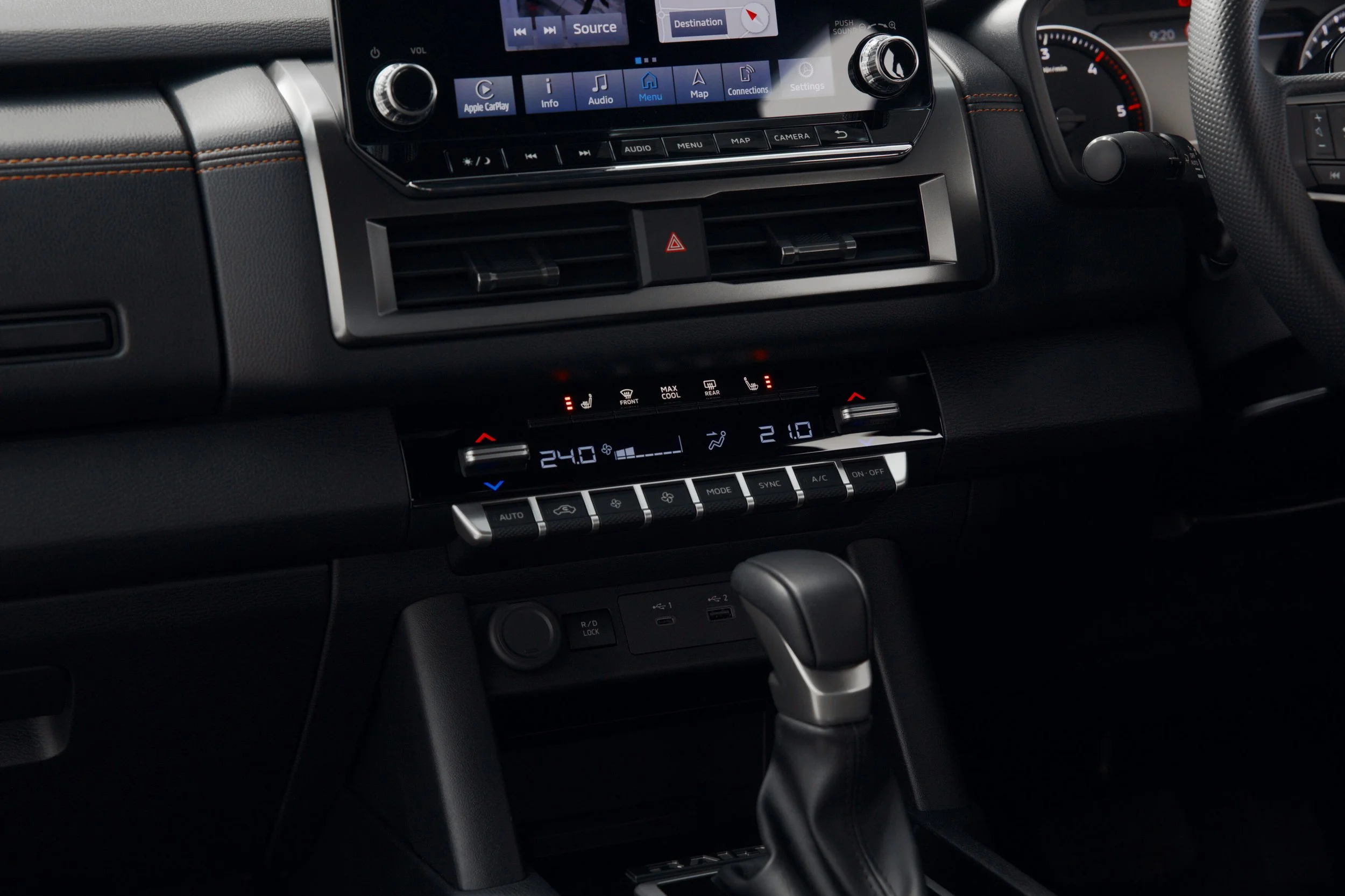
The infotainment screen is only 9.0 inches.
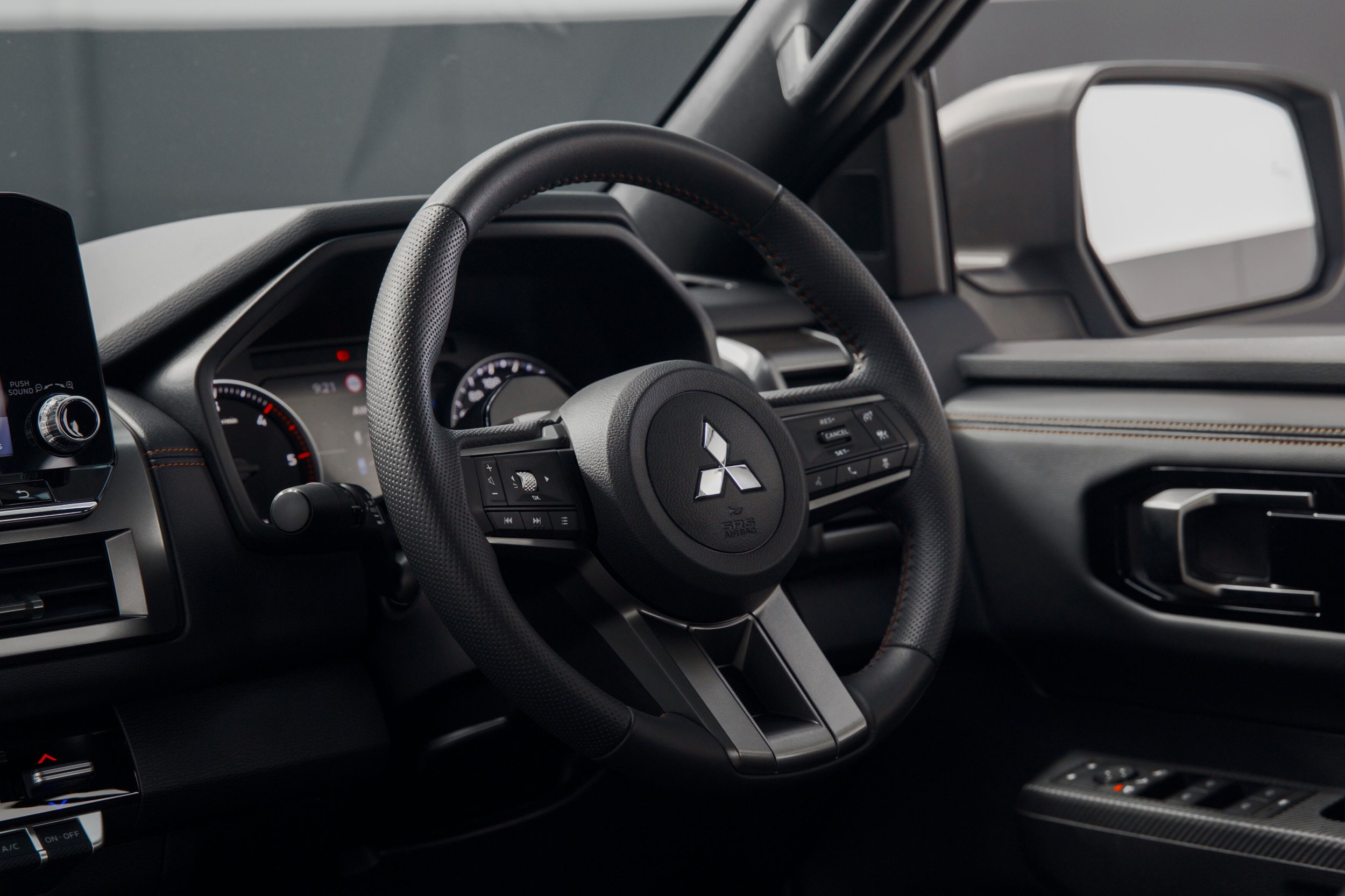
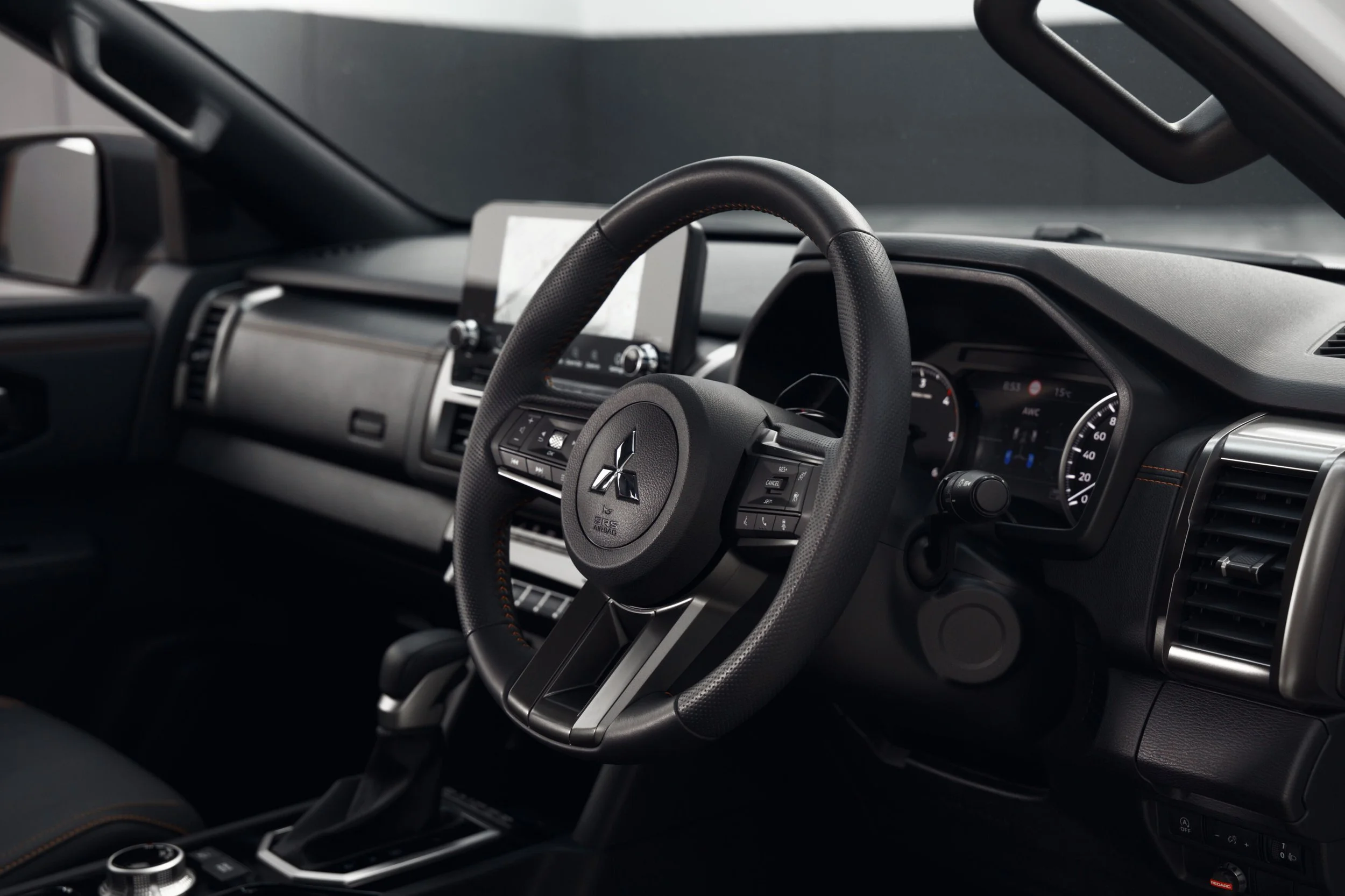
There are traditional analogue gauges surrounding a relatively modest digital display.
There are buttons everywhere.
Physical climate controls.
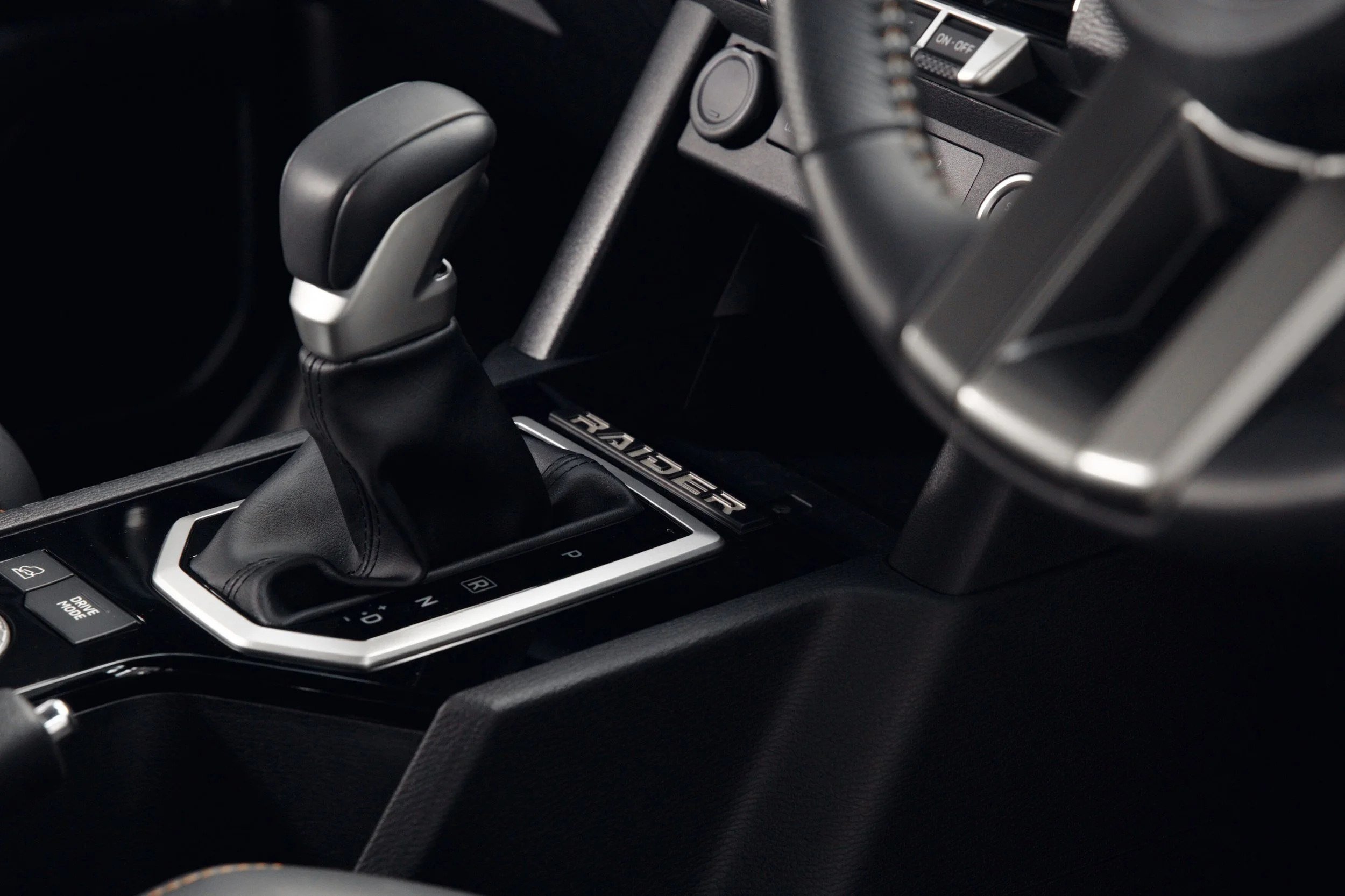
A conventional gear selector.
A rotary 4WD selector.
A button for the rear differential lock.
It doesn't look particularly futuristic.
And do you know what?
Good.
I loved it.
Because everything is where you expect it to be.
Want to change the temperature?
There's the control.
Want to adjust the fan?
There.
Want to select a different four-wheel-drive mode?
Turn the dial.
Want the rear differential lock?
Press the button.
Done.
No menus.
No swiping.
No hunting through an off-road app while the vehicle is sitting halfway up an obstacle.
Just controls.
You press them.
Things happen.
Thank you, Mitsubishi.
The Screen
And can we talk about the fact that a 9.0-inch infotainment screen now seems small?
When did that happen?
There was a time when having any screen in a ute felt luxurious.
Now we've got vehicles with displays large enough to host a PowerPoint presentation.
The Triton's screen looks almost quaint by comparison.
But here's the thing:
It works.
It has wireless Apple CarPlay.
Yes, Leapmotor.
I noticed.
It has Android Auto.
Satellite navigation.
Bluetooth.
And there are physical shortcut controls around it.
It doesn't dominate the dashboard.
It doesn't attempt to become the entire personality of the vehicle.
It's just...
A screen.
What a refreshing concept.
Simplicity
This was the thing that stayed with me.
The Triton Raider doesn't constantly remind you how technologically advanced it is.
And after driving so many modern cars that do exactly that, I found the experience strangely relaxing.
Get in.
Start it.
Drive.
There's still plenty of safety technology underneath.
Adaptive cruise.
Autonomous emergency braking.
Blind-spot monitoring.
Lane assistance.
Surround-view cameras.
All the modern necessities are there.
But the fundamental experience feels comparatively analogue.
And I think we've reached the point where that's becoming a luxury in itself.
Technology should help you.
It shouldn't constantly demand that you acknowledge its existence.
The Raider mostly understands that.
Mostly.
The Driver Monitoring System
I say mostly because there is one exception.
The driver monitoring system.
It's still a little too enthusiastic.
Look away for slightly too long and the Triton wants to discuss it.
Mitsubishi has apparently reduced its sensitivity, and importantly, it now takes only a couple of button presses to disable it.
So credit where it's due.
But given how much I enjoyed the rest of the Raider simply letting me drive...
This particular system feels slightly out of character.
Calm down.
I'm looking at the road.
We're okay.
Driving
The 2.4-litre diesel isn't a powerhouse.
150kW.
470Nm.
Perfectly respectable.
Not exciting.
Put your foot down and there is a moment where you might wish Premcar had been allowed to visit the engine bay with a laptop.
But the performance is adequate.
And the six-speed automatic generally gets on with things without drawing attention to itself.
There's enough torque down low.
Overtaking requires some planning but isn't difficult.
Highway cruising is relaxed.
Again:
It just does what you ask.
But the Raider starts separating itself from the regular Triton when the road gets rougher.
Premcar's Work
This is the clever bit.
The Raider doesn't feel like somebody simply installed a lift kit.
Premcar has actually tuned the suspension package around the vehicle.
The bespoke Monroe dampers improve body control while retaining enough compliance for everyday driving.
There's additional ride height.
The wider track helps stability.
And the Bridgestone all-terrain tyres provide considerably more off-road ability than the standard road-biased rubber.
Yet none of those changes ruin the vehicle on the road.
That's important.
Because it's easy to make a ute better off road.
Fit enormous tyres.
Lift it six inches.
Install extremely aggressive suspension.
Congratulations.
You've created something that's awful for the other 95 per cent of its life.
The Raider doesn't do that.
It's still a perfectly usable daily driver.
Just a more capable one.
That's good engineering.
Thank you, Premcar.
Off Road
And when the bitumen ends, everything starts making even more sense.
The Raider has 243mm of ground clearance, with an approach angle of 32.7 degrees, departure angle of 24.1 degrees and breakover angle of 24.8 degrees.
Then there's Super Select II.
This remains one of Mitsubishi's strongest assets.
Unlike many traditional part-time 4WD systems, Super Select II gives you the ability to run four-wheel drive on sealed surfaces through its centre differential.
That means you've got the flexibility of rear-wheel drive when you want it and all-wheel-drive security when conditions deteriorate.
Then when things become properly difficult?
Low range.
Terrain modes.
Rear differential lock.
Actual off-road hardware.
Again, no enormous animated graphic showing a digital ute climbing a mountain.
Turn the dial.
Press the button.
Drive up the actual mountain.
Perfect.
The Tyres
The Bridgestone Dueler A/T 002s deserve mention because tyres can completely change a vehicle like this.
And they're properly useful here.
More aggressive than highway rubber without turning every motorway journey into a soundtrack of tyre roar.
There's considerably more bite on loose surfaces.
Mud.
Gravel.
Sand.
Rocky climbs.
That's where they earn their place.
They're also 285/60 R18s, giving you a healthy amount of sidewall rather than an enormous wheel surrounded by a decorative strip of rubber.
Because this is an off-road vehicle.
Sidewall is useful.
Thank you.
Towing and Payload
The Raider retains a 3,500kg braked towing capacity and carries a 990kg payload.
That's important because off-road specials sometimes become so heavy with accessories that their useful payload begins disappearing.
Here, the Raider loses only around 40kg compared with the regular GSR.
Still, as always, the 3.5-tonne number shouldn't be viewed in isolation.
Passengers.
Tow-ball download.
Accessories.
Gear.
GVM.
GCM.
It all matters.
But as a touring platform, the basic numbers stack up well.
Comfort
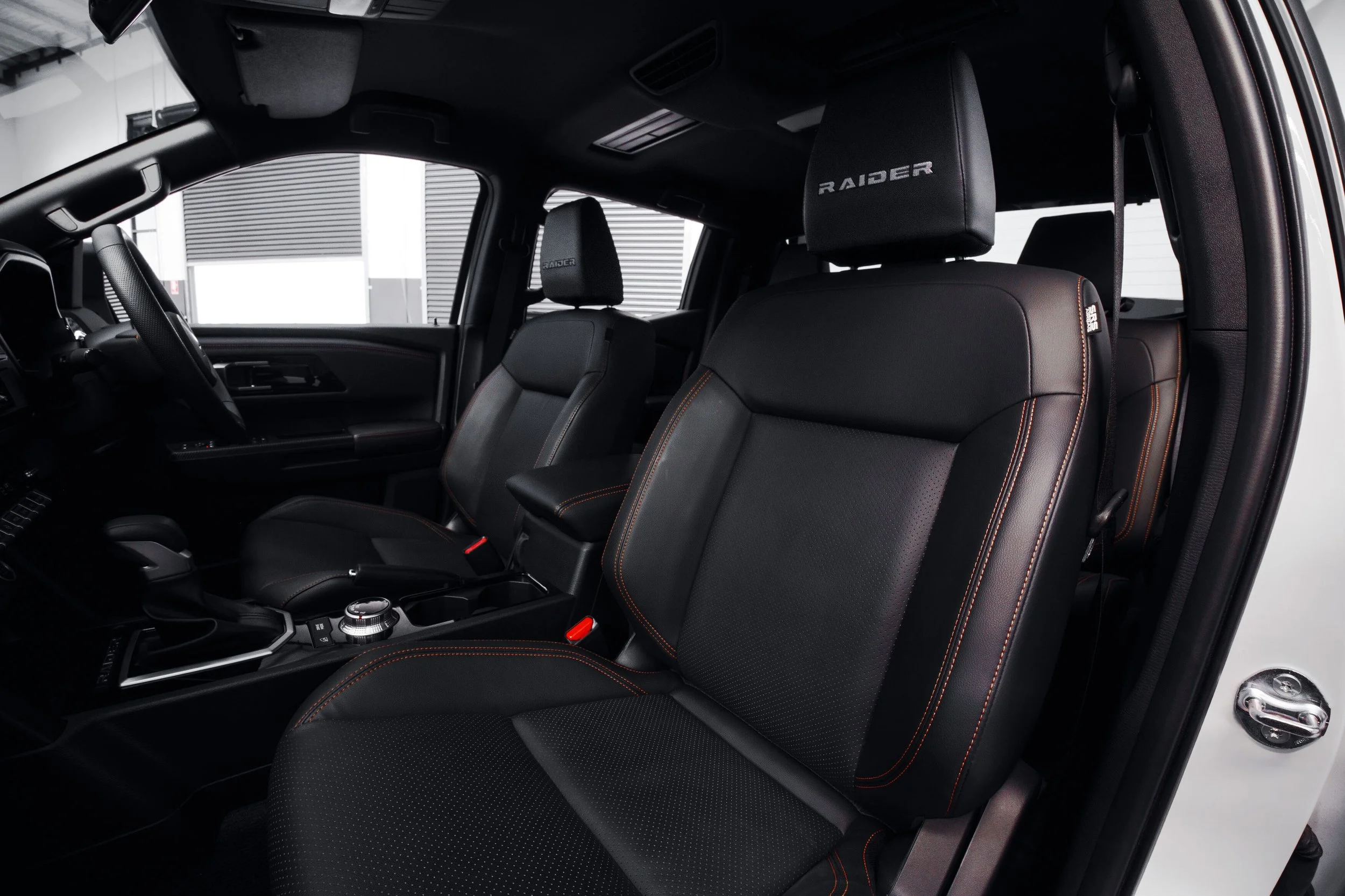
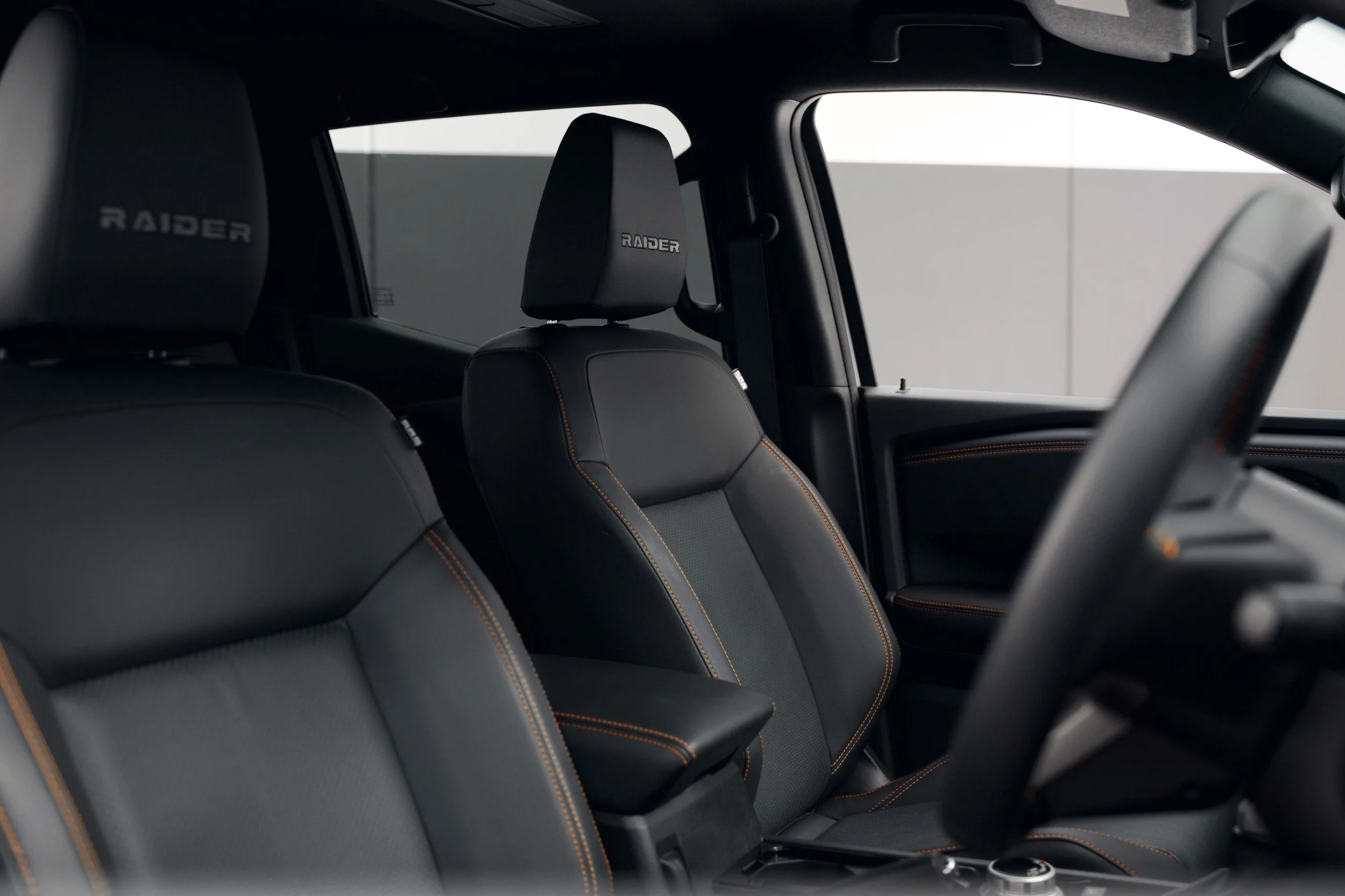
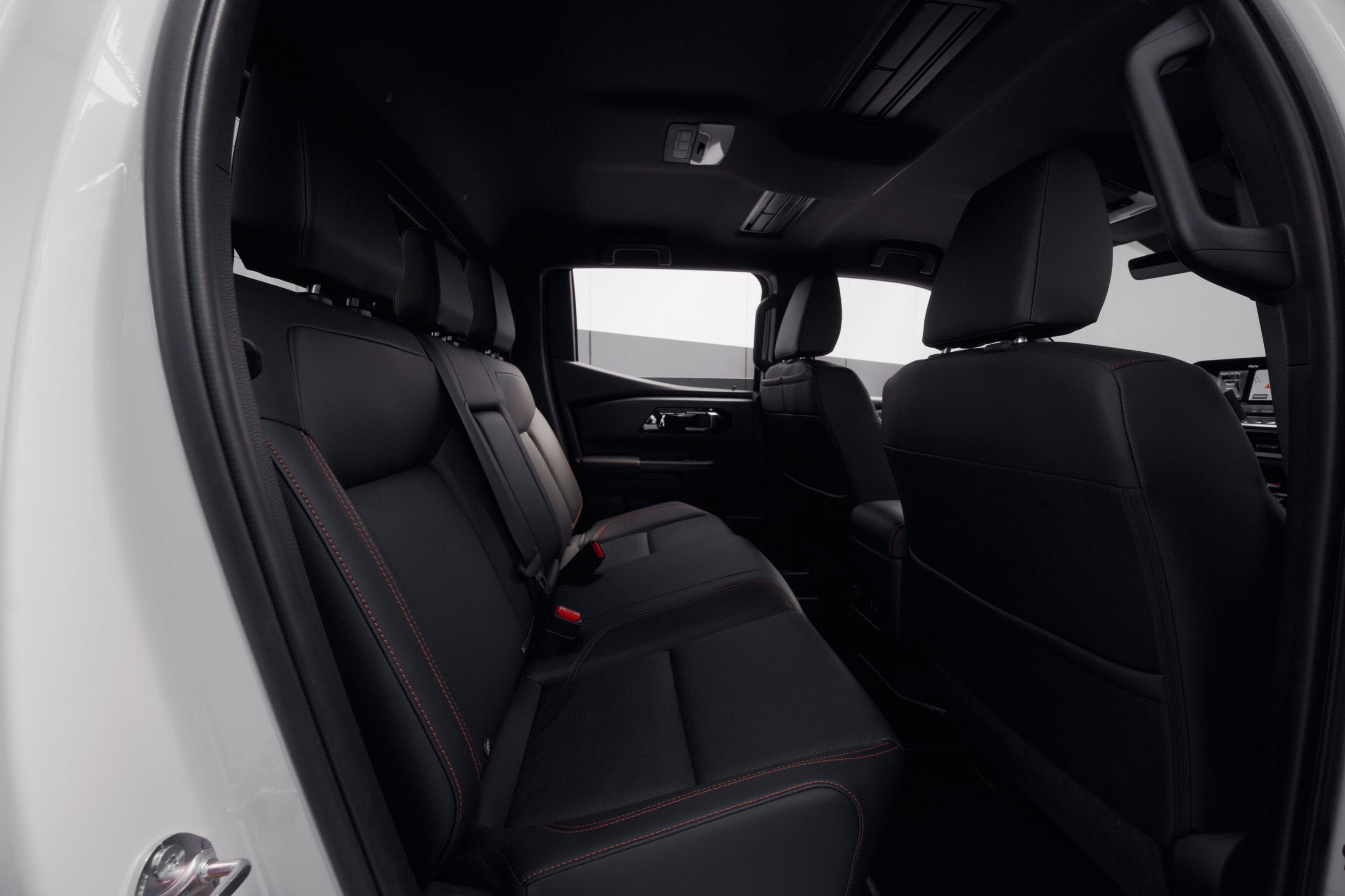
The GSR-based cabin means the Raider gets leather-appointed seats, heating up front and power adjustment for the driver.
Would ventilated seats be nice?
Absolutely.
We've become spoiled.
But the seats themselves are comfortable and supportive.
There's good room in the second row.
Roof-mounted rear air vents are particularly welcome in Australia.
And the cabin feels like it could survive being used as an actual ute.
There's hard plastic.
Quite a lot of it.
Normally that's something reviewers criticise.
But I'm not sure I want the lower half of a 4WD ute interior covered in cream Alcantara.
Mud exists.
Children exist.
Work boots exist.
Sometimes wipe-clean plastic is exactly the correct material.
On the Road
Perhaps the biggest surprise is how well the Raider behaves on sealed roads.
The increased ride height doesn't result in enormous amounts of body roll.
The steering feels nicely weighted.
And Premcar's suspension changes keep the body controlled without making the ride unnecessarily harsh.
You still know you're driving a ladder-frame ute.
Obviously.
There's some movement over bumps.
The rear end reminds you there's a tray back there.
Nobody is going to confuse it with a 5 Series.
But there's an honesty to the way it drives.
It isn't pretending to be an SUV.
It's a ute.
A good one.
Technology Without the Circus
And I keep coming back to this.
Because the Raider has technology.
Plenty of it.
It just doesn't make technology the experience.
That's a distinction I think manufacturers are starting to lose.
A vehicle doesn't become better simply because the screen gets larger.
It doesn't become safer because it beeps more often.
It doesn't become more advanced because a physical button has been replaced with an animated icon.
Sometimes the better solution is the simple one.
A knob.
A switch.
A button.
Something you can operate while keeping your eyes outside the vehicle.
Especially in a ute designed to go off road.
The Raider reminded me how nice that can be.
Safety
The Triton carries a five-star ANCAP rating from its 2024 testing, scoring 86 per cent for adult occupant protection and 89 per cent for child occupant protection.
Eight airbags are fitted, alongside autonomous emergency braking, adaptive cruise control, blind-spot monitoring, lane-keeping assistance, front and rear cross-traffic systems, trailer stability assist and a surround-view camera.
So despite the comparatively simple presentation, this isn't an old-fashioned vehicle underneath.
That's precisely the point.
You can have modern safety technology without making the driver feel like they're operating a laptop.
Ownership
Mitsubishi's Australian warranty arrangement is unusual but potentially excellent.
Standard coverage is five years or 100,000km, but eligible owners who continue servicing through Mitsubishi's dealer network can extend that coverage annually up to 10 years or 200,000km.
Roadside assistance can similarly extend to ten years, while servicing intervals are 12 months or 15,000km.
And importantly for the Raider, the Premcar-developed modifications are integrated into the factory-backed package.
That's a major advantage over buying a GSR and immediately throwing an aftermarket catalogue at it.
The Competition
The Raider enters a very Australian little niche.
There's the Isuzu D-MAX Blade.
The Ford Ranger Tremor.
Premcar's own Navara Warrior products.
And then the enormous aftermarket waiting to modify virtually every dual-cab currently sold.
The Ranger has more power and a significantly more technologically impressive cabin.
The D-MAX has its own reputation for toughness and simplicity.
And plenty of buyers will reasonably ask whether they could buy a cheaper Triton and modify it themselves.
Of course you could.
But that's not really the point.
The Raider has been engineered as a package.
Suspension.
Wheels.
Tyres.
Stability systems.
Ground clearance.
Protection.
All designed to work together.
Then tested.
Then sold through Mitsubishi.
Then covered within the broader factory ownership proposition.
There's value in that.
Verdict
I didn't expect to like the Mitsubishi Triton Raider as much as I did.
And strangely, the thing I liked most wasn't the lift.
Or the tyres.
Or the suspension.
Or even its off-road ability.
It was the simplicity.
The Raider reminded me that a modern vehicle doesn't need to constantly entertain, monitor or communicate with you.
Sometimes you just want to get in and drive.
There are physical climate controls.
A normal gear selector.
Analogue gauges.
A modest touchscreen.
A rotary 4WD selector.
A proper differential-lock button.
Wireless Apple CarPlay.
All the technology you actually need.
And very little theatre surrounding it.
Then underneath that simplicity sits a genuinely well-engineered off-road package.
Premcar hasn't transformed the Triton into something it isn't.
It has simply taken the things the Triton already did well and made them better.
Better suspension.
Better tyres.
More clearance.
More protection.
More capability.
Could it use more power?
Absolutely.
Could the driver-monitoring system calm down?
Yes please.
Does the interior look a generation behind something like a Ranger?
Probably.
But after spending time in cars where seemingly every function requires a screen, every movement generates a warning and every drive begins with dismissing various notifications...
The Triton Raider felt refreshing.
Get in.
Start it.
Tell it what you want.
And it does it.
No argument.
No technology showcase.
No unnecessary drama.
Just a bloody good ute getting on with its job.
Sometimes progress isn't adding more.
Sometimes it's knowing when you've added enough.
Thank you, Mitsubishi