
I didn't particularly want to like this.
That's probably not the opening Hyundai was hoping for.
But when the first images of the ELEXIO appeared, I remember looking at it and thinking...
Hmm.
Not ugly.
Not necessarily.
Just...
Odd.
The proportions looked strange in some photos.
The lighting treatment was unusual.
The wheels looked enormous.
And compared with Hyundai's excellent IONIQ range, the ELEXIO didn't immediately make me want to know more.
Then one arrived.
And I saw it in person.
Oh.
That's better.
Then I drove it.
Oh.
That's considerably better.
And after finding Sport mode?
Right.
Okay, Hyundai.
You've got my attention.
What Exactly Is an ELEXIO?
Good question.
Because unlike IONIQ, KONA or even INSTER, the ELEXIO name doesn't arrive with much existing recognition in Australia.
The ELEXIO was originally developed through Beijing Hyundai as part of the company's Chinese-market EV strategy, before making its way to Australia.
It's built in China and uses Hyundai's dedicated E-GMP electric vehicle architecture.
And within Hyundai's Australian electric range, it occupies a very deliberate position.
Above the KONA Electric.
Below the IONIQ 5.
Hyundai describes it as the sweet spot between the two, offering more space and range than the KONA Electric while starting considerably below the IONIQ 5.
That makes sense.
Because fundamentally, this is a medium electric family SUV.
Nothing particularly revolutionary there.
The interesting bit is how Hyundai has approached it.
Design
Let's get this out of the way.
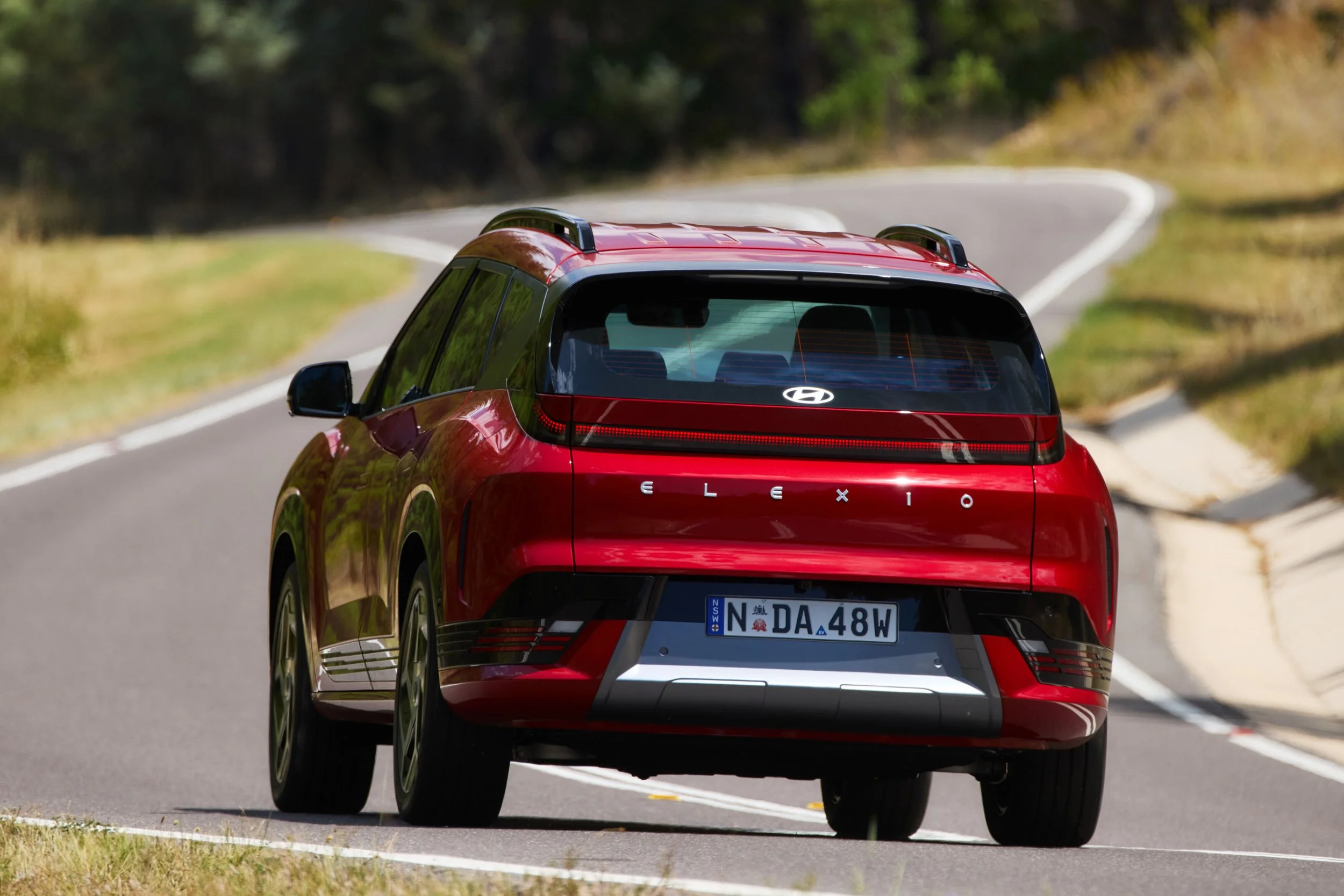
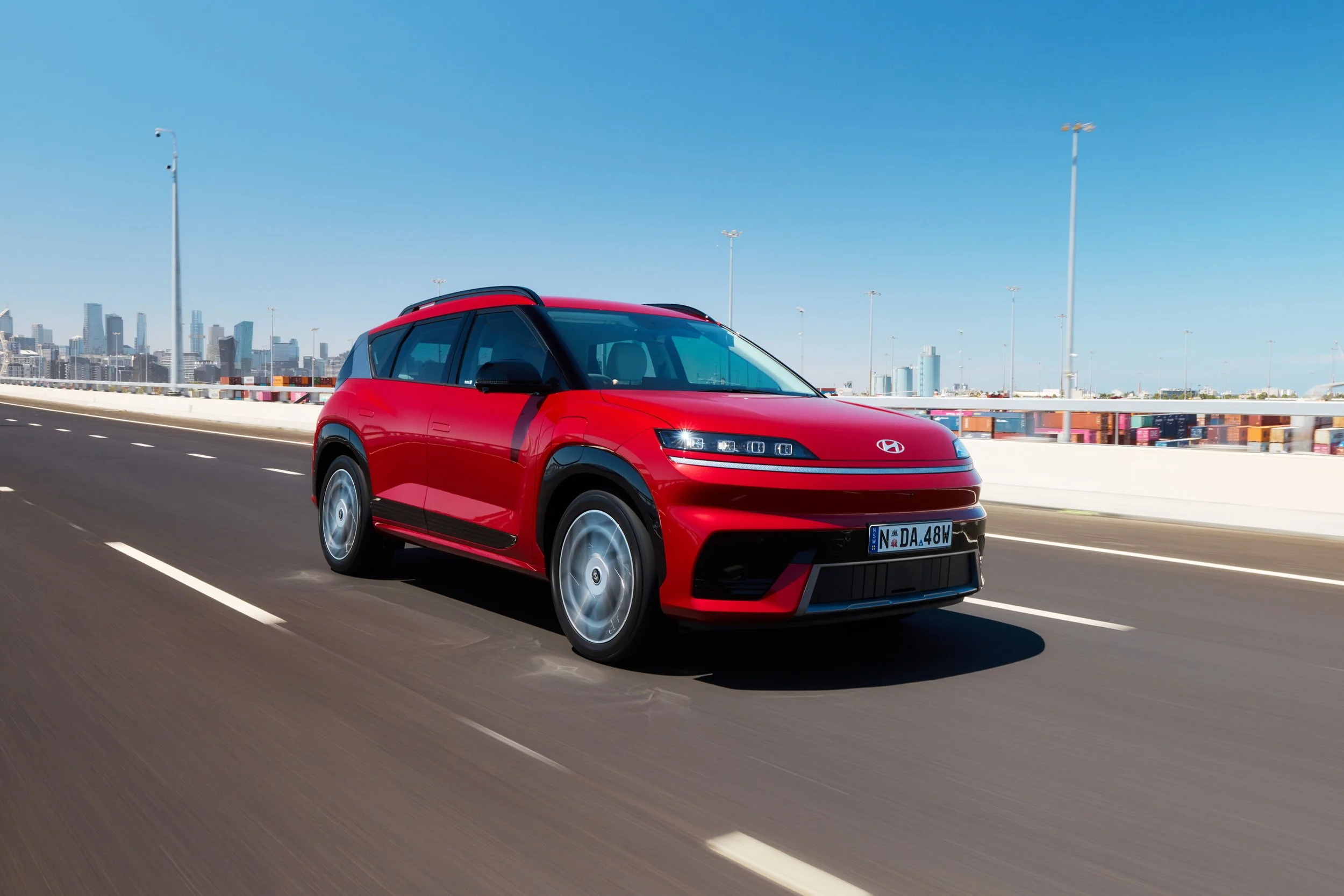
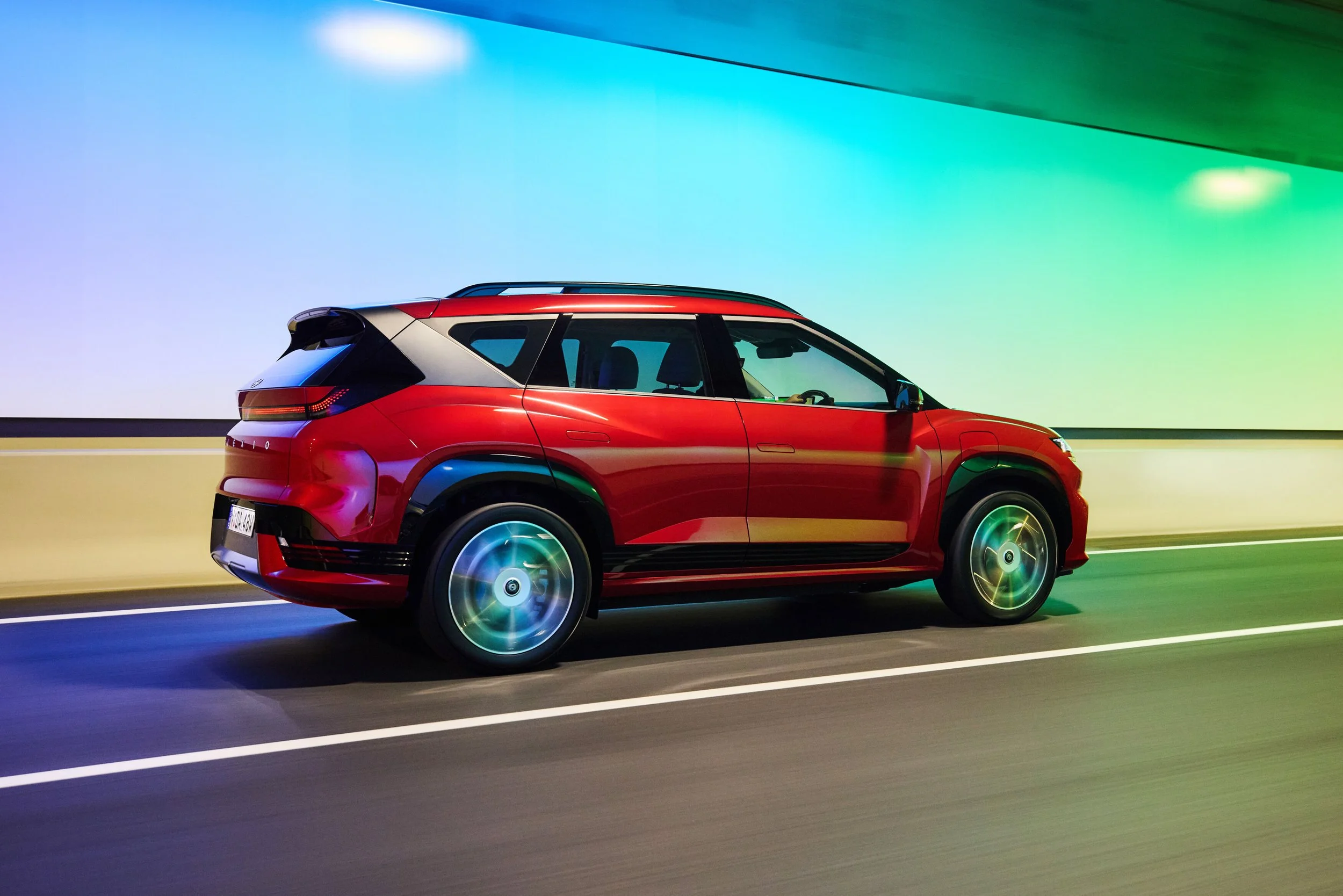
It looks much better in person.
I don't know what happened with some of those original press images.
Maybe it was the angles.
Maybe the colours.
Maybe the ELEXIO simply doesn't photograph particularly well.
Relatable.
But standing beside it, the proportions make considerably more sense.
There's a clean, almost monolithic quality to the body.
Flush door handles.
Smooth surfacing.
A relatively upright SUV profile.
And then there are those distinctive crystal-square lights.
They're unusual.
Definitely.
But once you see the vehicle moving through traffic, they give the ELEXIO an identity.
And that's important.
We literally just criticised the Leapmotor C10 for disappearing into the enormous sea of increasingly similar electric SUVs.
The ELEXIO doesn't.
You might not immediately know what it is.
But you'll probably look at it.
That's already something.
Those Wheels
The Elite gets 20-inch alloy wheels with what Hyundai calls a plum-blossom-inspired design.
They're...
Interesting.
There's a lot happening.
I'm not entirely convinced I'd describe a wheel as plum blossom-inspired without assistance from a press release.
But they suit the car.
Again, this is one of those design elements that looked strange in photographs and somehow made considerably more sense when attached to an actual vehicle sitting in front of me.
The standard ELEXIO gets smaller 18s.
My head says those are probably the sensible choice.
Better ride.
Cheaper tyres.
And they contribute to slightly better driving range.
My eyes?
Still deciding.
Interior
And then you climb inside.
Hmm.
That's interesting.
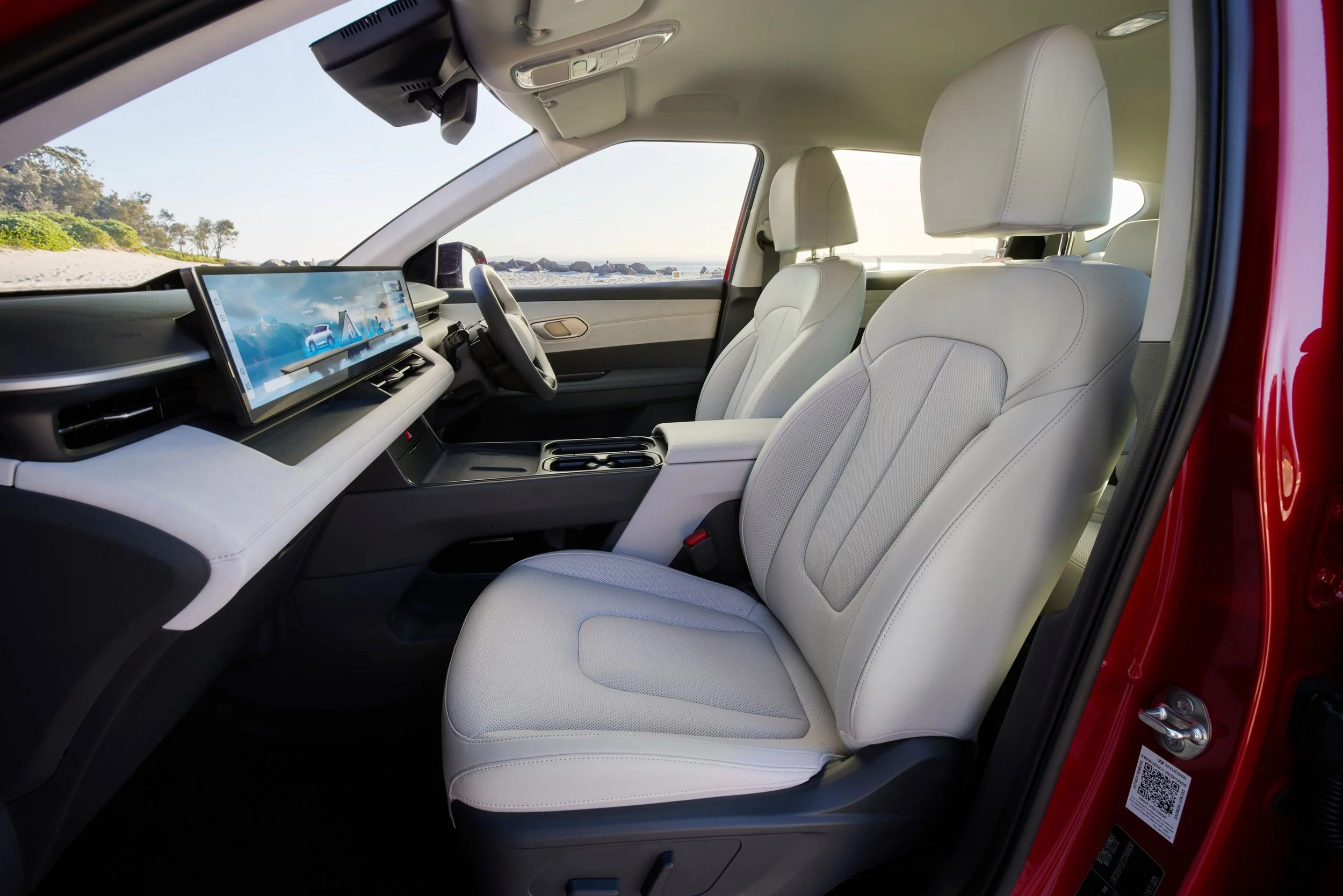
Because Hyundai has done something slightly unusual with the screens.
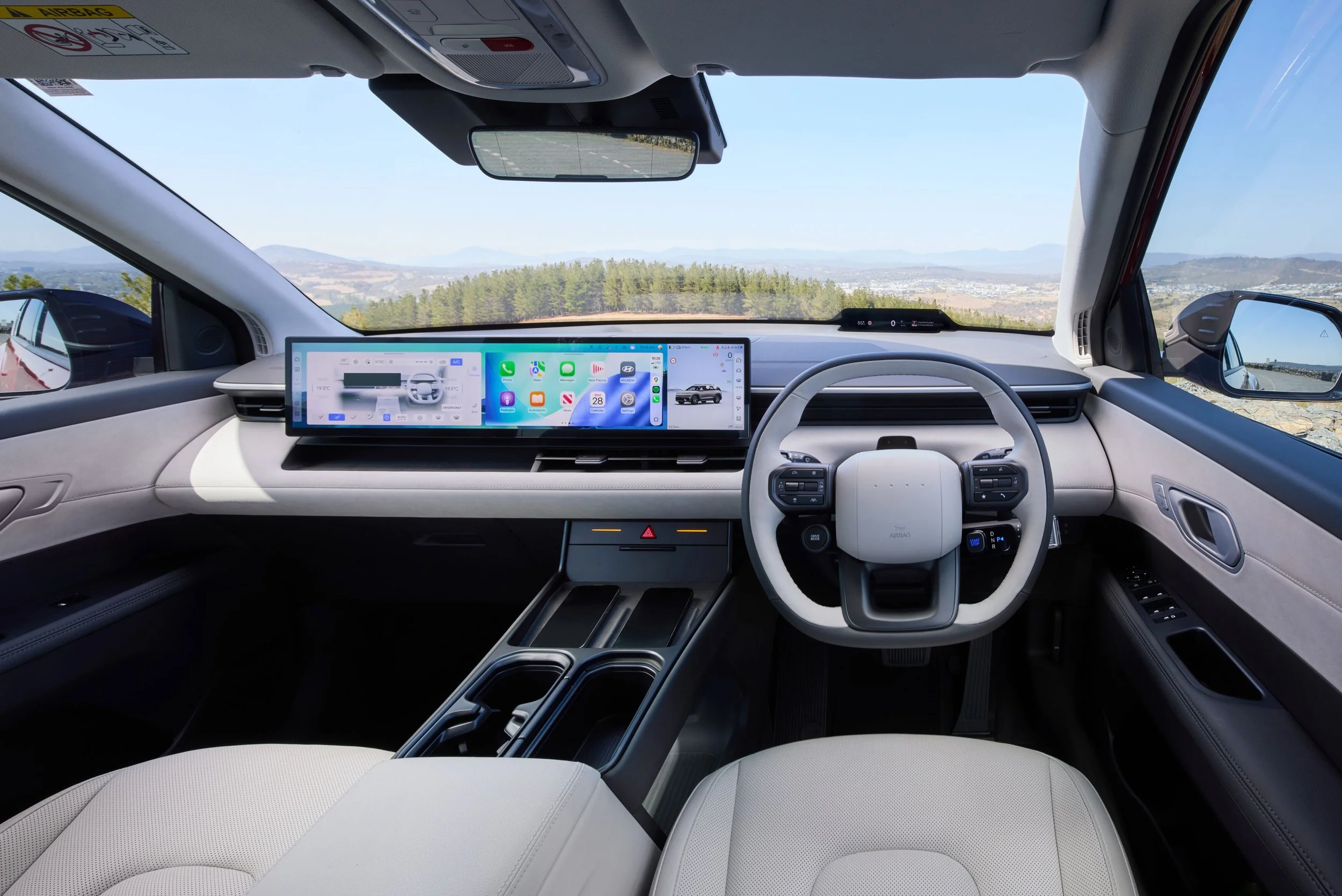
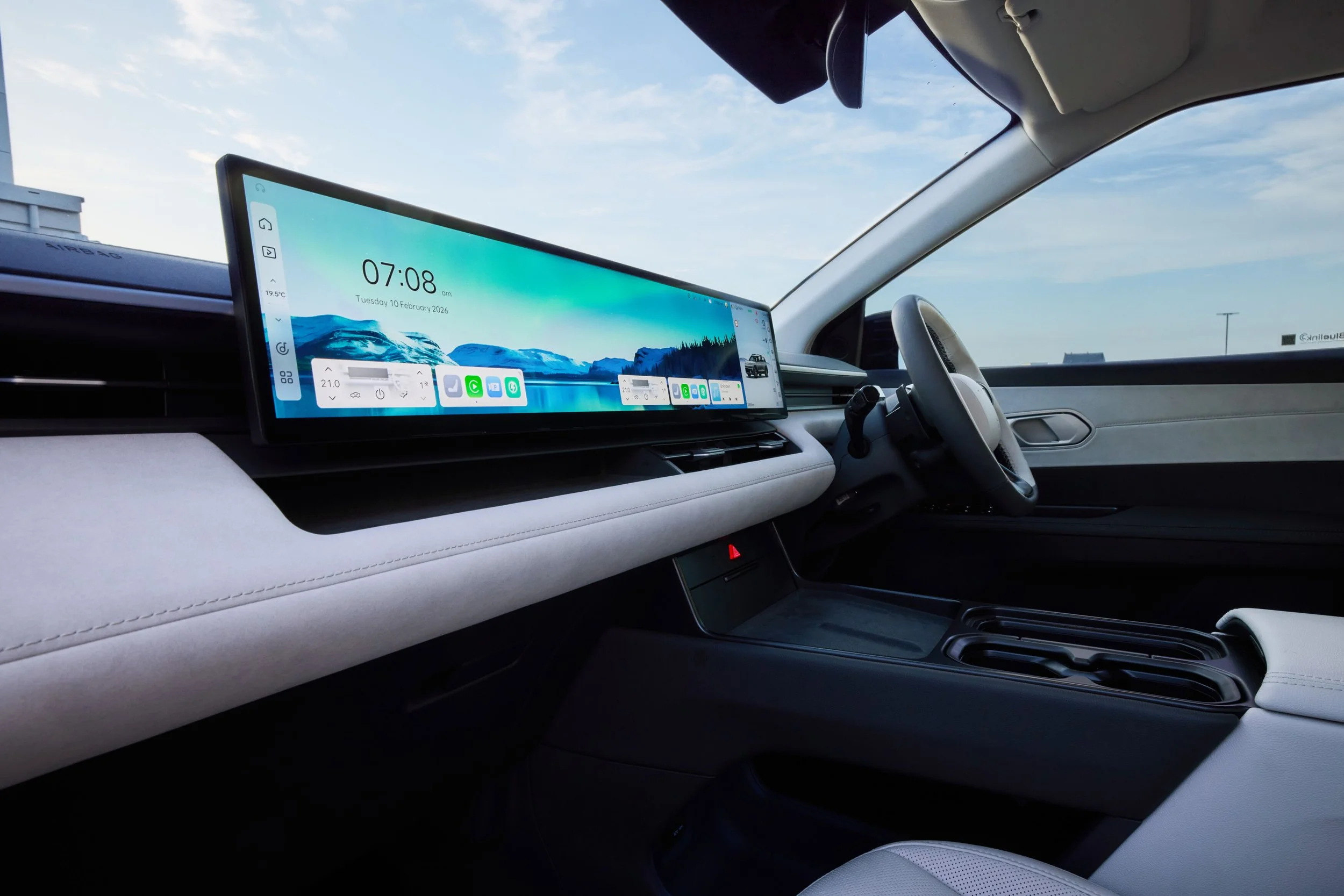
The enormous 27-inch display doesn't sit directly in front of the driver like we've become accustomed to.
Instead, it's pushed across towards the passenger side of the dashboard.
Initially, I wasn't sure about that.
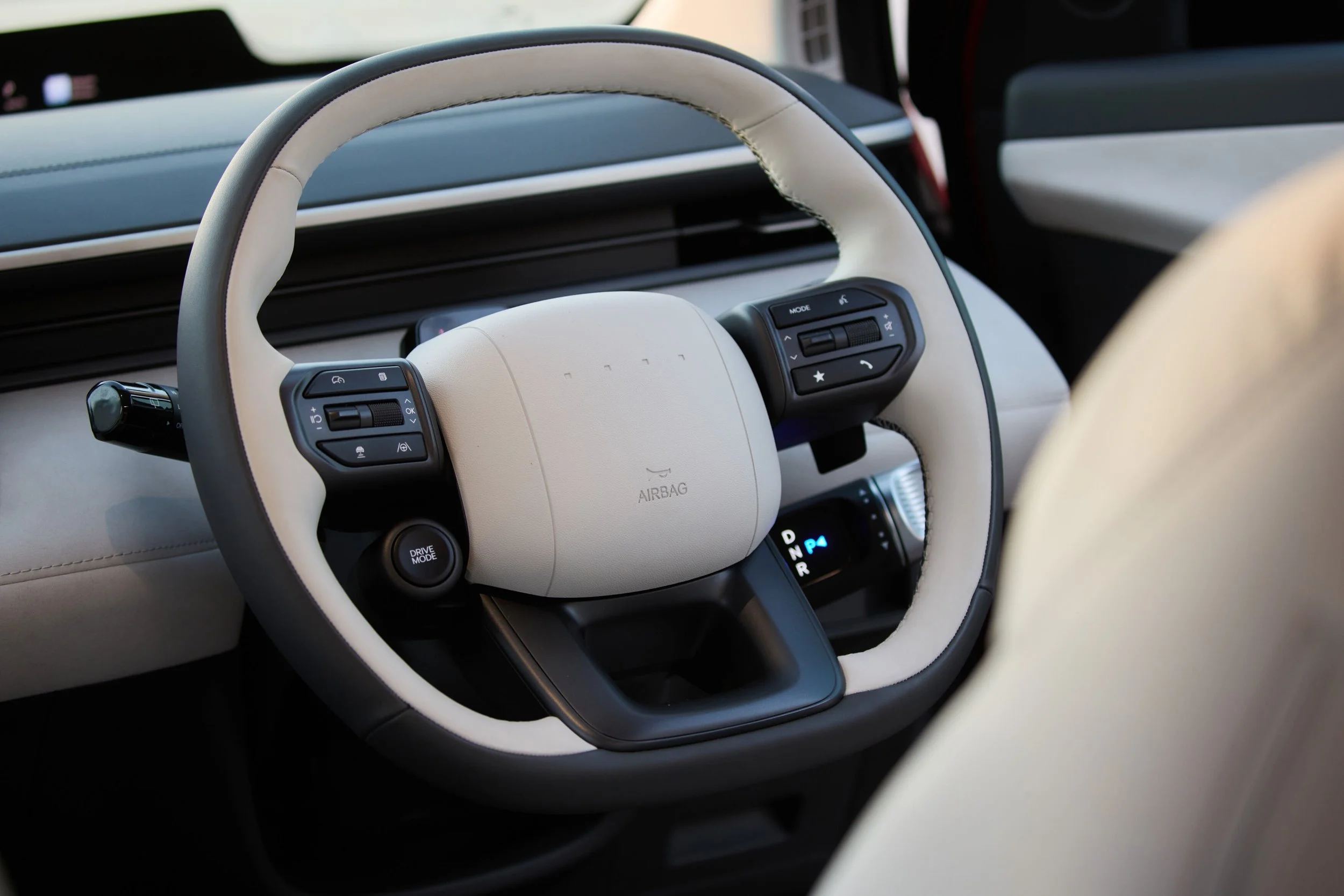
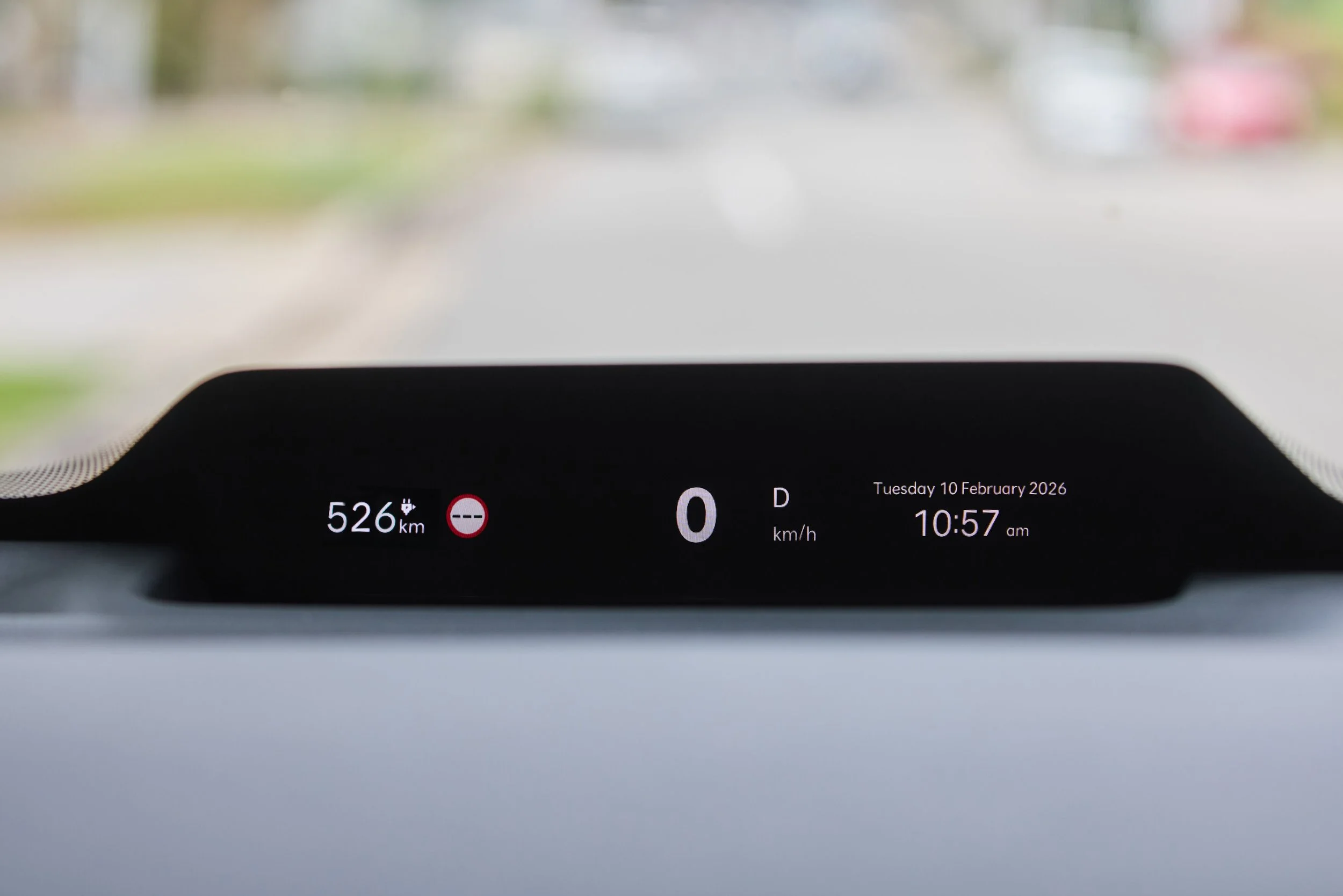
There's this enormous expanse of high-resolution display sitting beside you, while directly ahead of the steering wheel there's...
Basically a letterbox.
A slim information display showing the things you actually need while driving.
Speed.
Battery level.
Range.
Drive information.
That's largely it.
And after a little while?
I didn't hate it.
Actually, I started to understand it.
Because Hyundai has separated two completely different types of information.
The stuff you need while driving sits directly in your line of sight.
The stuff you want to interact with lives on the enormous display beside you.
That's...
Actually quite sensible.
Damn it.
I was prepared to make fun of this.
The slim driver's display is almost comically small compared with the enormous screen beside it, but because it isn't trying to display maps, album artwork, animated vehicles and seventeen different menus simultaneously, it's incredibly easy to read.
Speed?
There.
Range?
There.
Battery?
There.
Done.
Meanwhile, the giant 27-inch display handles navigation, media, vehicle settings and everything else.
And because it's positioned further towards the passenger side, your passenger can actually interact with it without leaning halfway across the centre console.
There's something refreshingly logical about that.
Don't misunderstand me.
I'm still not convinced every modern car needs enough screen real estate to operate an air-traffic-control centre.
But if you're going to install an enormous display?
Separating it from the driver's essential information actually makes quite a lot of sense.
It's weird.
Definitely.
The first time you climb aboard, you'll notice it immediately.
But after living with it?
Hmm, that's interesting.
And surprisingly...
I don't hate it.
The Passenger Screen Problem
There's another unexpected benefit.
Most modern infotainment systems are fundamentally designed around the driver.
Which makes sense.
They're driving.
But it also means passengers trying to change music, enter a destination or find something often end up reaching awkwardly towards a screen positioned primarily for somebody else.
The ELEXIO flips that around.
The driver already has the important information directly ahead.
So the enormous central display can stretch towards the passenger and become more of a shared interface.
Your passenger can find the restaurant.
Change the music.
Search for a charging station.
Handle navigation.
Do passenger things.
Excellent.
Delegation.
Meanwhile, I can continue driving without somebody's arm appearing directly in front of the dashboard every thirty seconds.
Relationships have survived on less significant innovations.
Thank you, Hyundai.
Space
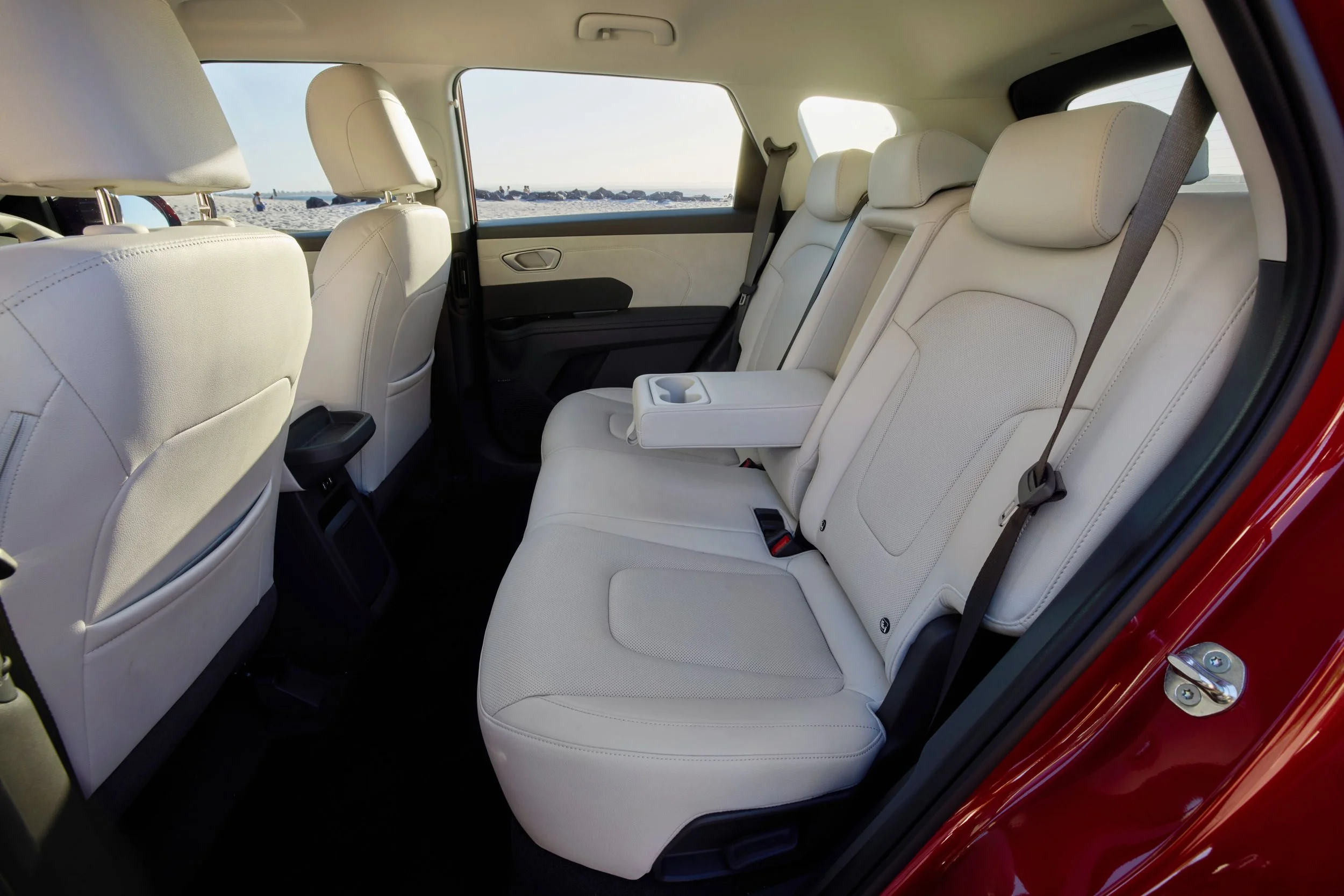
The ELEXIO is also properly spacious.
There's loads of room in the second row, helped by the dedicated EV platform and 2750mm wheelbase.
The flat floor makes the rear feel open.
Adults fit comfortably.
Kids will have acres of room.
And there are apparently 46 different storage areas throughout the cabin.
Forty-six.
I'm not sure I could identify forty-six separate things I regularly need to store in a car.
But if you've got children?
Give it six months.
They'll fill every single one.
Probably with rocks.
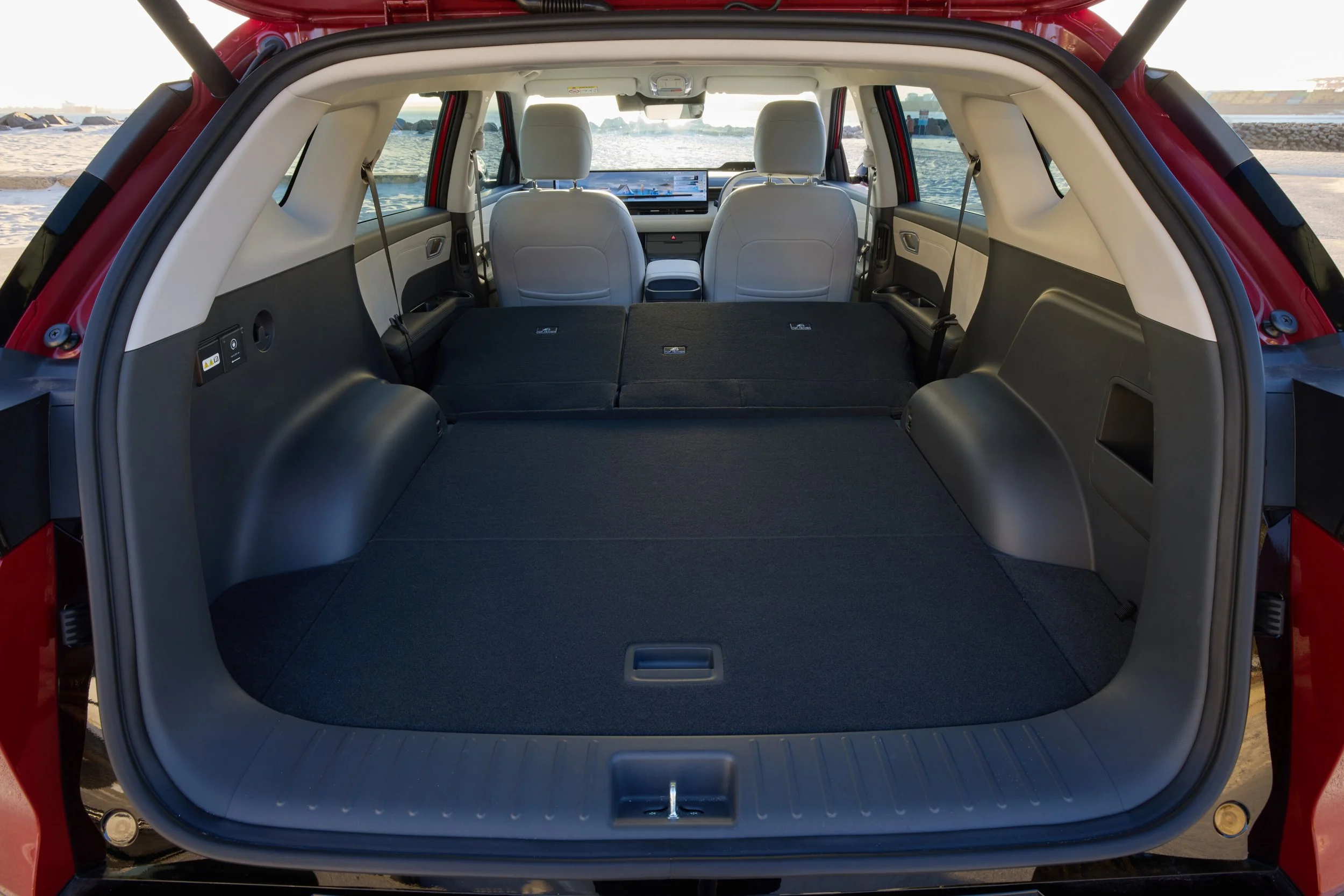
Boot Space
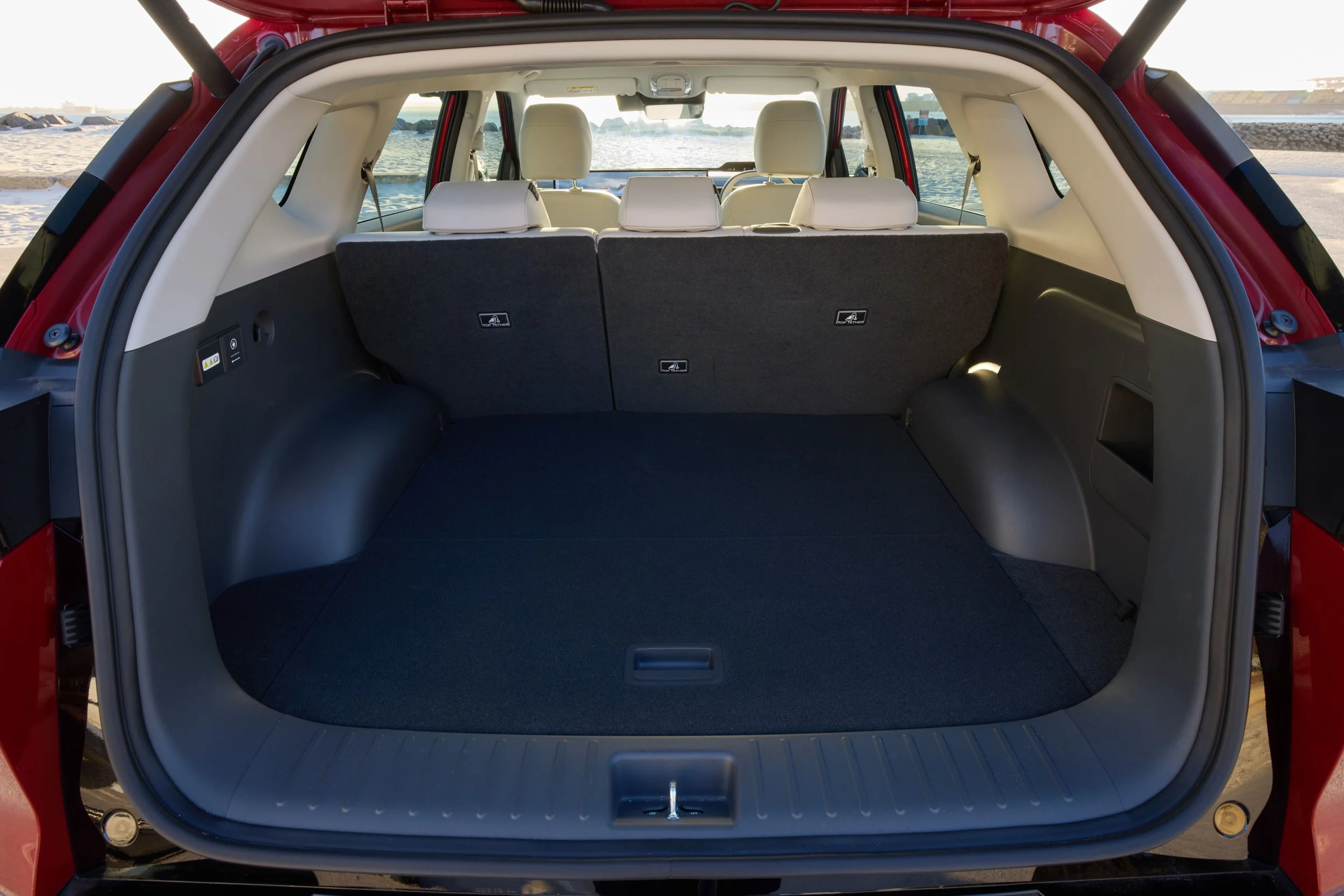
506 litres.
That's the boot capacity with the rear seats in place.
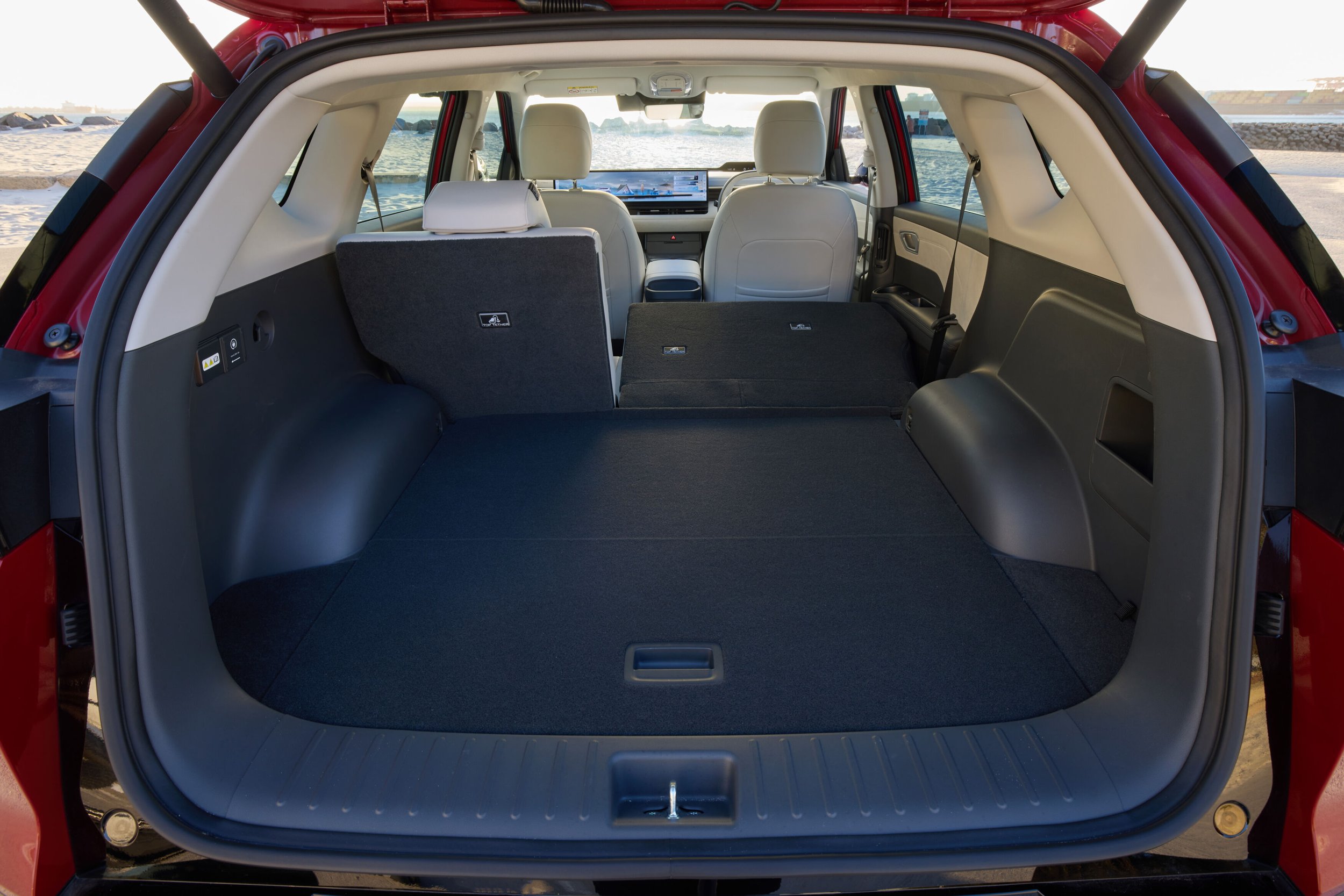
Fold them and you've got 1,540 litres available.
Good.
Proper family-SUV numbers.
The opening is wide, the space itself is useful, and there's enough room for the usual collection of family-life equipment.
Prams.
Shopping.
Suitcases.
Sports bags.
Approximately seventeen water bottles nobody remembers owning.
All good.
There's no frunk, which is slightly disappointing given the dedicated EV architecture.
Not disastrous.
But if there's no engine under there...
I always want somewhere to put the charging cable.
Powertrain
Both Australian ELEXIO variants use the same basic drivetrain.
A single electric motor driving the front wheels.
160kW.
310Nm.
An 88.1kWh LFP battery.
And this is perhaps where my initial drive didn't immediately win me over.
Because 160kW in a vehicle weighing more than two tonnes isn't an outrageous amount of power.
It's enough.
Absolutely.
Around town, electric torque means response is immediate.
There's no gearbox.
No waiting for boost.
No engine trying to find the correct rev range.
Press accelerator.
Car goes.
But in the default driving mode, the ELEXIO felt...
Fine.
Comfortable.
Smooth.
Perfectly adequate.
And after the Leapmotor, I started getting worried.
Oh no.
Not another one.
Then I found Sport mode.
Sport Mode
There you are.
Now, let's manage expectations.
Sport mode does not transform the ELEXIO into an IONIQ 5 N.
Obviously.
You're still working with the same 160kW and 310Nm.
Hyundai hasn't secretly hidden another motor underneath the boot floor waiting for you to press a button.
But the throttle response sharpens.
The car feels more eager.
That immediate electric torque becomes easier to access.
And suddenly the ELEXIO feels considerably more alive.
Not fast.
Responsive.
There's a difference.
And for everyday driving, I actually think responsiveness matters more.
You press the accelerator and the vehicle reacts immediately.
Gap in traffic?
Go.
Motorway merge?
Done.
Overtake?
No problem.
The ELEXIO suddenly felt lighter than its two-tonne kerb weight suggested.
And I found myself enjoying it considerably more.
Sometimes all a car needs is a little waking up.
Sport mode did that.
Thank you, Hyundai.
Driving
Even outside Sport mode, the ELEXIO is impressively refined.
It's quiet.
Obviously.
But there's more to EV refinement than simply removing an engine.
Wind noise is well suppressed.
Road noise is controlled.
The ride is comfortable.
And the overall calibration feels mature.
That's perhaps where Hyundai's experience becomes obvious.
This isn't the company's first electric car.
Not even close.
Hyundai has been developing EVs long enough now that the fundamentals feel sorted.
Throttle calibration.
Regenerative braking.
Brake-pedal transition.
Steering weight.
Ride.
These aren't exciting things to talk about.
But when they're wrong?
You notice immediately.
The ELEXIO generally gets them right.
Regenerative Braking
Hyundai also gives you multiple levels of regenerative braking, including i-Pedal functionality for one-pedal driving.
Excellent.
And this remains one of my favourite things about Hyundai EVs.
Let the driver choose.
Want traditional coasting behaviour?
Fine.
Want stronger regeneration?
Fine.
Want to barely touch the brake pedal during normal urban driving?
Also fine.
Different people like different things.
Give us options.
Thank you, Hyundai.
It's really not complicated.
Ride and Handling
The ELEXIO isn't trying to be sporty.
Even with Sport mode selected.
And that's okay.
This is a family SUV.
The suspension prioritises comfort, and for the most part that decision pays off.
Poor surfaces are dealt with nicely.
The substantial battery mass keeps the centre of gravity relatively low.
And through faster corners, the ELEXIO feels planted rather than cumbersome.
There's not much steering feedback.
You're not going to wake up at 5am on Sunday morning specifically to drive one through the mountains.
But again, that's not the job.
What's important is that the ELEXIO doesn't feel sloppy.
There's enough body control.
Enough grip.
Enough steering accuracy.
Then you put it back into Sport mode and give it a little more enthusiasm.
That's where I found the sweet spot.
Comfortable chassis.
Sharper response.
Much better.
Range
Here's one of the ELEXIO's strongest arguments.
That large 88.1kWh battery gives the standard ELEXIO an official WLTP range of 562km, while the Elite's larger wheels reduce that slightly to 546km.
That's proper range.
Not “technically enough for most people if the weather is good and you don't use the air-conditioning” range.
More than 500 kilometres gives you genuine flexibility.
For everyday commuting, you'd potentially go several days between charges.
For longer journeys, you're starting with enough range that charging becomes something you plan around meal or rest stops rather than constantly thinking about.
And for Australians still hesitant about moving to an EV?
That number matters.
Efficiency
Official combined energy consumption is 18.2kWh/100km.
For a medium SUV weighing north of two tonnes, that's respectable.
And this is where the ELEXIO's relatively modest power output begins making sense.
Could Hyundai have given it 250kW?
Of course.
Would that look better on the brochure?
Absolutely.
Would most families actually need it?
No.
Instead, Hyundai has prioritised usable range and everyday efficiency.
Which is very sensible.
Annoyingly sensible.
Apparently Toyota doesn't have exclusive rights to doing that.
Charging
There is one area where the ELEXIO reminds you that it doesn't have the full high-voltage charging capability of Hyundai's more expensive IONIQ products.
Hyundai quotes approximately 38 minutes for a 10–80 per cent DC charge under the specified conditions.
That's perfectly usable.
But an IONIQ 5 can perform the same basic exercise considerably faster under ideal conditions.
And that's part of the hierarchy.
Want Hyundai's cutting-edge charging architecture?
IONIQ 5.
Want a large battery, strong range and lower entry price?
ELEXIO.
Fair enough.
Technology
There's a lot here.
The giant 27-inch display.
The slim driver's information screen.
Head-up display.
Bluelink connected services.
Over-the-air updates.
Digital Key 2.
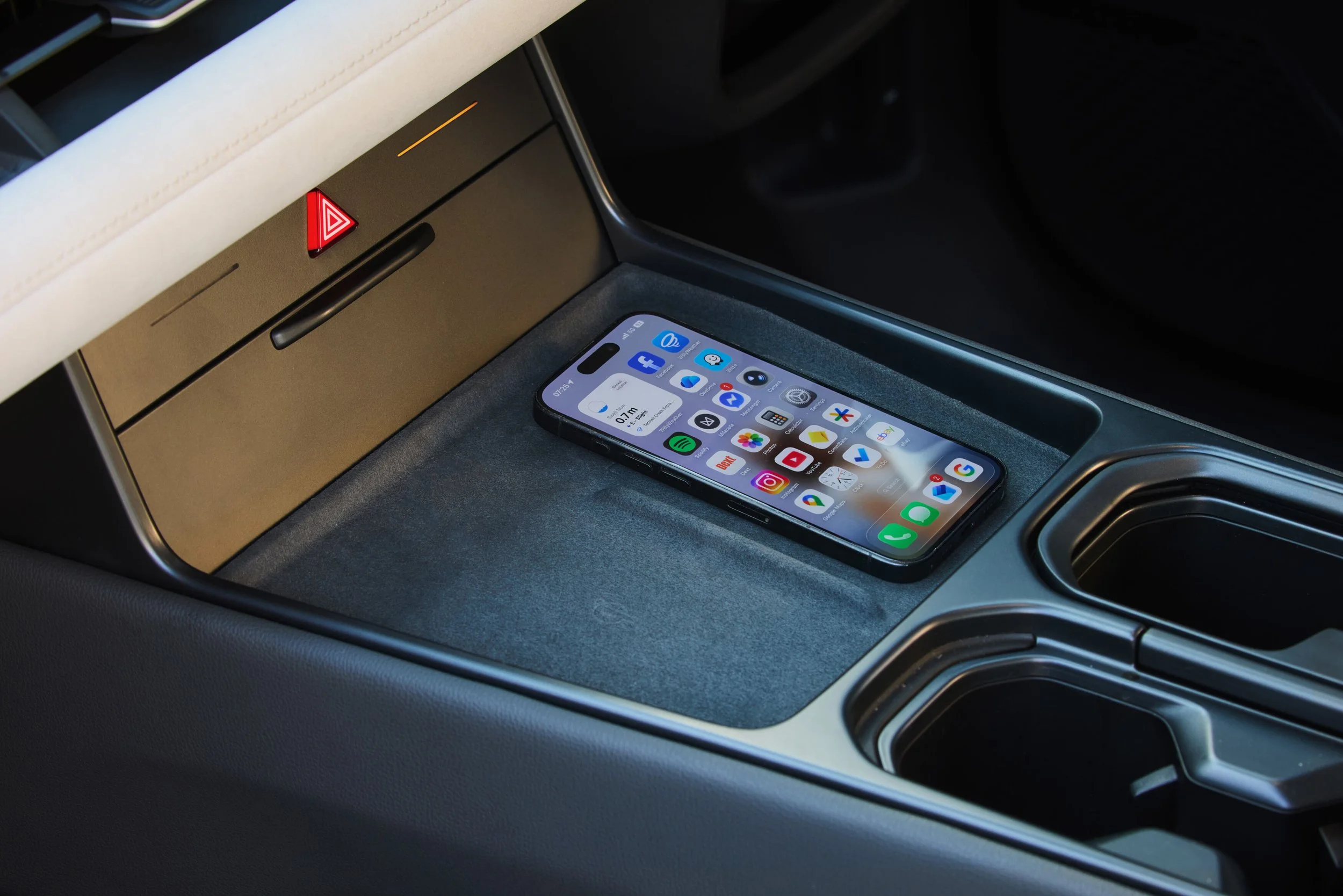
Wireless charging.
Surround-view camera technology depending on variant.
And an extensive suite of driver assistance.
But importantly, most of it feels relatively polished.
The ELEXIO is technology-heavy without feeling like a technology demonstration.
There's a difference.
The software generally responds quickly.
The graphics are clean.
And after the frustrations I had with the Leapmotor C10, this felt like a reminder that putting a giant screen in a car isn't inherently the problem.
Badly integrating one is.
The ELEXIO's screen layout initially looks like somebody installed the dashboard slightly off-centre.
Spend some time with it and you realise there's actual thought behind the decision.
I like that.
Safety
The ELEXIO carries a five-star ANCAP safety rating and comes with nine airbags alongside Hyundai's SmartSense suite of driver-assistance technology.
There's autonomous emergency braking.
Adaptive cruise control.
Lane assistance.
Blind-spot technology.
Driver monitoring.
The usual modern collection.
But Hyundai has had years to refine how these systems behave, and that experience generally shows.
They're present.
They're watching.
But most of the time, they aren't screaming for your attention.
We've established how much I appreciate that.
The China Question
Yes.
The ELEXIO is built in China.
And yes, it was initially developed specifically around the Chinese market through Beijing Hyundai.
But I actually find that interesting.
Because we're watching the automotive industry become considerably more global in the opposite direction.
For decades, Chinese manufacturers learned from European, Japanese and Korean brands.
Now established global manufacturers are using Chinese engineering, manufacturing and technology ecosystems to develop products that are subsequently exported elsewhere.
The ELEXIO is part of that shift.
But importantly, it still feels like a Hyundai.
The driving calibration.
The safety systems.
The EV expertise.
The overall polish.
There's enough familiar DNA here.
The Competition
And this is where things become difficult.
Because medium electric SUVs are multiplying faster than streaming services.
Tesla Model Y.
Kia EV5.
BYD Sealion 7.
Leapmotor C10.
XPeng G6.
Deepal S07.
And plenty more.
That's a brutal segment.
Price matters.
Range matters.
Charging matters.
Equipment matters.
And increasingly...
Personality matters.
Which brings me back to why the ELEXIO surprised me.
It actually has some.
Not enormous amounts.
Let's not get carried away.
This isn't an IONIQ 5 N.
But between the unusual styling, interesting interior and slightly more eager personality in Sport mode, there was enough going on that I remembered the car after handing the keys back.
After the Leapmotor C10?
That mattered more than I expected.
Verdict
I almost didn't want to like the Hyundai ELEXIO.
The launch photos didn't do much for me.
The styling looked strange.
The concept seemed like yet another electric medium SUV arriving into a market already overflowing with them.
And initially?
Driving it didn't completely change my mind.
Comfortable.
Quiet.
Spacious.
Competent.
Here we go again.
Then I spent more time with it.
Saw it in different light.
Started appreciating the details.
Got used to that enormous screen being shoved towards the passenger while my speed and range lived on what initially appeared to be a digital letterbox in front of me.
Found Sport mode.
And somewhere along the way...
I started liking it.
More than I expected.
That's perhaps the ELEXIO's greatest strength.
It gets better the longer you spend with it.
The design makes more sense in person.
That strange dashboard layout starts feeling strangely logical.
The cabin is genuinely spacious.
The 506-litre boot works for family life.
More than 500km of WLTP range removes much of the usual EV anxiety.
The ride is comfortable.
And Sport mode gives the drivetrain just enough extra urgency to stop the experience becoming completely anonymous.
Would I call it exciting?
No.
Would I choose it because I wanted a driver's car?
Also no.
But unlike some EVs I've driven recently, the ELEXIO didn't leave me cold.
There's enough character here.
Enough weirdness.
Enough personality.
And enough underlying Hyundai polish to make the whole thing work.
Which brings me back to those original press photos.
I judged you too quickly.
Sorry, ELEXIO.
Turns out you're alright.
Actually...
You're better than alright.
Thank you, Hyundai.